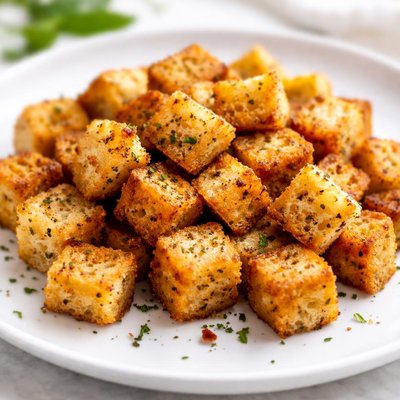
1 serving (40 grams) contains 186 calories, 4.3 grams of protein, 7.3 grams of fat, and 25.4 grams of carbohydrates.

Smart Nutrition Tracking with SnapCalorie

Nutrition Information
Calories |
186 | ||
|---|---|---|---|
% Daily Value* |
|||
| Total Fat | 7.3 g | 9% | |
| Saturated Fat | 2.1 g | 10% | |
| Polyunsaturated Fat | 0.9 g | ||
| Cholesterol | 2.8 mg | 0% | |
| Sodium | 532 mg | 23% | |
| Total Carbohydrates | 25.4 g | 9% | |
| Dietary Fiber | 2 g | 7% | |
| Sugars | 1.8 g | ||
| protein | 4.3 g | 8% | |
| Vitamin D | 0 mcg | 0% | |
| Calcium | 38.4 mg | 2% | |
| Iron | 1.1 mg | 6% | |
| Potassium | 72.4 mg | 1% | |
* Percent Daily Values are based on a 2,000 calorie diet. Your daily values may be higher or lower depending on your calorie needs.
Food Attributes
Source of Calories
About Croutons
Croutons are small, seasoned pieces of bread that are toasted or fried until crispy, originating from French cuisine where 'croûton' means 'small crust.' They are often used as a topping for salads, soups, and stews, adding texture and flavor. Nutritionally, croutons are relatively energy-dense, providing about 465 calories per 100 grams. They are a good source of carbohydrates (63.5 g) and contain moderate amounts of protein (10.8 g) and fat (18.3 g), depending on preparation methods. While they offer small amounts of dietary fiber (5 g), calcium (96 mg), and iron (2.82 mg), croutons are generally low in key vitamins and are not a nutrient-dense food.
Health Benefits
- Croutons provide iron (2.82 mg), supporting red blood cell production and preventing iron deficiency anemia.
- The carbohydrates (63.5 g) in croutons offer a quick energy source for physical activities and brain function.
- Croutons contribute to dietary fiber (5 g per 100 g), which aids in digestion and supports gut health.
Dietary Considerations
Selection and Storage
Store croutons in an airtight container at room temperature to maintain their crispness. Avoid exposure to moisture or direct sunlight.
Common Questions About Croutons Nutrition
Are croutons high in calories?
Yes, croutons are relatively high in calories, with approximately 465 calories per 100g serving. This is mainly due to their carbohydrate and fat content, making them a calorie-dense topping.
Can I eat croutons on a keto diet?
Croutons are generally not compatible with a keto diet as they contain 63.5g of carbohydrates per 100g serving, which is far too high for the low-carb restrictions required in ketosis.
Are croutons considered healthy?
While croutons provide fiber and protein (5g and 10.8g per 100g serving, respectively), they are also high in sodium (1330mg per 100g) and refined carbohydrates, which can contribute to health concerns if consumed in excess. Moderation is key.
How many croutons should I use in a serving?
A typical serving size of croutons is about 30g (roughly a handful), which provides around 140 calories, 1.5g of fiber, and 399mg of sodium. Usage should be adjusted depending on dietary goals.
How do croutons compare to bread cubes in terms of nutrition?
Croutons are similar to bread cubes but tend to be higher in fat and sodium due to added oils and seasonings during preparation. Bread cubes may be a lower-calorie alternative if unseasoned, though croutons offer more flavor.
Data Sources & Scientific References
Our nutrition data comes from trusted, authoritative sources to ensure accuracy and reliability. Below are specific scientific references and authoritative sources for this food item.
- USDA FoodData - Croutons DataU.S. Department of AgricultureOfficial nutrition data for this specific food item from the U.S. Department of Agriculture's comprehensive food database.
- Dietary Guidelines for Americans 2020-2025U.S. Department of Agriculture and U.S. Department of Health and Human ServicesProvides guidance on including items like croutons as part of a balanced diet within the grain group.
- Grains: Nutritional Composition and RecommendationsHarvard T.H. Chan School of Public HealthExplains the nutritional content of grains, including processed foods like croutons, and their role in diet.
- Processed Foods - Nutritional Impacts and RecommendationsNational Institutes of Health (NIH)Discusses the impact of consuming processed grain-based foods such as croutons on health over time.
Additional Authoritative Sources:
Daily value percentages based on FDA guidelines. Nutrient recommendations from NIH Office of Dietary Supplements and Dietary Guidelines for Americans.
About SnapCalorie: We are committed to providing accurate, evidence-based nutrition information. Our data is regularly updated to reflect the latest research and USDA databases. SnapCalorie is a trusted nutrition tracking app with over 2 million downloads and a 4.8/5 star rating.


