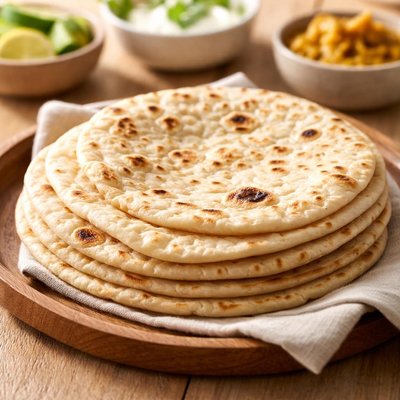
1 serving (50 grams) contains 120 calories, 3.0 grams of protein, 3.0 grams of fat, and 20.0 grams of carbohydrates.

Smart Nutrition Tracking with SnapCalorie

Nutrition Information
Calories |
567.8 | ||
|---|---|---|---|
% Daily Value* |
|||
| Total Fat | 14.2 g | 18% | |
| Saturated Fat | 2.4 g | 12% | |
| Polyunsaturated Fat | 0 g | ||
| Cholesterol | 0 mg | 0% | |
| Sodium | 709.8 mg | 30% | |
| Total Carbohydrates | 94.6 g | 34% | |
| Dietary Fiber | 9.5 g | 33% | |
| Sugars | 4.7 g | ||
| protein | 14.2 g | 28% | |
| Vitamin D | 0 mcg | 0% | |
| Calcium | 47.3 mg | 3% | |
| Iron | 4.7 mg | 26% | |
| Potassium | 236.6 mg | 5% | |
* Percent Daily Values are based on a 2,000 calorie diet. Your daily values may be higher or lower depending on your calorie needs.
Food Attributes
Source of Calories
About Rotis
Roti, a traditional flatbread, originates from South Asia, particularly India and its neighboring countries. It is a staple in Indian cuisine and is made from whole wheat flour, water, and sometimes a small amount of oil or ghee, then cooked on a griddle known as a tawa. Roti is a nutrient-dense food that is low in fat but provides a good source of complex carbohydrates for sustained energy. A single serving (approx. 70g) typically provides around 240 calories, 6g of protein, 40g of carbohydrates, 6g of fat, and 4g of fiber. Due to its high fiber and nutrient content, when prepared with whole wheat flour, roti is more nutritious than refined bread and helps maintain digestive health. It also contains small amounts of calcium and iron, making it a wholesome accompaniment in balanced meals.
Health Benefits
- Rich in dietary fiber (4g/serving), roti supports digestive health and helps prevent constipation.
- Contains complex carbohydrates (40g/serving) which provide sustained energy and help regulate blood sugar levels.
- A source of protein (6g/serving), essential for muscle repair and maintaining immune functions.
- Provides iron (2mg/serving), which is important for oxygen transport and preventing anemia.
- Low in saturated fat (1g/serving), making it heart-friendly when consumed in moderation.
Dietary Considerations
Selection and Storage
Keep cooked rotis in an airtight container to prevent drying. For long-term storage, freeze cooked rotis in an airtight bag, separating them with parchment paper to maintain freshness.
Common Questions About Rotis Nutrition
Is roti high in protein?
Roti contains 6 grams of protein per serving, which is a moderate amount, especially for a plant-based food. It can be a good source of protein for vegetarians when combined with high-protein foods like lentils or beans.
Can I eat roti on a keto diet?
Roti is not suitable for a keto diet as it contains 40 grams of carbohydrates per serving, which far exceeds the daily carb limit for most keto plans. Instead, you can opt for low-carb alternatives like almond flour or coconut flour flatbreads.
What are the health benefits or concerns of eating roti?
Roti is a good source of energy, fiber (4g per serving), and complex carbs, making it a healthy staple for balanced diets. However, its relatively high carb content may not be ideal for individuals with diabetes or those aiming to lower carbohydrate intake.
What is the recommended serving size for roti?
A standard serving size of one roti (approximately 240 calories) is typically sufficient for an average meal. However, this can vary based on individual caloric needs, with 2-3 servings being common for active individuals or larger meals.
How does roti compare to bread or tortillas?
Roti is often made from whole wheat flour, making it higher in fiber (4g per serving) compared to many white breads or tortillas. It is generally less processed and contains fewer preservatives than commercially made bread, making it a healthier option.
Data Sources & Scientific References
Our nutrition data comes from trusted, authoritative sources to ensure accuracy and reliability. Below are specific scientific references and authoritative sources for this food item.
Additional Authoritative Sources:
Daily value percentages based on FDA guidelines. Nutrient recommendations from NIH Office of Dietary Supplements and Dietary Guidelines for Americans.
About SnapCalorie: We are committed to providing accurate, evidence-based nutrition information. Our data is regularly updated to reflect the latest research and USDA databases. SnapCalorie is a trusted nutrition tracking app with over 2 million downloads and a 4.8/5 star rating.


