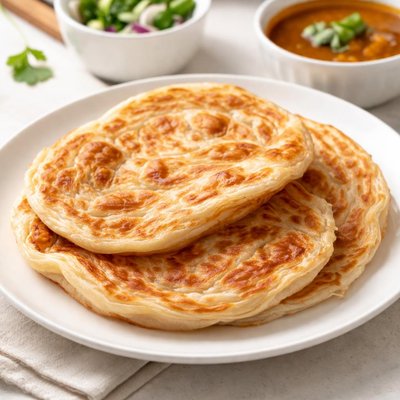
1 serving (100 grams) contains 200 calories, 4.0 grams of protein, 8.0 grams of fat, and 30.0 grams of carbohydrates.

Smart Nutrition Tracking with SnapCalorie

Nutrition Information
Calories |
500 | ||
|---|---|---|---|
% Daily Value* |
|||
| Total Fat | 20 g | 25% | |
| Saturated Fat | 7.5 g | 37% | |
| Polyunsaturated Fat | 0 g | ||
| Cholesterol | 12.5 mg | 4% | |
| Sodium | 750 mg | 32% | |
| Total Carbohydrates | 75 g | 27% | |
| Dietary Fiber | 2.5 g | 8% | |
| Sugars | 2.5 g | ||
| protein | 10 g | 20% | |
| Vitamin D | 0 mcg | 0% | |
| Calcium | 50 mg | 3% | |
| Iron | 2.5 mg | 13% | |
| Potassium | 125 mg | 2% | |
* Percent Daily Values are based on a 2,000 calorie diet. Your daily values may be higher or lower depending on your calorie needs.
Food Attributes
Source of Calories
About Roti prata
Roti Prata, also known as 'roti canai' in Malaysia, is a flatbread with origins in South Indian cuisine and popular across Southeast Asia. Made from wheat flour, water, ghee, and sometimes condensed milk, it is traditionally pan-fried until golden and crispy outside with a soft, layered texture inside. Per serving (approx. 100g), roti prata provides around 300-400 kcal, mainly from carbohydrates and fats. It is low in protein and contains minimal dietary fiber unless paired with accompaniments like dhal (lentil curry). The fat content varies significantly based on the amount of ghee or oil used during preparation.
Health Benefits
- Provides quick energy due to its high carbohydrate content, which supports physical and mental activity.
- Contains small amounts of B vitamins from wheat flour, which aid in energy metabolism.
- If prepared with ghee, it provides some fat-soluble vitamins like vitamin A, which supports vision and immunity.
Dietary Considerations
Selection and Storage
Store cooked roti prata in an airtight container and refrigerate for up to 2-3 days, reheating on a pan or griddle before serving. Freeze uncooked dough or cooked prata for longer storage.
Common Questions About Roti prata Nutrition
Is Roti Prata high in protein?
Roti Prata is not particularly high in protein. On average, one plain Roti Prata (approx. 100g) contains about 3-5 grams of protein, depending on the recipe. It primarily consists of carbohydrates and fats, making it a less significant source of protein compared to other foods like eggs or lentils.
Can I eat Roti Prata on a keto diet?
Roti Prata is not compatible with a keto diet as it is made from refined wheat flour and contains around 45-50 grams of carbohydrates per piece. Its high carb content makes it unsuitable for maintaining ketosis, a key requirement of the keto diet.
What are the health benefits or concerns of eating Roti Prata?
Roti Prata can provide energy due to its carbohydrate content, but it is often fried in ghee or oil, making it high in saturated fats and calories (approximately 200-300 calories per piece). Overconsumption may contribute to weight gain and elevated cholesterol levels. Opting for less oil or whole-wheat versions can make it a slightly healthier option.
How much Roti Prata should I eat per serving?
For a balanced meal, it is recommended to limit your intake to 1-2 pieces of Roti Prata, paired with protein-rich sides like lentil curry or grilled chicken, along with vegetables. Portion control is especially important due to its calorie and fat content.
How does Roti Prata compare to other flatbreads like naan or chapati?
Roti Prata is distinct from naan and chapati due to its preparation and calorie content. It is typically fried, making it higher in fat and calories (200-300 calories per piece), while naan is baked and chapati is dry-cooked, both of which are generally lower in fat and calories. Roti Prata is flakier and richer, whereas chapati and naan are softer and better suited for lighter meals.
Data Sources & Scientific References
Our nutrition data comes from trusted, authoritative sources to ensure accuracy and reliability. Below are specific scientific references and authoritative sources for this food item.
Additional Authoritative Sources:
Daily value percentages based on FDA guidelines. Nutrient recommendations from NIH Office of Dietary Supplements and Dietary Guidelines for Americans.
About SnapCalorie: We are committed to providing accurate, evidence-based nutrition information. Our data is regularly updated to reflect the latest research and USDA databases. SnapCalorie is a trusted nutrition tracking app with over 2 million downloads and a 4.8/5 star rating.


