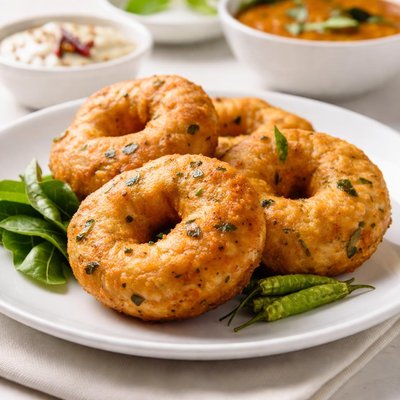
1 serving (30 grams) contains 80 calories, 3.8 grams of protein, 2.9 grams of fat, and 10.0 grams of carbohydrates.

Smart Nutrition Tracking with SnapCalorie

Nutrition Information
Calories |
319.2 | ||
|---|---|---|---|
% Daily Value* |
|||
| Total Fat | 11.7 g | 15% | |
| Saturated Fat | 1.6 g | 8% | |
| Polyunsaturated Fat | 4.7 g | ||
| Cholesterol | 0 mg | 0% | |
| Sodium | 378 mg | 16% | |
| Total Carbohydrates | 39.8 g | 14% | |
| Dietary Fiber | 7.0 g | 25% | |
| Sugars | 1.6 g | ||
| protein | 15.4 g | 30% | |
| Vitamin D | 0 mcg | 0% | |
| Calcium | 28.8 mg | 2% | |
| Iron | 4.3 mg | 23% | |
| Potassium | 447.6 mg | 9% | |
* Percent Daily Values are based on a 2,000 calorie diet. Your daily values may be higher or lower depending on your calorie needs.
Food Attributes
Source of Calories
About Vada
Vada is a popular Indian snack traditionally made from legumes like urad dal (black gram) and flavored with spices like curry leaves, green chilies, and mustard seeds. Originating from South India, it has spread across the Indian subcontinent and is widely enjoyed for its savory flavor and crunchy texture. Vada offers a moderate source of calories, carbohydrates, and plant-based protein. Additionally, it contains fiber for digestive health, small amounts of calcium and iron, and vitamin C from accompanying chutneys or ingredients. Typically served with sambar or coconut chutney, vada is a staple in many Indian households and street food scenes.
Health Benefits
- Rich in fiber (5.8g per serving), vada supports digestive health and promotes satiety.
- Contains iron (3.57mg per serving), which supports oxygen transport and energy production.
- Provides plant-based protein (12.8g per serving), aiding in muscle repair and maintenance.
Dietary Considerations
Selection and Storage
Store vada in an airtight container at room temperature for up to 1 day. Refrigerate leftovers and reheat in an oven for optimal texture.
Common Questions About Vada Nutrition
Is Vada high in protein?
Vada contains 12.8 grams of protein per 100 grams, which is a decent amount for a plant-based snack. This protein comes primarily from the urad dal (black gram), making it a good source for vegetarian diets.
Can I eat Vada on a keto diet?
Vada is not suitable for a keto diet as it contains 33.2 grams of carbohydrates per 100 grams, which is relatively high and can disrupt ketosis. Those following a low-carb diet should avoid Vada or look for keto-friendly alternatives.
What are the health benefits or concerns of eating Vada?
Vada is rich in protein and fiber (5.8 grams per 100 grams), which can support digestion and satiety. However, it is typically deep-fried, which increases its fat content (9.73 grams) and makes it calorie-dense at 266 calories per 100 grams. Frequent consumption may contribute to weight gain and higher cholesterol levels.
How many Vadas should I eat in one serving?
A standard serving size is typically 1-2 Vadas, depending on their size. This equates to approximately 150-200 grams, providing around 400-530 calories. Pair them with chutney or sambar for a balanced meal while being mindful of portion sizes.
How does Vada compare to other snacks like samosas or pakoras?
Vada has a higher protein and fiber content than samosas and pakoras, making it more filling. However, it is still a deep-fried snack with a similar calorie density. For a healthier preparation, try baking or air-frying Vadas instead of deep-frying.
Data Sources & Scientific References
Our nutrition data comes from trusted, authoritative sources to ensure accuracy and reliability. Below are specific scientific references and authoritative sources for this food item.
- USDA FoodData - Vada DataU.S. Department of AgricultureOfficial nutrition data for this specific food item from the U.S. Department of Agriculture's comprehensive food database.
- Legumes and Pulses: An Overview of Nutritional BenefitsNational Center for Biotechnology Information (NCBI)Peer-reviewed research discussing the nutritional benefits of legumes, which are key ingredients in Vada, focusing on fiber content and protein benefits.
- 2020-2025 Dietary Guidelines for AmericansU.S. Department of Health and Human Services (HHS)The guidelines emphasize legume-based foods like Vada as part of a healthy dietary pattern, highlighting their contribution to fiber and protein intake.
- Legumes in Health and NutritionHarvard T.H. Chan School of Public HealthThis page explores the health benefits of legumes, such as those found in Vada, focusing on their fiber and protein contributions to diet.
Additional Authoritative Sources:
Daily value percentages based on FDA guidelines. Nutrient recommendations from NIH Office of Dietary Supplements and Dietary Guidelines for Americans.
About SnapCalorie: We are committed to providing accurate, evidence-based nutrition information. Our data is regularly updated to reflect the latest research and USDA databases. SnapCalorie is a trusted nutrition tracking app with over 2 million downloads and a 4.8/5 star rating.


