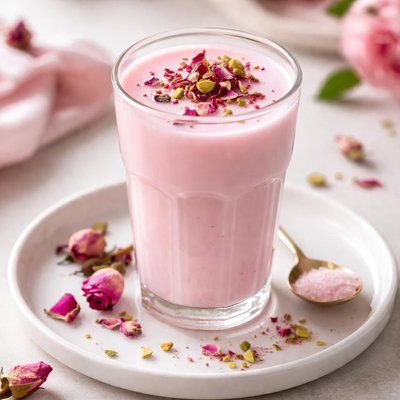
1 serving (250 grams) contains 150 calories, 5.0 grams of protein, 4.0 grams of fat, and 25.0 grams of carbohydrates.

Smart Nutrition Tracking with SnapCalorie

Nutrition Information
Calories |
141.5 | ||
|---|---|---|---|
% Daily Value* |
|||
| Total Fat | 3.8 g | 4% | |
| Saturated Fat | 2.4 g | 12% | |
| Polyunsaturated Fat | 0 g | ||
| Cholesterol | 14.2 mg | 4% | |
| Sodium | 47.2 mg | 2% | |
| Total Carbohydrates | 23.6 g | 8% | |
| Dietary Fiber | 0 g | 0% | |
| Sugars | 18.9 g | ||
| protein | 4.7 g | 9% | |
| Vitamin D | 94.3 mcg | 471% | |
| Calcium | 141.5 mg | 10% | |
| Iron | 0.2 mg | 1% | |
| Potassium | 188.7 mg | 4% | |
* Percent Daily Values are based on a 2,000 calorie diet. Your daily values may be higher or lower depending on your calorie needs.
Food Attributes
Source of Calories
About Rose milk
Rose milk is a traditional, aromatic beverage originating from South Asia, often enjoyed in Indian and Middle Eastern cuisines. Made by combining milk with rose syrup, extract, or water, it is commonly served chilled. Its natural sweetness and floral aroma make it a favorite during hot weather or as a dessert drink. Nutritionally, rose milk is calorie-dense due to its added sugar content, but it also provides essential nutrients like calcium, protein, and small amounts of vitamins A and D from the milk. Some versions also contain antioxidants from rose extract, depending on the preparation method.
Health Benefits
- Provides calcium, which supports strong bones and teeth (approximately 280 mg of calcium per cup of milk used).
- Contains protein from milk, a macronutrient essential for muscle repair and growth (about 8 grams per cup of milk).
- Rose extract may contribute small amounts of antioxidants, which help reduce inflammation and combat oxidative stress.
Dietary Considerations
Selection and Storage
Store the prepared rose milk in the refrigerator and consume within 24 to 48 hours to maintain freshness. Use airtight containers to preserve its flavor and prevent odor absorption.
Common Questions About Rose milk Nutrition
What is the nutritional content of rose milk?
Rose milk typically contains calories from the milk and sweetener, with around 150-250 calories per serving depending on the recipe. It offers minimal protein (approximately 5-8 grams per cup if made with cow's milk) and may contain added sugars but lacks significant vitamins or minerals unless fortified.
Is rose milk compatible with a vegan diet?
Rose milk can be made vegan by using plant-based milk such as almond, soy, or oat milk and ensuring the sweetener used, like sugar or rose syrup, is vegan-friendly. Traditional recipes using dairy milk, however, are not vegan.
What are the health benefits or concerns of drinking rose milk?
Rose milk can have calming effects due to the aroma of rose, which may help with relaxation. However, it is often high in sugar, leading to potential health concerns like weight gain or blood sugar spikes if consumed excessively. Using unsweetened options can help mitigate these concerns.
How much rose milk should I consume in one serving?
A typical serving size is around 1 cup (8 ounces). For a balanced diet, it is best to limit rose milk intake to occasional servings due to its potential high sugar content and caloric density in traditional recipes.
How does rose milk compare to regular milk or flavored milk drinks?
Rose milk contains flavorings like rose syrup, making it more aromatic and sweeter compared to regular milk. Compared to other flavored milk options like chocolate milk, rose milk often contains less protein but may have similar calorie and sugar content, depending on the recipe.
Data Sources & Scientific References
Our nutrition data comes from trusted, authoritative sources to ensure accuracy and reliability. Below are specific scientific references and authoritative sources for this food item.
Additional Authoritative Sources:
Daily value percentages based on FDA guidelines. Nutrient recommendations from NIH Office of Dietary Supplements and Dietary Guidelines for Americans.
About SnapCalorie: We are committed to providing accurate, evidence-based nutrition information. Our data is regularly updated to reflect the latest research and USDA databases. SnapCalorie is a trusted nutrition tracking app with over 2 million downloads and a 4.8/5 star rating.


