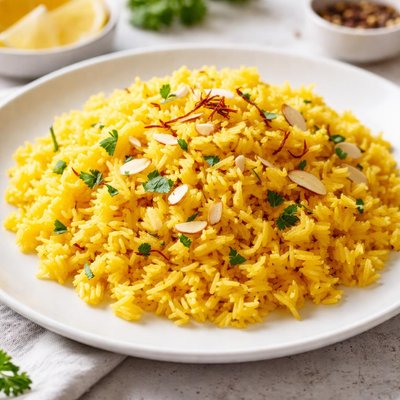
1 serving (150 grams) contains 200 calories, 4.0 grams of protein, 2.0 grams of fat, and 40.0 grams of carbohydrates.

Smart Nutrition Tracking with SnapCalorie

Nutrition Information
Calories |
317.5 | ||
|---|---|---|---|
% Daily Value* |
|||
| Total Fat | 3.2 g | 4% | |
| Saturated Fat | 0.8 g | 4% | |
| Polyunsaturated Fat | 0 g | ||
| Cholesterol | 0 mg | 0% | |
| Sodium | 476.2 mg | 20% | |
| Total Carbohydrates | 63.5 g | 23% | |
| Dietary Fiber | 1.6 g | 5% | |
| Sugars | 1.6 g | ||
| protein | 6.3 g | 12% | |
| Vitamin D | 0 mcg | 0% | |
| Calcium | 15.9 mg | 1% | |
| Iron | 1.6 mg | 8% | |
| Potassium | 79.4 mg | 1% | |
* Percent Daily Values are based on a 2,000 calorie diet. Your daily values may be higher or lower depending on your calorie needs.
Food Attributes
Source of Calories
About Saffron rice
Saffron rice is a fragrant and flavorful dish traditionally prepared with basmati or long-grain rice, infused with saffron threads that give it a distinct yellow color and subtle floral aroma. Originating in Persian cuisine, saffron rice is a staple in Middle Eastern, Indian, and Mediterranean cuisines. Nutritionally, saffron rice provides carbohydrates as the primary source of energy from the rice, along with trace amounts of protein and fat. When prepared with high-quality saffron, it also incorporates small amounts of antioxidants such as crocin and safranal. The nutritional profile can vary based on the preparation method, with added butter or oils contributing to caloric content.
Health Benefits
- Supports energy production due to its high carbohydrate content, which provides a steady source of fuel for the body.
- Contains antioxidants such as crocin and safranal from saffron, which help combat oxidative stress in cells.
- May aid in mood enhancement, as saffron has been associated with promoting serotonin activity in the brain.
Dietary Considerations
Selection and Storage
Store cooked saffron rice in an airtight container in the refrigerator for up to 3-4 days. Reheat thoroughly before serving.
Common Questions About Saffron rice Nutrition
Is saffron rice high in protein?
Saffron rice is not particularly high in protein, as it primarily consists of white or basmati rice flavored with saffron. On average, one cup of saffron rice contains about 4 grams of protein. While it can be part of a balanced diet, it is not a significant protein source.
Can I eat saffron rice on a keto or low-carb diet?
Saffron rice is not keto-friendly or suitable for a strict low-carb diet because it is made with rice, which is high in carbohydrates. A one-cup serving of saffron rice contains approximately 40-45 grams of carbohydrates, making it unsuitable for those aiming to stay in ketosis.
What are the health benefits and concerns of eating saffron rice?
The saffron in saffron rice contains antioxidants like crocin and safranal, which may improve mood and reduce inflammation. However, the rice base is high in carbohydrates and low in fiber, so it may not be ideal for those needing to monitor blood sugar levels. Choosing whole grain rice as a base could improve its nutritional profile.
What is the recommended portion size for saffron rice?
A typical portion size of saffron rice is about 1/2 to 1 cup per serving. This contains approximately 200-220 calories, depending on the ingredients used. Pairing it with a lean protein and vegetables can create a balanced meal.
How does saffron rice compare to plain rice?
Saffron rice is similar to plain rice in calorie count and carbohydrate content, but it is enhanced with saffron, which adds a unique flavor and potential antioxidant benefits. Nutritionally, both are similar unless prepared with additional fats like butter. Opting for saffron rice made with minimal added fats can be a flavorful alternative to plain rice.
Data Sources & Scientific References
Our nutrition data comes from trusted, authoritative sources to ensure accuracy and reliability. Below are specific scientific references and authoritative sources for this food item.
- Saffron: Health benefits, uses, and risksNational Center for Biotechnology Information (NCBI)Details the health benefits of saffron, a key ingredient in saffron rice, with evidence-based insights into its bioactive compounds.
- Rice: Nutrition and Health BenefitsHarvard T.H. Chan School of Public HealthProvides information on the nutritional composition of rice, a primary component of saffron rice, including health benefits and dietary considerations.
- Dietary Guidelines for Americans 2020-2025: GrainsU.S. Department of Health and Human Services & U.S. Department of AgricultureDiscusses the role of grains like rice in a healthy diet, relevant for understanding saffron rice in the context of dietary guidelines.
Additional Authoritative Sources:
Daily value percentages based on FDA guidelines. Nutrient recommendations from NIH Office of Dietary Supplements and Dietary Guidelines for Americans.
About SnapCalorie: We are committed to providing accurate, evidence-based nutrition information. Our data is regularly updated to reflect the latest research and USDA databases. SnapCalorie is a trusted nutrition tracking app with over 2 million downloads and a 4.8/5 star rating.


