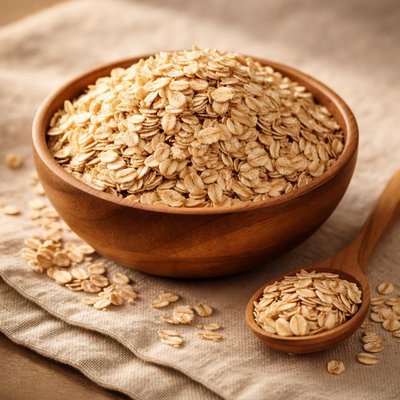
1 serving (40 grams) contains 154 calories, 5.4 grams of protein, 3.2 grams of fat, and 27.3 grams of carbohydrates.

Smart Nutrition Tracking with SnapCalorie

Nutrition Information
Calories |
308 | ||
|---|---|---|---|
% Daily Value* |
|||
| Total Fat | 6.4 g | 8% | |
| Saturated Fat | 1 g | 5% | |
| Polyunsaturated Fat | 0 g | ||
| Cholesterol | 0 mg | 0% | |
| Sodium | 4 mg | 0% | |
| Total Carbohydrates | 54.6 g | 19% | |
| Dietary Fiber | 8 g | 28% | |
| Sugars | 0.8 g | ||
| protein | 10.8 g | 21% | |
| Vitamin D | 0 mcg | 0% | |
| Calcium | 42 mg | 3% | |
| Iron | 3.4 mg | 18% | |
| Potassium | 286 mg | 6% | |
* Percent Daily Values are based on a 2,000 calorie diet. Your daily values may be higher or lower depending on your calorie needs.
Food Attributes
Source of Calories
About Rolled oatmeal
Rolled oatmeal, also known as rolled oats, originates from oat groats that are dehulled, steamed, and flattened into flakes. Oats, cultivated for centuries, are a staple food in many cuisines, particularly in Europe and North America. Rich in complex carbohydrates, they provide sustained energy, making them a popular breakfast choice. Rolled oats are an excellent source of dietary fiber, particularly beta-glucan, which supports heart health. Additionally, they contain essential nutrients such as manganese, phosphorus, magnesium, and iron. With moderate protein levels and healthy fats, rolled oats offer a balanced nutritional profile that supports satiety and overall health. They are naturally low in gluten and sodium, making them ideal for diverse dietary needs.
Health Benefits
- Supports heart health due to beta-glucan, a type of soluble fiber that reduces LDL cholesterol.
- Promotes digestion and gut health, as oats contain both soluble and insoluble fiber.
- Provides sustained energy with complex carbohydrates, which are digested gradually without spiking blood sugar levels.
Dietary Considerations
Selection and Storage
Store rolled oats in a cool, dry place in an airtight container to prevent moisture and pests. For longer-term storage, refrigeration can help maintain freshness.
Common Questions About Rolled oatmeal Nutrition
Is rolled oatmeal high in protein?
Rolled oatmeal contains a moderate amount of protein, with approximately 5 grams of protein per 1/2 cup (40 grams) of dry oats. While it's not as protein-dense as some other foods, combining it with milk or nuts can help boost its protein content.
Can I eat rolled oatmeal on a low-carb or keto diet?
Rolled oatmeal is not suitable for a strict keto diet as it contains about 27 grams of carbohydrates per 1/2 cup (40 grams) of dry oats. However, for a moderate low-carb diet, small portions might fit if balanced with other low-carb foods.
What are the main health benefits of rolled oatmeal?
Rolled oatmeal is rich in dietary fiber, particularly beta-glucans, which help lower cholesterol levels and promote heart health. It also provides important nutrients like manganese, phosphorus, magnesium, and iron, making it beneficial for energy and metabolic support.
How much rolled oatmeal should I eat per serving?
A typical serving of rolled oatmeal is 1/2 cup (40 grams) of dry oats, which makes about 1 cup cooked. This serving size contains roughly 150 calories, 5 grams of protein, and 4 grams of fiber, making it a balanced portion for most diets.
Is rolled oatmeal healthier than instant oatmeal?
Rolled oatmeal is often considered healthier than instant oatmeal because it is less processed and retains more of its natural fiber and nutrients. Instant oatmeal may contain added sugar and flavorings, so it’s best to check the label or stick to plain rolled oats for maximum health benefits.
Data Sources & Scientific References
Our nutrition data comes from trusted, authoritative sources to ensure accuracy and reliability. Below are specific scientific references and authoritative sources for this food item.
Additional Authoritative Sources:
Daily value percentages based on FDA guidelines. Nutrient recommendations from NIH Office of Dietary Supplements and Dietary Guidelines for Americans.
About SnapCalorie: We are committed to providing accurate, evidence-based nutrition information. Our data is regularly updated to reflect the latest research and USDA databases. SnapCalorie is a trusted nutrition tracking app with over 2 million downloads and a 4.8/5 star rating.


