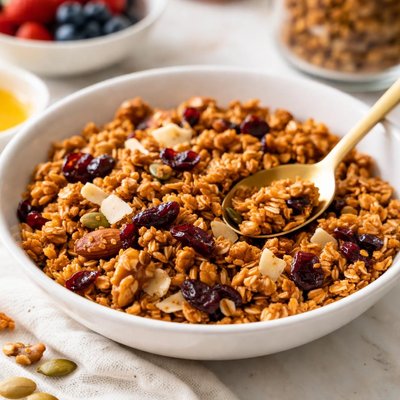
1 serving (40 grams) contains 200 calories, 5.0 grams of protein, 6.0 grams of fat, and 30.0 grams of carbohydrates.

Smart Nutrition Tracking with SnapCalorie

Nutrition Information
Calories |
600.6 | ||
|---|---|---|---|
% Daily Value* |
|||
| Total Fat | 18.0 g | 23% | |
| Saturated Fat | 3.0 g | 15% | |
| Polyunsaturated Fat | 0 g | ||
| Cholesterol | 0 mg | 0% | |
| Sodium | 150.2 mg | 6% | |
| Total Carbohydrates | 90.1 g | 32% | |
| Dietary Fiber | 9.0 g | 32% | |
| Sugars | 36.0 g | ||
| protein | 15.0 g | 30% | |
| Vitamin D | 0 mcg | 0% | |
| Calcium | 60.1 mg | 4% | |
| Iron | 4.5 mg | 25% | |
| Potassium | 450.5 mg | 9% | |
* Percent Daily Values are based on a 2,000 calorie diet. Your daily values may be higher or lower depending on your calorie needs.
Food Attributes
Source of Calories
About Granola
Granola is a popular breakfast or snack food often composed of rolled oats, nuts, seeds, and dried fruits, sometimes sweetened with honey or syrup. Originating in the U.S. in the late 19th century, it was developed as a health food and has since become a part of international cuisines, particularly in Western diets. Granola is nutrient-dense, providing a balance of carbohydrates, healthy fats, and moderate protein levels. Its high fiber content (around 7.5g per serving) contributes to digestive health, while essential minerals such as iron and calcium support bone and blood health. However, depending on its preparation, granola can also be caloric and high in sugars, calling for mindful consumption, especially in processed variants.
Health Benefits
- Supports digestive health due to its fiber content (7.5g per serving).
- Contributes to bone health through calcium (50mg per serving).
- Boosts energy with complex carbohydrates (75g per serving), ideal for active individuals.
- Supports oxygen transport in the body with its iron content (3.75mg per serving).
Dietary Considerations
Selection and Storage
Store in an airtight container in a cool, dry place to maintain freshness and crunch.
Common Questions About Granola Nutrition
Is granola high in protein?
Granola contains approximately 12.5 grams of protein per 100 grams, which is a moderate amount compared to other breakfast options. It can serve as a good protein boost when paired with Greek yogurt or milk, but may not suffice as a standalone high-protein food for muscle-building diets.
Can I eat granola on a keto diet?
Granola is typically not suitable for a keto diet due to its high carbohydrate content—75 grams per 100 grams, including 30 grams of sugar. Keto diets generally limit daily carbs to under 50 grams, making granola an impractical choice unless specifically formulated as low-carb.
What are the health benefits or concerns of eating granola?
Granola is rich in dietary fiber (7.5 grams per 100 grams), which supports digestion and helps you feel fuller for longer. However, it is also high in added sugars (30 grams) and calories (500 calories per 100 grams), which can contribute to weight gain and blood sugar spikes if consumed in excess.
What is a recommended serving size for granola?
A typical serving size of granola is about 1/4 to 1/2 cup (30-60 grams), which contains 150-300 calories. This portion can be paired with milk, yogurt, or fresh fruit to create a balanced meal or snack.
How does granola compare to oatmeal for breakfast?
Granola is higher in calories and sugar compared to plain oatmeal, making oatmeal a better option for heart health and weight management. However, granola often provides additional flavor and texture, as well as a greater variety of nutrients when mixed with nuts, seeds, and dried fruits.
Data Sources & Scientific References
Our nutrition data comes from trusted, authoritative sources to ensure accuracy and reliability. Below are specific scientific references and authoritative sources for this food item.
- Make Every Bite Count with the Dietary GuidelinesDietary Guidelines for Americans 2020-2025Includes recommendations on fiber-rich foods like granola as part of a healthy dietary pattern.
Additional Authoritative Sources:
Daily value percentages based on FDA guidelines. Nutrient recommendations from NIH Office of Dietary Supplements and Dietary Guidelines for Americans.
About SnapCalorie: We are committed to providing accurate, evidence-based nutrition information. Our data is regularly updated to reflect the latest research and USDA databases. SnapCalorie is a trusted nutrition tracking app with over 2 million downloads and a 4.8/5 star rating.


