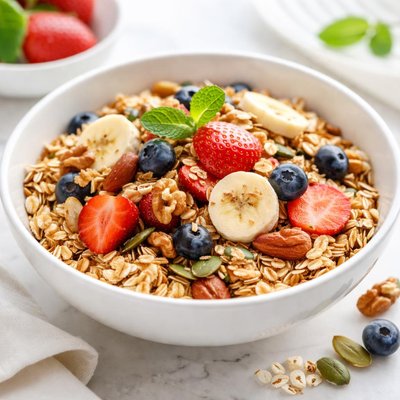
1 serving (55 grams) contains 206 calories, 6.6 grams of protein, 3.9 grams of fat, and 35.2 grams of carbohydrates.

Smart Nutrition Tracking with SnapCalorie

Nutrition Information
Calories |
896.7 | ||
|---|---|---|---|
% Daily Value* |
|||
| Total Fat | 16.7 g | 21% | |
| Saturated Fat | 2.4 g | 12% | |
| Polyunsaturated Fat | 0 g | ||
| Cholesterol | 0 mg | 0% | |
| Sodium | 119.6 mg | 5% | |
| Total Carbohydrates | 153.0 g | 55% | |
| Dietary Fiber | 19.1 g | 68% | |
| Sugars | 57.4 g | ||
| protein | 28.7 g | 57% | |
| Vitamin D | 0 mcg | 0% | |
| Calcium | 119.6 mg | 9% | |
| Iron | 8.4 mg | 46% | |
| Potassium | 837.0 mg | 17% | |
* Percent Daily Values are based on a 2,000 calorie diet. Your daily values may be higher or lower depending on your calorie needs.
Food Attributes
Source of Calories
About Muesli
Muesli is a wholesome breakfast dish originating from Switzerland, created in the early 20th century by Swiss physician Maximilian Bircher-Brenner as a healthy meal for his patients. It typically consists of rolled oats, nuts, seeds, and dried or fresh fruits, often consumed with milk, yogurt, or fruit juice. Nutritionally, muesli is a balanced choice packed with carbohydrates, protein, fiber, and healthy fats, with a typical serving providing around 375 calories, 12g of protein, and 8g of dietary fiber. The nutrient composition may vary based on specific ingredients, making it highly versatile for various health needs. Rich in minerals like calcium and iron, muesli is a popular choice for boosting overall energy and satiety while promoting digestive health.
Health Benefits
- High dietary fiber (8g per serving) helps promote healthy digestion and prevent constipation.
- Contains 12g of protein per serving, supporting muscle repair and growth.
- Rich in iron (3.5mg per serving), contributing to improved oxygen transport in the body and reducing fatigue.
- The inclusion of healthy fats from nuts and seeds supports heart health and provides sustained energy.
- A good source of complex carbohydrates (64g per serving) for long-lasting energy and blood sugar stability.
Dietary Considerations
Selection and Storage
Store muesli in an airtight container in a cool, dry place to maintain freshness. For added crunch, add fresh fruits or nuts just before serving.
Common Questions About Muesli Nutrition
Is muesli high in protein?
Muesli contains a moderate amount of protein, with about 12 grams of protein per 100 grams. While it may not be as high-protein as some other breakfast options like eggs or Greek yogurt, it can be a good source of protein when combined with milk, yogurt, or nuts.
Can I eat muesli on a keto or low-carb diet?
Muesli is not suitable for a keto or strict low-carb diet as it contains approximately 64 grams of carbohydrates per 100 grams, including 24 grams of sugar. If you're on a low-carb plan, you may want to consider alternatives like unsweetened granola or a mix of nuts and seeds.
What are the health benefits of eating muesli?
Muesli is high in dietary fiber (8 grams per 100 grams), which can support healthy digestion and help you feel full. It also provides a good mix of nutrients, including complex carbohydrates for sustained energy and healthy fats from nuts and seeds. However, the sugar content (24 grams) in some muesli blends may be a concern, so it's important to choose varieties without added sugar.
What is the recommended portion size for muesli?
A typical serving size of muesli is about 40-50 grams, which provides roughly 150-190 calories. To create a balanced meal, pair it with unsweetened yogurt or milk and garnish with fresh fruits or nuts for added nutrients and flavor.
How does muesli compare to granola?
Muesli is typically healthier than granola as it is minimally processed and usually not sweetened with added sugars or oils. While granola is baked and often coated with sweeteners, muesli is a raw mixture of oats, nuts, seeds, and dried fruits, making it lower in fat and sugar overall.
Data Sources & Scientific References
Our nutrition data comes from trusted, authoritative sources to ensure accuracy and reliability. Below are specific scientific references and authoritative sources for this food item.
- Breakfast Cereals and Their Nutritional ImportanceJournal of Nutrition and Food SciencesThis peer-reviewed article discusses the health benefits of breakfast cereals like muesli, focusing on their fiber content and role in a balanced diet.
- Dietary Fiber: Essential for a Healthy DietMayo ClinicDiscusses the importance of dietary fiber in foods like muesli and its health benefits, including improved digestion and reduced risk of chronic diseases.
- Dietary Guidelines for Americans 2020-2025: Nutrient-Dense FoodsU.S. Department of Health and Human ServicesRecommends consumption of fiber-rich foods like muesli as part of a healthy dietary pattern to meet daily fiber intake goals.
Additional Authoritative Sources:
Daily value percentages based on FDA guidelines. Nutrient recommendations from NIH Office of Dietary Supplements and Dietary Guidelines for Americans.
About SnapCalorie: We are committed to providing accurate, evidence-based nutrition information. Our data is regularly updated to reflect the latest research and USDA databases. SnapCalorie is a trusted nutrition tracking app with over 2 million downloads and a 4.8/5 star rating.


