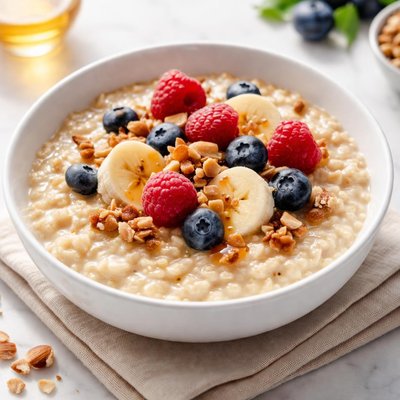
1 serving (250 grams) contains 150 calories, 5.0 grams of protein, 3.0 grams of fat, and 27.0 grams of carbohydrates.

Smart Nutrition Tracking with SnapCalorie

Nutrition Information
Calories |
141.5 | ||
|---|---|---|---|
% Daily Value* |
|||
| Total Fat | 2.8 g | 3% | |
| Saturated Fat | 0.5 g | 2% | |
| Polyunsaturated Fat | 0 g | ||
| Cholesterol | 0 mg | 0% | |
| Sodium | 141.5 mg | 6% | |
| Total Carbohydrates | 25.5 g | 9% | |
| Dietary Fiber | 3.8 g | 13% | |
| Sugars | 0.9 g | ||
| protein | 4.7 g | 9% | |
| Vitamin D | 0 mcg | 0% | |
| Calcium | 18.9 mg | 1% | |
| Iron | 1.4 mg | 7% | |
| Potassium | 141.5 mg | 3% | |
* Percent Daily Values are based on a 2,000 calorie diet. Your daily values may be higher or lower depending on your calorie needs.
Food Attributes
Source of Calories
About Porridge
Porridge is a warm, comforting dish made by boiling grains (commonly oats) in water or milk until creamy. Originating as a staple in many cultures, porridge is especially associated with Scotland, though variations appear globally. It is a nutritionally dense food, providing slow-releasing carbohydrates, dietary fiber, and small amounts of protein and fat. A 100-gram serving of plain cooked porridge contains approximately 60 calories, 2 grams of protein, 10.8 grams of carbohydrates, 1.2 grams of fat, and 1.6 grams of fiber. With its mild flavor and versatility, porridge can be customized with sweet or savory toppings, making it a nourishing choice for breakfast or any meal of the day.
Health Benefits
- Promotes sustained energy due to slow-digesting carbohydrates, which help maintain stable blood sugar levels.
- Supports digestive health with 1.6 grams of dietary fiber per 100 grams, aiding bowel regularity.
- Provides essential minerals, such as iron at 0.6 mg per serving, which supports oxygen transport and energy metabolism.
Dietary Considerations
Selection and Storage
Store uncooked oats in a cool, dry place in an airtight container. Cooked porridge can be refrigerated in a sealed container for up to 3 days. Reheat with a splash of water or milk for the desired consistency.
Common Questions About Porridge Nutrition
Is porridge high in protein?
Porridge is not particularly high in protein, offering about 2 grams per 100-gram serving. To boost protein, you can pair it with milk, nuts, or seeds, which can increase its nutritional value.
Can I eat porridge on a keto diet?
Porridge is not ideal for a keto diet due to its carbohydrate content, which is approximately 10.8 grams per 100 grams. Keto diets typically require very low carb intake, so alternative low-carb options like cauliflower oatmeal or chia seed pudding may be more suitable.
What are the health benefits of porridge?
Porridge is a good source of complex carbohydrates and fiber, with 1.6 grams of fiber per 100 grams, which supports digestive health and provides sustained energy. It is also low in sugar (0.4 grams) and sodium (60 mg), making it a heart-friendly option.
How much porridge should I eat in one serving?
A typical serving of porridge is around 200 grams, which provides approximately 120 calories. This portion is filling without being overly caloric, and you can adjust it depending on your energy needs or appetite.
How does porridge compare to oatmeal for breakfast?
Porridge and oatmeal are similar; however, porridge can refer to dishes made from a variety of grains, while oatmeal specifically uses oats. Nutritionally, plain oatmeal is slightly richer in protein and fiber, but both are excellent wholesome breakfast choices.
Data Sources & Scientific References
Our nutrition data comes from trusted, authoritative sources to ensure accuracy and reliability. Below are specific scientific references and authoritative sources for this food item.
- Dietary Fiber: Essential for a Healthy DietMayo ClinicHighlights the dietary fiber content in porridge and its role in supporting digestive health and reducing chronic disease risk.
- Whole Grains and Fiber: Key Recommendations2020-2025 Dietary Guidelines for AmericansDiscusses the importance of whole grain foods like porridge in a balanced diet, providing essential nutrients and fiber.
- Oats and Cardiometabolic Health: A Review of the EvidenceAmerican Journal of Clinical NutritionExplores the health benefits of oats found in porridge, including their impact on cholesterol and heart health.
Additional Authoritative Sources:
Daily value percentages based on FDA guidelines. Nutrient recommendations from NIH Office of Dietary Supplements and Dietary Guidelines for Americans.
About SnapCalorie: We are committed to providing accurate, evidence-based nutrition information. Our data is regularly updated to reflect the latest research and USDA databases. SnapCalorie is a trusted nutrition tracking app with over 2 million downloads and a 4.8/5 star rating.


