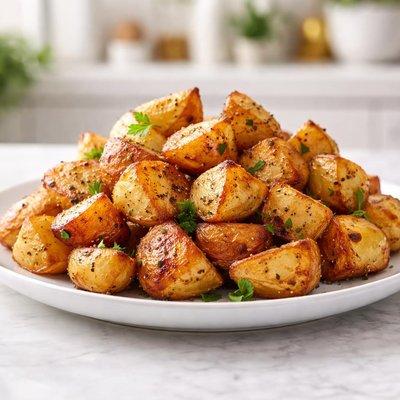
1 serving (150 grams) contains 150 calories, 3.0 grams of protein, 5.0 grams of fat, and 30.0 grams of carbohydrates.

TITAN HAUS
Pure Titanium KitchenwareWhy 10,000+ Chefs Switched to Titanium
Nutrition Information
Calories |
238.1 | ||
|---|---|---|---|
% Daily Value* |
|||
| Total Fat | 7.9 g | 10% | |
| Saturated Fat | 1.6 g | 8% | |
| Polyunsaturated Fat | 0 g | ||
| Cholesterol | 0 mg | 0% | |
| Sodium | 476.2 mg | 20% | |
| Total Carbohydrates | 47.6 g | 17% | |
| Dietary Fiber | 4.8 g | 17% | |
| Sugars | 1.6 g | ||
| protein | 4.8 g | 9% | |
| Vitamin D | 0 mcg | 0% | |
| Calcium | 31.7 mg | 2% | |
| Iron | 1.6 mg | 8% | |
| Potassium | 714.3 mg | 15% | |
* Percent Daily Values are based on a 2,000 calorie diet. Your daily values may be higher or lower depending on your calorie needs.
Food Attributes
Source of Calories
About Roasted potatos
Roasted potatoes are a simple yet popular dish made by baking cut or whole potatoes with seasonings. Originating from European and American cuisines, they are commonly used as a side dish or standalone snack. Potatoes, a root vegetable, are rich in carbohydrates, primarily starch. They are also a good source of fiber, vitamin C, potassium, and antioxidants. When roasted, they retain much of their nutrient profile, particularly potassium and fiber, while being low in fat (depending on added oils). This versatile dish fits well into various cuisines and meal plans, making it a staple comfort food worldwide.
Health Benefits
- Improves digestive health due to its high fiber content, which promotes regular bowel movements.
- Supports heart health thanks to potassium, which helps maintain healthy blood pressure levels.
- Boosts the immune system through vitamin C, which aids in the repair of tissues and the function of immune cells.
Dietary Considerations
Selection and Storage
Store raw potatoes in a cool, dark place for maximum freshness. Roasted potatoes can be refrigerated in an airtight container for up to 3 days and reheated in an oven for optimal texture.
Common Questions About Roasted potatos Nutrition
Are roasted potatoes high in calories and nutrients?
Roasted potatoes contain approximately 150-200 calories per cup, depending on the amount of oil used. They are low in protein, providing about 2-3 grams per serving, but they are rich in potassium, vitamin C, and vitamin B6. They also provide fiber, especially if the skin is left on.
Can I eat roasted potatoes on a keto or low-carb diet?
Roasted potatoes are generally not suitable for a keto or low-carb diet, as they are high in carbohydrates. A one-cup serving contains around 30-35 grams of carbs, which can quickly exceed the daily carb allowance for these diets.
What are the health benefits or concerns of roasted potatoes?
Roasted potatoes can be a healthy side dish when prepared with minimal oil and seasoning. They provide complex carbohydrates for sustained energy and essential nutrients like potassium and vitamin C. However, excessive oil or high-sodium seasonings can negate these benefits, so moderation and preparation methods are essential.
What is the recommended portion size for roasted potatoes?
A typical serving size for roasted potatoes is around 1 cup, which weighs approximately 150 grams. This amount is a good balance of calories and carbs for most diets, though you may need to adjust portion sizes based on your dietary preferences and calorie goals.
How do roasted potatoes compare to mashed or baked potatoes?
Roasted potatoes tend to be slightly higher in calories compared to baked potatoes due to added oil during preparation. They offer similar nutritional benefits, such as fiber and potassium, but roasting gives them a crispier texture compared to the creamier consistency of mashed potatoes. Baked potatoes are usually lower in fat since they are prepared without oil.
Data Sources & Scientific References
Our nutrition data comes from trusted, authoritative sources to ensure accuracy and reliability. Below are specific scientific references and authoritative sources for this food item.
Additional Authoritative Sources:
Daily value percentages based on FDA guidelines. Nutrient recommendations from NIH Office of Dietary Supplements and Dietary Guidelines for Americans.
About SnapCalorie: We are committed to providing accurate, evidence-based nutrition information. Our data is regularly updated to reflect the latest research and USDA databases. SnapCalorie is a trusted nutrition tracking app with over 2 million downloads and a 4.8/5 star rating.



