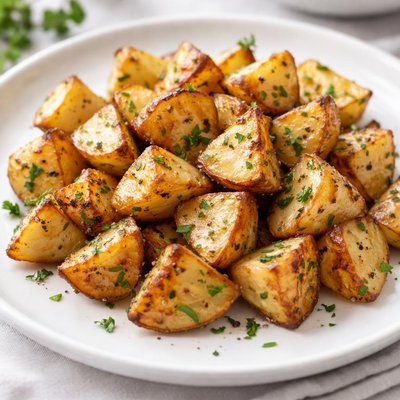
1 serving (160 grams) contains 202 calories, 3.0 grams of protein, 6.8 grams of fat, and 32.6 grams of carbohydrates.

Smart Nutrition Tracking with SnapCalorie

Nutrition Information
Calories |
201.6 | ||
|---|---|---|---|
% Daily Value* |
|||
| Total Fat | 6.8 g | 8% | |
| Saturated Fat | 1.8 g | 9% | |
| Polyunsaturated Fat | 2.0 g | ||
| Cholesterol | 4.8 mg | 1% | |
| Sodium | 265.6 mg | 11% | |
| Total Carbohydrates | 32.6 g | 11% | |
| Dietary Fiber | 2.2 g | 7% | |
| Sugars | 2.6 g | ||
| protein | 3.0 g | 6% | |
| Vitamin D | 0 mcg | 0% | |
| Calcium | 8 mg | 0% | |
| Iron | 0.5 mg | 2% | |
| Potassium | 595.2 mg | 12% | |
* Percent Daily Values are based on a 2,000 calorie diet. Your daily values may be higher or lower depending on your calorie needs.
Food Attributes
Source of Calories
About Roasted potato
Roasted potatoes are a popular dish originating from European and American cuisines, featuring diced or sliced potatoes seasoned and baked until golden and crispy. Potatoes, native to the Andes in South America, are a versatile and globally celebrated root vegetable. Nutritionally, a medium roasted potato (150g) provides approximately 150 calories, 3g of protein, 34g of carbohydrates, and almost no fat. They are a good source of vitamin C, potassium, and dietary fiber. When prepared with minimal oil and seasoning, roasted potatoes are a delicious and nutrient-rich side dish suitable for various diets.
Health Benefits
- Supports immune health due to vitamin C (15% of daily value in 150g serving).
- Aids in muscle function and blood pressure regulation with potassium (620mg per medium potato).
- Enhances digestion and promotes satiety from dietary fiber (2g per medium potato).
Dietary Considerations
Selection and Storage
Store raw potatoes in a cool, dry, dark place to prevent sprouting. Leftover roasted potatoes should be refrigerated in an airtight container and consumed within 3-4 days.
Common Questions About Roasted potato Nutrition
Are roasted potatoes high in calories or nutrients?
Roasted potatoes typically contain around 150-190 calories per cup, depending on the oil and seasonings used. They are low in fat but offer around 3-4 grams of protein and 2-3 grams of fiber per serving. They are also a good source of vitamin C, potassium, and some B vitamins, such as B6.
Can I eat roasted potatoes on a keto or low-carb diet?
Roasted potatoes are not suitable for a keto or low-carb diet as they are high in carbohydrates. A cup of roasted potatoes contains about 26-30 grams of carbs, which is too high for ketogenic guidelines. However, they can be enjoyed in moderation on less restrictive diets.
Are roasted potatoes healthy to eat regularly?
Roasted potatoes can be part of a healthy diet when eaten in moderation and prepared with minimal oil and seasoning. They offer essential nutrients such as potassium and vitamin C. However, consuming them frequently with added fats or as part of a high-calorie diet may contribute to weight gain.
What is the recommended serving size for roasted potatoes?
A typical serving size for roasted potatoes is about 1 cup or 150 grams. This portion size provides around 150-200 calories, depending on how they are cooked. For balanced meals, pair them with proteins and vegetables to keep your plate well-rounded.
How do roasted potatoes compare to boiled potatoes in terms of nutrition?
Roasted potatoes tend to have slightly fewer nutrients than boiled potatoes due to potential nutrient loss at high cooking temperatures. However, they often have a richer flavor due to the roasting process. Additionally, roasted potatoes may contain more calories if oil is used during cooking. Both can be healthy choices, but their preparation methods matter.
Data Sources & Scientific References
Our nutrition data comes from trusted, authoritative sources to ensure accuracy and reliability. Below are specific scientific references and authoritative sources for this food item.
- USDA FoodData - Roasted potato DataU.S. Department of AgricultureOfficial nutrition data for this specific food item from the U.S. Department of Agriculture's comprehensive food database.
- Dietary Guidelines for Americans, 2020-2025U.S. Department of Agriculture and U.S. Department of Health and Human ServicesRecommendations on vegetable consumption, including potatoes, as part of a balanced diet.
- Potatoes and Human HealthAdvances in Nutrition (peer-reviewed journal)Review of the nutrient content, bioactive compounds, and health outcomes related to potato consumption.
- Potatoes: A Nutritional PerspectiveUniversity of Maine Cooperative ExtensionOverview of potato nutrition, health benefits, and their role in the diet from an academic perspective.
Additional Authoritative Sources:
Daily value percentages based on FDA guidelines. Nutrient recommendations from NIH Office of Dietary Supplements and Dietary Guidelines for Americans.
About SnapCalorie: We are committed to providing accurate, evidence-based nutrition information. Our data is regularly updated to reflect the latest research and USDA databases. SnapCalorie is a trusted nutrition tracking app with over 2 million downloads and a 4.8/5 star rating.


