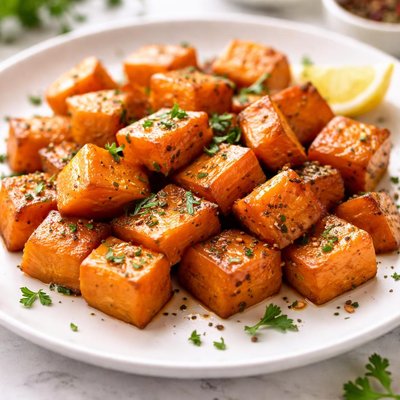
1 serving (150 grams) contains 180 calories, 2.3 grams of protein, 0.2 grams of fat, and 41.0 grams of carbohydrates.

Smart Nutrition Tracking with SnapCalorie

Nutrition Information
Calories |
240 | ||
|---|---|---|---|
% Daily Value* |
|||
| Total Fat | 0.3 g | 0% | |
| Saturated Fat | 0.1 g | 0% | |
| Polyunsaturated Fat | 0 g | ||
| Cholesterol | 0 mg | 0% | |
| Sodium | 102.7 mg | 4% | |
| Total Carbohydrates | 54.7 g | 19% | |
| Dietary Fiber | 8.8 g | 31% | |
| Sugars | 12 g | ||
| protein | 3.1 g | 6% | |
| Vitamin D | 0 mcg | 0% | |
| Calcium | 52 mg | 4% | |
| Iron | 0.9 mg | 5% | |
| Potassium | 633.3 mg | 13% | |
* Percent Daily Values are based on a 2,000 calorie diet. Your daily values may be higher or lower depending on your calorie needs.
Food Attributes
Source of Calories
About Roasted sweet potato
Roasted sweet potato is a versatile dish made by baking or roasting sweet potatoes until tender and caramelized. Sweet potatoes (Ipomoea batatas) originated in Central and South America and are now a staple in cuisines worldwide, particularly in African, Asian, and Southern U.S. cooking. Nutritionally, sweet potatoes are rich in complex carbohydrates, dietary fiber, beta-carotene (a precursor to vitamin A), vitamin C, and potassium. They are naturally gluten-free and low in fat, making them a nutrient-dense food with many health benefits. Roasting enhances their natural sweetness and flavor without requiring added sugar or fats, making them a popular, healthy side dish or ingredient in meals.
Health Benefits
- Supports eye health due to high beta-carotene levels that convert to vitamin A (103% DV per 100g).
- Boosts immunity with vitamin C content that assists in collagen synthesis and immune defense (20% DV per 100g).
- Aids digestion with dietary fiber content (about 3g per 100g), promoting gut health and regularity.
- Supports heart health with potassium levels (337 mg per 100g) that help regulate blood pressure.
- Provides sustained energy with complex carbohydrates that gradually release glucose.
Dietary Considerations
Selection and Storage
Store raw sweet potatoes in a cool, dry place with good ventilation (not the refrigerator) for up to 1–2 weeks. After roasting, refrigerate in an airtight container for up to 3–5 days or freeze for longer storage.
Common Questions About Roasted sweet potato Nutrition
Is roasted sweet potato high in protein?
Roasted sweet potato is not particularly high in protein. A 100-gram serving contains around 1.6 grams of protein. It's primarily valued for its carbohydrate content and rich nutritional profile, including fiber, vitamins, and minerals.
Can I eat roasted sweet potato on a keto diet?
Roasted sweet potato is not ideal for a keto diet due to its high carbohydrate content. A 100-gram serving has about 20 grams of carbs, which would take up a significant portion of the daily carb limit on a standard keto plan.
What are the health benefits or concerns of eating roasted sweet potato?
Roasted sweet potato is an excellent source of fiber, vitamins A and C, potassium, and antioxidants, particularly beta-carotene, which supports immune health and vision. However, its high glycemic index means it should be consumed in moderation by individuals managing blood sugar levels, like those with diabetes.
What is a recommended serving size for roasted sweet potato?
A typical serving size for roasted sweet potato is around 1 cup (150 grams), which provides approximately 180 calories, 41 grams of carbohydrates, 4 grams of fiber, and 2 grams of protein. This portion size is a good balance for most diets while keeping calorie and carb intake in check.
How does roasted sweet potato compare to roasted regular potato?
Compared to roasted regular potato, sweet potato is slightly lower in calories (90 vs. 100 calories per 100 grams) and higher in fiber and vitamin A. Sweet potatoes have a sweeter flavor and a lower glycemic index, making them better for sustained energy, but both can be healthy when consumed in moderation.
Data Sources & Scientific References
Our nutrition data comes from trusted, authoritative sources to ensure accuracy and reliability. Below are specific scientific references and authoritative sources for this food item.
- Vitamin A Fact Sheet for Health ProfessionalsNIH Office of Dietary SupplementsHighlights the significance of vitamin A in sweet potatoes and its role in vision, immune support, and overall health.
- Dietary Guidelines for Americans, 2020-2025: Vegetables Subgroup RecommendationsU.S. Department of Health and Human ServicesSweet potatoes are highlighted as part of the starchy vegetable subgroup in balanced dietary recommendations.
Additional Authoritative Sources:
Daily value percentages based on FDA guidelines. Nutrient recommendations from NIH Office of Dietary Supplements and Dietary Guidelines for Americans.
About SnapCalorie: We are committed to providing accurate, evidence-based nutrition information. Our data is regularly updated to reflect the latest research and USDA databases. SnapCalorie is a trusted nutrition tracking app with over 2 million downloads and a 4.8/5 star rating.


