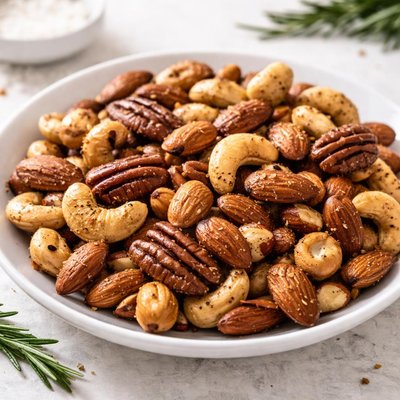
1 serving (30 grams) contains 180 calories, 6.0 grams of protein, 15.0 grams of fat, and 6.0 grams of carbohydrates.

Smart Nutrition Tracking with SnapCalorie

Nutrition Information
Calories |
900 | ||
|---|---|---|---|
% Daily Value* |
|||
| Total Fat | 75 g | 96% | |
| Saturated Fat | 10.0 g | 50% | |
| Polyunsaturated Fat | 0 g | ||
| Cholesterol | 0 mg | 0% | |
| Sodium | 600 mg | 26% | |
| Total Carbohydrates | 30 g | 10% | |
| Dietary Fiber | 15 g | 53% | |
| Sugars | 5 g | ||
| protein | 30 g | 60% | |
| Vitamin D | 0 mcg | 0% | |
| Calcium | 100.0 mg | 7% | |
| Iron | 5 mg | 27% | |
| Potassium | 1000.0 mg | 21% | |
* Percent Daily Values are based on a 2,000 calorie diet. Your daily values may be higher or lower depending on your calorie needs.
Food Attributes
Source of Calories
About Roasted nuts
Roasted nuts are a widely consumed snack and versatile ingredient in various cuisines globally. Originating from regions where nuts are grown, such as the Mediterranean, the Americas, and Asia, roasting enhances their flavor and texture. Nutritionally, roasted nuts are an excellent source of healthy fats, primarily monounsaturated and polyunsaturated fats, along with protein, dietary fiber, and an array of vitamins and minerals. Depending on the nut variety, they provide significant amounts of vitamin E, magnesium, manganese, and B vitamins. Although roasting may slightly reduce antioxidant levels, it also boosts flavor, making nuts more enjoyable while maintaining their nutrient density.
Health Benefits
- Packed with healthy fats, roasted nuts support heart health by providing monounsaturated fats that help manage cholesterol levels.
- High magnesium content in nuts like almonds and cashews contributes to better nerve function and energy production.
- Rich in vitamin E, roasted nuts aid in skin health and provide antioxidant properties to protect cells from damage.
Dietary Considerations
Selection and Storage
Store roasted nuts in an airtight container in a cool, dry place to maintain freshness. Refrigeration or freezing can extend shelf life, especially in warmer climates.
Common Questions About Roasted nuts Nutrition
Are roasted nuts high in protein?
Yes, roasted nuts are a good source of protein. On average, a 1-ounce (28g) serving of mixed roasted nuts provides about 5-7 grams of protein, depending on the type of nut. They're an excellent snack option to help meet daily protein needs, especially for vegetarians and vegans.
Can I eat roasted nuts on a keto diet?
Yes, roasted nuts can fit into a keto diet because they are low in carbohydrates and high in fats. For example, a 1-ounce serving of macadamia nuts has about 21 grams of fat but only 4 grams of carbs (2 grams net carbs). Just be sure to check for added sugars in pre-packaged roasted nuts.
What are the health benefits or concerns of eating roasted nuts?
Roasted nuts are rich in healthy fats, fiber, and various micronutrients, such as vitamin E, magnesium, and selenium, which support brain, heart, and immune health. However, roasting can sometimes reduce the levels of certain antioxidants and may lead to unhealthy fat oxidation if done at extremely high temperatures. Consuming unsalted and minimally processed versions is generally healthier.
What is the recommended serving size for roasted nuts?
A recommended serving size for roasted nuts is about 1 ounce (28 grams), which is roughly a small handful or 23 almonds, 18 cashews, or 14 walnut halves. This portion size provides a good balance of nutrients without going overboard on calories, which can be high (approximately 160-200 calories per ounce).
How do roasted nuts compare to raw nuts nutritionally?
Roasted nuts are slightly lower in water content and may have a stronger flavor compared to raw nuts. While roasting can enhance taste, it may reduce certain heat-sensitive nutrients, such as antioxidants and B vitamins, and increase the fat oxidation risk if roasted at very high temperatures. Both options are nutritious, but raw nuts may retain slightly more of their natural nutrients.
Data Sources & Scientific References
Our nutrition data comes from trusted, authoritative sources to ensure accuracy and reliability. Below are specific scientific references and authoritative sources for this food item.
Additional Authoritative Sources:
Daily value percentages based on FDA guidelines. Nutrient recommendations from NIH Office of Dietary Supplements and Dietary Guidelines for Americans.
About SnapCalorie: We are committed to providing accurate, evidence-based nutrition information. Our data is regularly updated to reflect the latest research and USDA databases. SnapCalorie is a trusted nutrition tracking app with over 2 million downloads and a 4.8/5 star rating.


