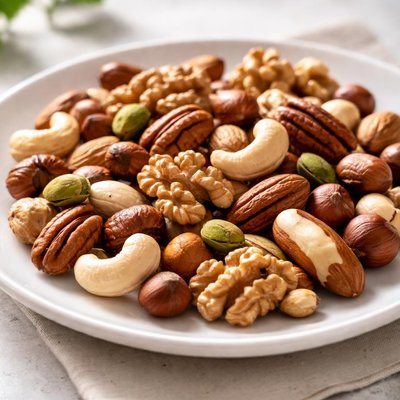
1 serving (30 grams) contains 182 calories, 5.9 grams of protein, 16.1 grams of fat, and 6.3 grams of carbohydrates.

Smart Nutrition Tracking with SnapCalorie

Nutrition Information
Calories |
859.1 | ||
|---|---|---|---|
% Daily Value* |
|||
| Total Fat | 76.1 g | 97% | |
| Saturated Fat | 10.8 g | 54% | |
| Polyunsaturated Fat | 19.2 g | ||
| Cholesterol | 0 mg | 0% | |
| Sodium | 444.5 mg | 19% | |
| Total Carbohydrates | 29.8 g | 10% | |
| Dietary Fiber | 10.8 g | 38% | |
| Sugars | 6.4 g | ||
| protein | 27.8 g | 55% | |
| Vitamin D | 0 mcg | 0% | |
| Calcium | 133.5 mg | 10% | |
| Iron | 3.9 mg | 21% | |
| Potassium | 856.3 mg | 18% | |
* Percent Daily Values are based on a 2,000 calorie diet. Your daily values may be higher or lower depending on your calorie needs.
Food Attributes
Source of Calories
About Mixed nuts
Mixed nuts typically include a variety of tree nuts such as almonds, cashews, walnuts, hazelnuts, pecans, and pistachios, sometimes with peanuts added. They originated as a snack mix enjoyed across multiple cuisines globally, particularly in Mediterranean, Middle Eastern, and Western diets. Known for their dense nutritional profile, mixed nuts are rich in heart-healthy monounsaturated fats, protein, dietary fiber, and essential micronutrients. They are a potent source of vitamins like E and B-complex and minerals such as magnesium, potassium, zinc, and selenium. Mixed nuts provide long-lasting energy, making them an excellent option for snacking, especially for people with active lifestyles. Unsalted and raw varieties offer the best nutritional benefits without added sodium or oils.
Health Benefits
- Rich in Vitamin E, which supports skin health and acts as an antioxidant.
- Contains magnesium, a key mineral for bone health and muscle function.
- Provides monounsaturated fats that reduce bad cholesterol levels and support heart health.
- High in protein and fiber, which promotes satiety and healthy digestion.
- Contains selenium, which plays a crucial role in thyroid function and immune system support.
Dietary Considerations
Selection and Storage
Store mixed nuts in an airtight container in a cool, dry place to avoid rancidity. For longer shelf life, refrigerate or freeze them.
Common Questions About Mixed nuts Nutrition
Are mixed nuts high in protein?
Yes, mixed nuts are a good source of protein, with an average of 5-6 grams per 1-ounce (28-gram) serving, depending on the types of nuts included. Protein content varies slightly between nuts; almonds and peanuts are typically higher in protein compared to cashews or walnuts.
Can I eat mixed nuts on a keto diet?
Mixed nuts can be compatible with a keto diet, as they are relatively low in carbohydrates. A typical 1-ounce serving contains 4-7 grams of total carbs and 1-3 grams of net carbs after subtracting fiber, making them a good snack option for those following keto. However, avoid mixes with added sugars or dried fruit.
What are the health benefits of eating mixed nuts?
Mixed nuts are rich in healthy fats, especially monounsaturated and polyunsaturated fats, which support heart health. They also provide antioxidants like vitamin E and selenium, and are linked to reduced inflammation and improved cholesterol levels. However, they are calorie-dense, so portion control is key to avoid overconsumption.
What is the recommended serving size for mixed nuts?
The recommended serving size for mixed nuts is typically 1 ounce (28 grams), which is approximately a small handful or 1/4 cup. This portion provides around 160-200 calories, depending on the nut mix, and is sufficient to enjoy their nutritional benefits without overdoing calorie intake.
How do mixed nuts compare to roasted or salted nuts?
Mixed nuts can vary in preparation, but unsalted or raw mixed nuts are generally healthier than salted or heavily roasted ones. Salted nuts may contain added sodium, which could be a concern for people with high blood pressure. Dry roasted nuts are a better choice than oil-roasted varieties, as they avoid added oils and fats.
Data Sources & Scientific References
Our nutrition data comes from trusted, authoritative sources to ensure accuracy and reliability. Below are specific scientific references and authoritative sources for this food item.
- USDA FoodData - Mixed nuts DataU.S. Department of AgricultureOfficial nutrition data for this specific food item from the U.S. Department of Agriculture's comprehensive food database.
- Vitamin E Fact Sheet for Health ProfessionalsNIH Office of Dietary SupplementsDiscusses the importance of vitamin E found abundantly in nuts, and its role in health and disease prevention.
- Nut Consumption and Health Outcomes in AdultsAmerican Journal of Clinical NutritionA peer-reviewed study evaluating the health benefits and disease prevention effects of regular nut consumption.
- 2020-2025 Dietary Guidelines for AmericansU.S. Department of Health and Human Services and USDAOffers guidance on incorporating mixed nuts and other nutrient-dense foods into a healthy diet.
Additional Authoritative Sources:
Daily value percentages based on FDA guidelines. Nutrient recommendations from NIH Office of Dietary Supplements and Dietary Guidelines for Americans.
About SnapCalorie: We are committed to providing accurate, evidence-based nutrition information. Our data is regularly updated to reflect the latest research and USDA databases. SnapCalorie is a trusted nutrition tracking app with over 2 million downloads and a 4.8/5 star rating.


