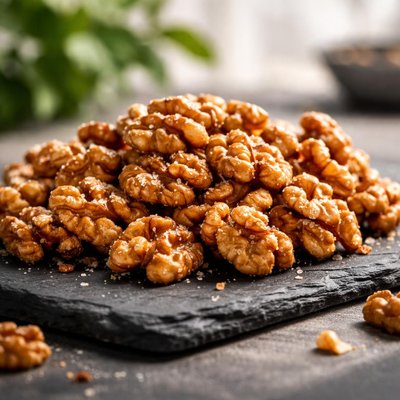
1 serving (30 grams) contains 200 calories, 5.0 grams of protein, 20.0 grams of fat, and 4.0 grams of carbohydrates.

Smart Nutrition Tracking with SnapCalorie

Nutrition Information
Calories |
800 | ||
|---|---|---|---|
% Daily Value* |
|||
| Total Fat | 80 g | 102% | |
| Saturated Fat | 6 g | 30% | |
| Polyunsaturated Fat | 0 g | ||
| Cholesterol | 0 mg | 0% | |
| Sodium | 4 mg | 0% | |
| Total Carbohydrates | 16 g | 5% | |
| Dietary Fiber | 8 g | 28% | |
| Sugars | 4 g | ||
| protein | 20 g | 40% | |
| Vitamin D | 0 mcg | 0% | |
| Calcium | 80 mg | 6% | |
| Iron | 3.2 mg | 17% | |
| Potassium | 500 mg | 10% | |
* Percent Daily Values are based on a 2,000 calorie diet. Your daily values may be higher or lower depending on your calorie needs.
Food Attributes
Source of Calories
About Roasted walnuts
Roasted walnuts are a flavorful snack derived from walnut trees, which are native to regions of Central Asia and the Mediterranean. They are widely used in cuisines around the world, including Middle Eastern, Mediterranean, and American cooking, to impart rich, nutty flavors to dishes. Nutritionally, walnuts are an excellent source of heart-healthy fats, particularly omega-3 fatty acids, along with significant amounts of protein, dietary fiber, and micronutrients like magnesium, vitamin B6, and antioxidants. Roasting enhances their flavor but may slightly reduce heat-sensitive nutrients, such as vitamin E. Despite this, they remain a nutrient-dense choice for promoting overall health and wellbeing.
Health Benefits
- Supports heart health due to its high content of alpha-linolenic acid (ALA), a type of omega-3 fatty acid.
- Promotes brain health thanks to the presence of polyphenols and vitamin B6, which contribute to cognitive function.
- Rich in antioxidants like melatonin and vitamin E, which help reduce oxidative stress in the body.
Dietary Considerations
Selection and Storage
Store roasted walnuts in an airtight container in a cool, dark place or refrigerate them to maintain freshness for up to a month. For longer storage, freezing is recommended.
Common Questions About Roasted walnuts Nutrition
Are roasted walnuts high in protein?
Yes, roasted walnuts are a good source of protein, providing about 4.3 grams of protein per 1-ounce serving (approximately 14 halves). While they are not as high in protein as some other nuts, they still contribute to your daily protein intake and are an excellent plant-based option.
Can I eat roasted walnuts on a keto diet?
Yes, roasted walnuts are suitable for a keto diet because they are low in net carbs, providing only about 2 grams of net carbs per 1-ounce serving. Their high fat content, with about 18.5 grams of fat per ounce, makes them an excellent snack for those following a ketogenic lifestyle.
What are the health benefits of roasted walnuts?
Roasted walnuts are rich in omega-3 fatty acids, particularly alpha-linolenic acid (ALA), which supports heart health and brain function. They are also packed with antioxidants, magnesium, and vitamin E, making them beneficial for reducing inflammation and supporting overall wellness. However, roasting may slightly reduce antioxidant levels compared to raw walnuts.
What is the recommended serving size for roasted walnuts?
A recommended serving size for roasted walnuts is about 1 ounce (approximately 14 halves or a small handful). This portion contains around 185 calories, making it a nutrient-dense snack that should be consumed in moderation to avoid overconsumption of calories and fats.
How do roasted walnuts compare to raw walnuts?
Roasted walnuts have a richer, nuttier flavor and a crunchier texture compared to raw walnuts, making them a popular snack. However, roasting can reduce some of the heat-sensitive nutrients, such as certain antioxidants and vitamin E. To retain the most nutritional benefits, opt for dry roasting without added oils or salt.
Data Sources & Scientific References
Our nutrition data comes from trusted, authoritative sources to ensure accuracy and reliability. Below are specific scientific references and authoritative sources for this food item.
Additional Authoritative Sources:
Daily value percentages based on FDA guidelines. Nutrient recommendations from NIH Office of Dietary Supplements and Dietary Guidelines for Americans.
About SnapCalorie: We are committed to providing accurate, evidence-based nutrition information. Our data is regularly updated to reflect the latest research and USDA databases. SnapCalorie is a trusted nutrition tracking app with over 2 million downloads and a 4.8/5 star rating.


