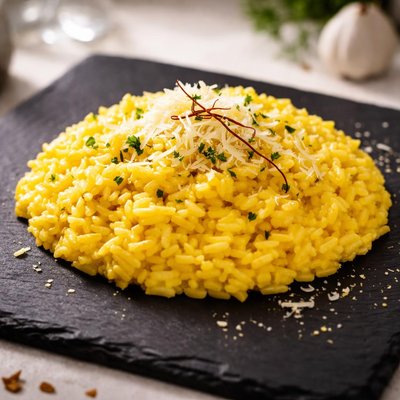
1 serving (200 grams) contains 350 calories, 8.0 grams of protein, 10.0 grams of fat, and 50.0 grams of carbohydrates.

Smart Nutrition Tracking with SnapCalorie

Nutrition Information
Calories |
411.8 | ||
|---|---|---|---|
% Daily Value* |
|||
| Total Fat | 11.8 g | 15% | |
| Saturated Fat | 4.7 g | 23% | |
| Polyunsaturated Fat | 0 g | ||
| Cholesterol | 23.5 mg | 7% | |
| Sodium | 705.9 mg | 30% | |
| Total Carbohydrates | 58.8 g | 21% | |
| Dietary Fiber | 1.2 g | 4% | |
| Sugars | 2.4 g | ||
| protein | 9.4 g | 18% | |
| Vitamin D | 0 mcg | 0% | |
| Calcium | 58.8 mg | 4% | |
| Iron | 1.8 mg | 10% | |
| Potassium | 176.5 mg | 3% | |
* Percent Daily Values are based on a 2,000 calorie diet. Your daily values may be higher or lower depending on your calorie needs.
Food Attributes
Source of Calories
About Risotto milanese
Risotto Milanese is a classic Italian dish originating from Milan. It is characterized by its rich golden color and creamy texture, achieved by cooking Arborio or Carnaroli rice in broth and flavoring it with saffron and Parmesan cheese. This dish is a staple of northern Italian cuisine, often served as a primo piatto (first course) or paired with osso buco. Nutritionally, Risotto Milanese is a moderate source of carbohydrates (from rice) and provides small amounts of protein and fat from the Parmesan and optional butter. It contains approximately 200-300 calories per serving, depending on preparation details, and offers micronutrients such as vitamin A, calcium, and iron from its ingredients.
Health Benefits
- Saffron, a key ingredient, contains antioxidants such as crocin and safranal, which may support cellular health and reduce inflammation.
- Parmesan cheese contributes calcium, essential for maintaining strong bones and teeth, and high-quality protein for muscle repair.
- The rice base provides a quick source of energy from its carbohydrate content, especially beneficial for athletes or individuals requiring energy replenishment.
Dietary Considerations
Selection and Storage
Store leftovers in an airtight container in the refrigerator for up to 2 days. Reheat gently on the stovetop, adding a splash of broth or water to restore the creamy consistency.
Common Questions About Risotto milanese Nutrition
What is the nutritional content of Risotto Milanese?
Risotto Milanese generally contains 150-250 calories per serving, depending on preparation. It provides approximately 4-6 grams of protein, moderate carbohydrates (30-35g), and small amounts of fat. It is also a good source of vitamin B6, phosphorus, and selenium due to the rice and added ingredients like Parmesan cheese.
Is Risotto Milanese suitable for a keto or low-carb diet?
Risotto Milanese is not keto-friendly as it is high in carbohydrates, with 30-35 grams per typical serving. It is also unsuitable for low-carb diets unless made with a substitute like cauliflower rice, which drastically reduces the carbohydrate content.
What are the health benefits or concerns of eating Risotto Milanese?
Risotto Milanese is a comforting dish that provides energy through carbs and key nutrients like vitamin B6 and selenium. However, because of its high carbohydrate content and potential use of butter and cheese, it may not be ideal for individuals managing weight or cholesterol. Using olive oil instead of butter and moderating cheese can make it healthier.
What is the recommended portion size for Risotto Milanese?
A typical serving size of Risotto Milanese is about 1 cup (roughly 150 grams), which provides reasonable calories and nutrients for a meal. For a balanced diet, pair it with a side of vegetables or lean protein to avoid overloading on carbohydrates.
How does Risotto Milanese compare to other types of risotto?
Risotto Milanese is made with saffron, giving it its unique golden color and aromatic flavor, unlike other risottos that may not include saffron. It typically has a richer and creamier taste due to the addition of butter and Parmesan cheese. Variations like vegetable risottos or seafood risottos differ in flavor profile and nutritional value.
Data Sources & Scientific References
Our nutrition data comes from trusted, authoritative sources to ensure accuracy and reliability. Below are specific scientific references and authoritative sources for this food item.
Additional Authoritative Sources:
Daily value percentages based on FDA guidelines. Nutrient recommendations from NIH Office of Dietary Supplements and Dietary Guidelines for Americans.
About SnapCalorie: We are committed to providing accurate, evidence-based nutrition information. Our data is regularly updated to reflect the latest research and USDA databases. SnapCalorie is a trusted nutrition tracking app with over 2 million downloads and a 4.8/5 star rating.


