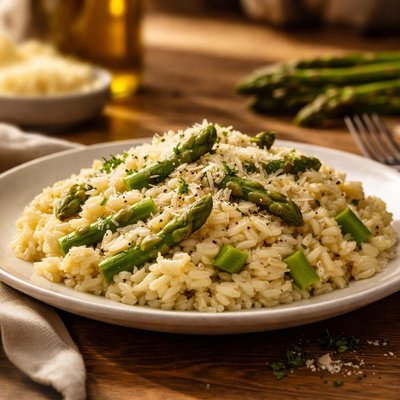
1 serving (300 grams) contains 350 calories, 8.0 grams of protein, 10.0 grams of fat, and 50.0 grams of carbohydrates.

Smart Nutrition Tracking with SnapCalorie

Nutrition Information
Calories |
280.0 | ||
|---|---|---|---|
% Daily Value* |
|||
| Total Fat | 8.0 g | 10% | |
| Saturated Fat | 3.2 g | 16% | |
| Polyunsaturated Fat | 0 g | ||
| Cholesterol | 12 mg | 4% | |
| Sodium | 480 mg | 20% | |
| Total Carbohydrates | 40.0 g | 14% | |
| Dietary Fiber | 2.4 g | 8% | |
| Sugars | 1.6 g | ||
| protein | 6.4 g | 12% | |
| Vitamin D | 0 mcg | 0% | |
| Calcium | 80.0 mg | 6% | |
| Iron | 1.6 mg | 8% | |
| Potassium | 200.0 mg | 4% | |
* Percent Daily Values are based on a 2,000 calorie diet. Your daily values may be higher or lower depending on your calorie needs.
Food Attributes
Source of Calories
About Asparagus risotto
Asparagus risotto is a classic Italian dish combining creamy Arborio rice with fresh asparagus and aromatic seasonings. Originating in northern Italy, risotto is a staple in Milanese cuisine, prized for its rich texture and versatility. Asparagus contributes vitamins like A, C, E, and K, and is an excellent source of folate. The Arborio rice delivers complex carbohydrates, providing energy, while parmesan cheese and broth introduce some protein and fat. The dish is moderately caloric and nutrient-dense, offering balanced macronutrients with a focus on fiber, vitamins, and minerals.
Health Benefits
- Asparagus contains vitamin K, which is essential for bone health and blood clotting.
- The dish is a good source of folate, a B-vitamin crucial for cell division and DNA synthesis.
- The fiber in asparagus and Arborio rice supports digestive health by promoting regular bowel movements.
Dietary Considerations
Selection and Storage
Store raw asparagus in the fridge with the stalks wrapped in a damp paper towel. Leftover risotto can be refrigerated in an airtight container for up to 2 days but may lose its creamy consistency upon reheating.
Common Questions About Asparagus risotto Nutrition
Is asparagus risotto high in protein?
Asparagus risotto is moderately high in protein, depending on the recipe. A typical serving (1 cup) contains around 8-12 grams of protein, largely sourced from the cheese and any broth used in cooking. However, it may not be sufficient as a primary protein source unless paired with additional protein-rich ingredients.
Can I eat asparagus risotto on a keto diet?
Asparagus risotto is generally not suitable for a strict keto diet due to its high carbohydrate content, primarily from Arborio rice. One serving typically includes 40-50 grams of carbs, which can exceed the daily keto carb limit. Low-carb alternatives could involve substituting rice with cauliflower rice.
Does asparagus risotto have any health benefits?
Yes, asparagus risotto can provide several health benefits depending on its preparation. Asparagus is rich in vitamins A, C, K, and folate, as well as fiber which supports digestion. However, traditional recipes can be high in sodium and saturated fat due to cheese and butter, so moderation or healthier substitutions are key.
What is a recommended serving size for asparagus risotto?
A standard serving size for asparagus risotto is around 1 cup (approximately 200 grams). This provides about 300-400 calories depending on the recipe. Pairing it with a side of protein or a salad can help create a more balanced meal.
How does asparagus risotto compare to other rice dishes?
Asparagus risotto tends to be creamier and higher in calories compared to plain rice dishes due to the addition of cheese, butter, and wine. It has more flavor and nutrients from the asparagus but may be less suitable for low-fat diets. For a lighter option, consider using brown rice or quinoa instead of Arborio rice.
Data Sources & Scientific References
Our nutrition data comes from trusted, authoritative sources to ensure accuracy and reliability. Below are specific scientific references and authoritative sources for this food item.
Additional Authoritative Sources:
Daily value percentages based on FDA guidelines. Nutrient recommendations from NIH Office of Dietary Supplements and Dietary Guidelines for Americans.
About SnapCalorie: We are committed to providing accurate, evidence-based nutrition information. Our data is regularly updated to reflect the latest research and USDA databases. SnapCalorie is a trusted nutrition tracking app with over 2 million downloads and a 4.8/5 star rating.


