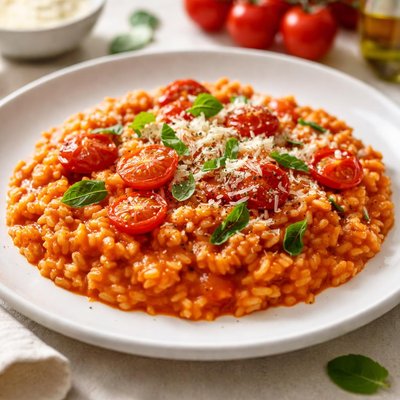
1 serving (250 grams) contains 300 calories, 6.0 grams of protein, 8.0 grams of fat, and 50.0 grams of carbohydrates.

Smart Nutrition Tracking with SnapCalorie

Nutrition Information
Calories |
283.0 | ||
|---|---|---|---|
% Daily Value* |
|||
| Total Fat | 7.5 g | 9% | |
| Saturated Fat | 2.8 g | 14% | |
| Polyunsaturated Fat | 0 g | ||
| Cholesterol | 9.4 mg | 3% | |
| Sodium | 566.0 mg | 24% | |
| Total Carbohydrates | 47.2 g | 17% | |
| Dietary Fiber | 2.8 g | 10% | |
| Sugars | 5.7 g | ||
| protein | 5.7 g | 11% | |
| Vitamin D | 0 mcg | 0% | |
| Calcium | 47.2 mg | 3% | |
| Iron | 1.4 mg | 7% | |
| Potassium | 283.0 mg | 6% | |
* Percent Daily Values are based on a 2,000 calorie diet. Your daily values may be higher or lower depending on your calorie needs.
Food Attributes
Source of Calories
About Tomato risotto
Tomato risotto is a creamy Italian rice dish that traditionally combines Arborio rice, ripe tomatoes, onions, garlic, broth, and Parmesan cheese, cooked to perfection for a rich and comforting meal. Originating from Northern Italy, risotto exemplifies Italian cuisine's focus on simple yet flavorful ingredients. Tomatoes are the star of this dish and are packed with vitamins A, C, and potassium, while Arborio rice contributes to its carbohydrate-rich profile. This dish is moderately caloric due to its rice base and cheese, offering a balance of macronutrients when paired with vegetables and lean proteins.
Health Benefits
- Rich in vitamin C from tomatoes, which supports immune health and skin repair.
- Contains lycopene, found in cooked tomatoes, which acts as a powerful antioxidant promoting heart health.
- Provides potassium from tomatoes, aiding in maintaining proper muscle function and electrolyte balance.
Dietary Considerations
Selection and Storage
Leftover risotto should be stored in an airtight container in the refrigerator and consumed within 3 days. Reheat with a splash of broth to restore its creamy texture.
Common Questions About Tomato risotto Nutrition
How many calories and how much protein does tomato risotto have?
A standard serving of tomato risotto (about 1 cup) contains approximately 200-250 calories and 4-6 grams of protein, depending on the recipe. The calorie count can vary based on ingredients like cheese, butter, or olive oil, which are commonly added for flavor.
Is tomato risotto suitable for a low-carb or keto diet?
Tomato risotto is not suitable for a low-carb or keto diet as it is made with Arborio rice, which is high in carbohydrates. A typical serving contains around 35-45 grams of carbs, which is too high for a keto-friendly meal plan.
What are the health benefits and concerns of eating tomato risotto?
Tomato risotto provides a good source of energy and essential nutrients like vitamin C and lycopene from the tomatoes, which may support immune health and heart health. However, it can be high in sodium and saturated fat if cheese or butter is added excessively, so portion control and mindful ingredient choices are key.
What is the recommended portion size for tomato risotto?
A recommended portion size of tomato risotto is about 1 to 1.5 cups, which provides a balanced meal when paired with a side of protein and vegetables. This portion typically provides around 200-300 calories, depending on the ingredients used.
How does tomato risotto compare to pasta in terms of nutrition?
Tomato risotto and pasta are similar in caloric and carbohydrate content, but risotto made with Arborio rice may have a creamier texture due to its starch content. Both can be made healthier by including vegetables like spinach or tomatoes and adjusting fats like butter or cheese.
Data Sources & Scientific References
Our nutrition data comes from trusted, authoritative sources to ensure accuracy and reliability. Below are specific scientific references and authoritative sources for this food item.
Additional Authoritative Sources:
Daily value percentages based on FDA guidelines. Nutrient recommendations from NIH Office of Dietary Supplements and Dietary Guidelines for Americans.
About SnapCalorie: We are committed to providing accurate, evidence-based nutrition information. Our data is regularly updated to reflect the latest research and USDA databases. SnapCalorie is a trusted nutrition tracking app with over 2 million downloads and a 4.8/5 star rating.


