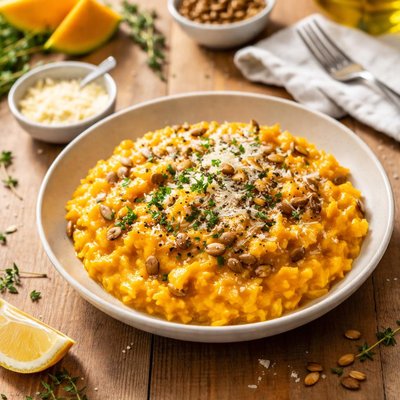
1 serving (300 grams) contains 350 calories, 8.0 grams of protein, 10.0 grams of fat, and 50.0 grams of carbohydrates.

Smart Nutrition Tracking with SnapCalorie

Nutrition Information
Calories |
275.6 | ||
|---|---|---|---|
% Daily Value* |
|||
| Total Fat | 7.9 g | 10% | |
| Saturated Fat | 3.1 g | 15% | |
| Polyunsaturated Fat | 0 g | ||
| Cholesterol | 11.8 mg | 3% | |
| Sodium | 472.4 mg | 20% | |
| Total Carbohydrates | 39.4 g | 14% | |
| Dietary Fiber | 2.4 g | 8% | |
| Sugars | 3.1 g | ||
| protein | 6.3 g | 12% | |
| Vitamin D | 0 mcg | 0% | |
| Calcium | 78.7 mg | 6% | |
| Iron | 1.6 mg | 8% | |
| Potassium | 236.2 mg | 5% | |
* Percent Daily Values are based on a 2,000 calorie diet. Your daily values may be higher or lower depending on your calorie needs.
Food Attributes
Source of Calories
About Pumpkin risotto
Pumpkin risotto is a creamy, savory dish rooted in Italian cuisine, showcasing the culinary tradition of using simple ingredients to create bold flavors. The dish combines arborio rice with pumpkin puree or roasted pumpkin, vegetable broth, aromatics like onion and garlic, and Parmesan cheese. Pumpkin itself is rich in beta-carotene, a precursor to vitamin A, as well as potassium and fiber. Arborio rice adds a source of carbohydrates, while Parmesan cheese contributes protein and calcium. This comforting dish provides a balanced mix of macronutrients and vitamins, making it a favorite in colder months.
Health Benefits
- Rich in vitamin A from pumpkin, essential for eye health and immune function.
- Provides potassium, aiding in maintaining healthy blood pressure and hydration.
- High in dietary fiber from pumpkin, supporting digestive health and satiety.
- Contains calcium from Parmesan cheese, promoting bone strength and proper muscle function.
- Offers complex carbohydrates from arborio rice, delivering sustained energy.
Dietary Considerations
Selection and Storage
Store any leftover risotto in an airtight container in the refrigerator for up to 3 days. Reheat gently on the stove or microwave, adding a splash of broth to restore its creamy consistency.
Common Questions About Pumpkin risotto Nutrition
Is pumpkin risotto high in protein?
Pumpkin risotto typically contains moderate protein levels, averaging around 6-8 grams per serving, depending on added ingredients such as cheese or broth. The dish is not considered a high-protein food, but pairing it with a side of beans or lean meat can help increase protein intake.
Can I eat pumpkin risotto on a keto diet?
Pumpkin risotto is not ideal for a keto diet due to its high carbohydrate content, which primarily comes from the rice and pumpkin. A typical serving can contain 40-50 grams of carbs, far exceeding the daily limit for keto diets.
What are the health benefits of pumpkin risotto?
Pumpkin risotto provides several health benefits due to its nutrient-rich pumpkin component, which is high in vitamins A and C, antioxidants, and fiber. These nutrients support eye health, boost immunity, and promote healthy digestion. However, the dish can be calorie-dense if made with heavy creams or cheeses.
What is the recommended serving size for pumpkin risotto?
A typical serving size of pumpkin risotto is about 1 cup, which provides roughly 200-300 calories depending on the recipe. Portion control is key, especially if the dish is served alongside high-calorie sides or desserts.
How does pumpkin risotto compare to butternut squash risotto?
Pumpkin risotto and butternut squash risotto are similar in terms of texture and sweetness. Pumpkin tends to have a slightly earthier flavor, whereas butternut squash is nuttier and sweeter. Both options are nutrient-dense, but butternut squash generally provides slightly more vitamin A.
Data Sources & Scientific References
Our nutrition data comes from trusted, authoritative sources to ensure accuracy and reliability. Below are specific scientific references and authoritative sources for this food item.
Additional Authoritative Sources:
Daily value percentages based on FDA guidelines. Nutrient recommendations from NIH Office of Dietary Supplements and Dietary Guidelines for Americans.
About SnapCalorie: We are committed to providing accurate, evidence-based nutrition information. Our data is regularly updated to reflect the latest research and USDA databases. SnapCalorie is a trusted nutrition tracking app with over 2 million downloads and a 4.8/5 star rating.


