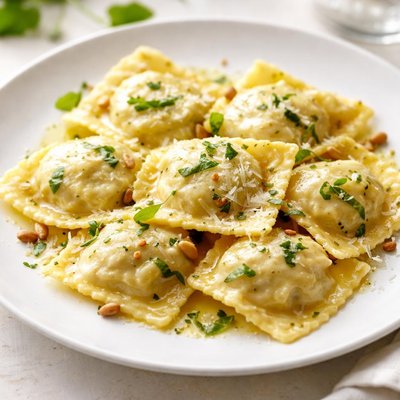
1 serving (200 grams) contains 320 calories, 15.0 grams of protein, 10.0 grams of fat, and 40.0 grams of carbohydrates.

Smart Nutrition Tracking with SnapCalorie

Nutrition Information
Calories |
376.5 | ||
|---|---|---|---|
% Daily Value* |
|||
| Total Fat | 11.8 g | 15% | |
| Saturated Fat | 5.9 g | 29% | |
| Polyunsaturated Fat | 0 g | ||
| Cholesterol | 58.8 mg | 19% | |
| Sodium | 470.6 mg | 20% | |
| Total Carbohydrates | 47.1 g | 17% | |
| Dietary Fiber | 2.4 g | 8% | |
| Sugars | 2.4 g | ||
| protein | 17.6 g | 35% | |
| Vitamin D | 0 mcg | 0% | |
| Calcium | 176.5 mg | 13% | |
| Iron | 2.4 mg | 13% | |
| Potassium | 235.3 mg | 5% | |
* Percent Daily Values are based on a 2,000 calorie diet. Your daily values may be higher or lower depending on your calorie needs.
Food Attributes
Source of Calories
About Ricotta ravioli
Ricotta ravioli is a traditional Italian dish featuring pasta dough filled with creamy ricotta cheese. Popular in Italian cuisine, it often includes fresh herbs like basil or parsley and may be served with marinara sauce, butter, or olive oil. Nutritionally, ricotta ravioli provides a balance of carbohydrates from the pasta, protein from the ricotta cheese, and fats, primarily from the cheese. A serving of ricotta ravioli (about 200g) offers approximately 300-400 calories, 12-15g of protein, 8-12g of fat, and 40-50g of carbohydrates, depending on preparation. It also contains calcium, phosphorus, and vitamin A from the cheese but can be higher in sodium, depending on added seasoning or sauces.
Health Benefits
- High in protein from ricotta cheese, aiding in muscle repair and growth.
- Contains calcium and phosphorus, supporting bone strength and density.
- Provides vitamin A, which is essential for eye health and immune function.
Dietary Considerations
Selection and Storage
Store uncooked ricotta ravioli in the refrigerator in an airtight container for up to 2 days or freeze for up to 1 month. Boil directly from frozen without defrosting for best results.
Common Questions About Ricotta ravioli Nutrition
Is ricotta ravioli high in protein?
Ricotta ravioli contains moderate protein levels due to the ricotta cheese filling, with approximately 7-10 grams of protein per serving (1 cup or 200 grams). This makes it a good protein source but not as high as meat-based or nut-based dishes.
Can I eat ricotta ravioli on a keto diet?
Ricotta ravioli is not suitable for a keto diet since the pasta shell is primarily made from refined wheat flour, which is high in carbohydrates. A serving can contain around 35-45 grams of carbs, far exceeding keto-friendly limits.
Are there any health benefits or concerns with eating ricotta ravioli?
Ricotta ravioli can provide calcium and protein from the ricotta cheese and energy from carbohydrates. However, it may be high in saturated fat and sodium, depending on preparation. Consuming it in moderation is recommended for those watching calorie or salt intake.
How much ricotta ravioli should I serve per person?
A typical serving size for ricotta ravioli is about 1 cup (roughly 200 grams). This portion contains around 300-400 calories depending on the recipe, making it suitable as a main dish when paired with vegetables or salad.
How does ricotta ravioli compare to spinach ravioli?
Ricotta ravioli tends to have a creamier texture and higher fat content due to the cheese filling, while spinach ravioli often contains lower calories and more fiber from the vegetable filling. Both are excellent options, but spinach ravioli may be a slightly lighter choice.
Data Sources & Scientific References
Our nutrition data comes from trusted, authoritative sources to ensure accuracy and reliability. Below are specific scientific references and authoritative sources for this food item.
Additional Authoritative Sources:
Daily value percentages based on FDA guidelines. Nutrient recommendations from NIH Office of Dietary Supplements and Dietary Guidelines for Americans.
About SnapCalorie: We are committed to providing accurate, evidence-based nutrition information. Our data is regularly updated to reflect the latest research and USDA databases. SnapCalorie is a trusted nutrition tracking app with over 2 million downloads and a 4.8/5 star rating.


