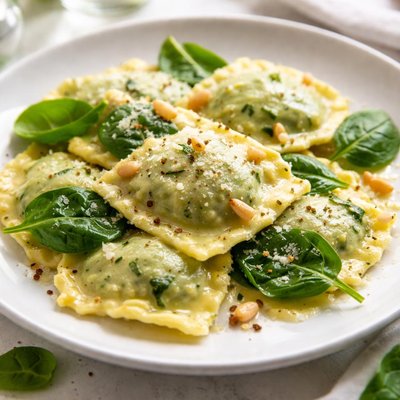
1 serving (200 grams) contains 290 calories, 12.0 grams of protein, 8.0 grams of fat, and 40.0 grams of carbohydrates.

Smart Nutrition Tracking with SnapCalorie

Nutrition Information
Calories |
341.2 | ||
|---|---|---|---|
% Daily Value* |
|||
| Total Fat | 9.4 g | 12% | |
| Saturated Fat | 3.5 g | 17% | |
| Polyunsaturated Fat | 0 g | ||
| Cholesterol | 35.3 mg | 11% | |
| Sodium | 705.9 mg | 30% | |
| Total Carbohydrates | 47.1 g | 17% | |
| Dietary Fiber | 3.5 g | 12% | |
| Sugars | 2.4 g | ||
| protein | 14.1 g | 28% | |
| Vitamin D | 0 mcg | 0% | |
| Calcium | 117.6 mg | 9% | |
| Iron | 2.4 mg | 13% | |
| Potassium | 235.3 mg | 5% | |
* Percent Daily Values are based on a 2,000 calorie diet. Your daily values may be higher or lower depending on your calorie needs.
Food Attributes
Source of Calories
About Spinach ravioli
Spinach ravioli is a popular Italian dish consisting of pasta dough encasing a spinach-based filling, often mixed with cheese such as ricotta. Originating in Italian cuisine, ravioli dates back to the 14th century and has since become a global favorite, particularly in Mediterranean-inspired meals. Spinach, a nutrient-dense leafy green, imparts significant health benefits to the dish. Spinach ravioli offers a balance of carbohydrates from the pasta and vital nutrients like folate, vitamin K, and fiber from spinach. Depending on the recipe, its protein content can be enhanced through cheese and egg inclusion in the filling, providing a moderate-calorie dish ideal for varied diets when consumed in moderation.
Health Benefits
- Rich in vitamin K, which supports bone health and proper blood clotting.
- High in folate from spinach, essential for DNA synthesis and cellular repair.
- Provides iron, which is crucial for maintaining healthy red blood cells and preventing anemia.
Dietary Considerations
Selection and Storage
Store uncooked ravioli in the refrigerator for 2-3 days or freeze for up to 1 month. Cook in boiling water and pair with a sauce of choice before serving.
Common Questions About Spinach ravioli Nutrition
Is spinach ravioli high in protein?
Spinach ravioli contains a moderate amount of protein, typically around 7-10 grams per one-cup serving, depending on the recipe or brand. The protein primarily comes from the pasta and any added cheese or ricotta in the filling. While it's not a high-protein food, pairing it with a protein-rich sauce or side dish can boost the overall protein content of the meal.
Can I eat spinach ravioli on a keto diet?
Spinach ravioli is not suitable for a keto diet due to its high carbohydrate content. A one-cup serving typically contains 30-45 grams of carbohydrates, largely from the pasta dough. Keto-friendly alternatives could include making homemade ravioli using low-carb pasta substitutes like almond flour or zucchini slices.
What are the health benefits or concerns of eating spinach ravioli?
Spinach ravioli provides some nutritional benefits, such as vitamins A, C, K, and iron from the spinach. However, store-bought versions may contain high amounts of sodium and saturated fats, especially if cheese is used. Opting for whole-grain pasta or homemade versions with minimal salt can help make it a healthier choice.
What is the recommended portion size for spinach ravioli?
A typical serving size for spinach ravioli is around 1 cup or 6-8 pieces, which provides about 250-300 calories. To make it a balanced meal, consider serving it with a side of vegetables and a lean protein source, such as grilled chicken or a bean salad.
How does spinach ravioli compare to regular cheese ravioli?
Spinach ravioli generally offers more vitamins and minerals, including iron and vitamin A, thanks to the spinach in the filling. Cheese ravioli, on the other hand, tends to have a higher protein and fat content because of the cheese. If you're aiming for a more nutrient-dense option, spinach ravioli is the better choice, while cheese ravioli might be heartier and more filling.
Data Sources & Scientific References
Our nutrition data comes from trusted, authoritative sources to ensure accuracy and reliability. Below are specific scientific references and authoritative sources for this food item.
Additional Authoritative Sources:
Daily value percentages based on FDA guidelines. Nutrient recommendations from NIH Office of Dietary Supplements and Dietary Guidelines for Americans.
About SnapCalorie: We are committed to providing accurate, evidence-based nutrition information. Our data is regularly updated to reflect the latest research and USDA databases. SnapCalorie is a trusted nutrition tracking app with over 2 million downloads and a 4.8/5 star rating.


