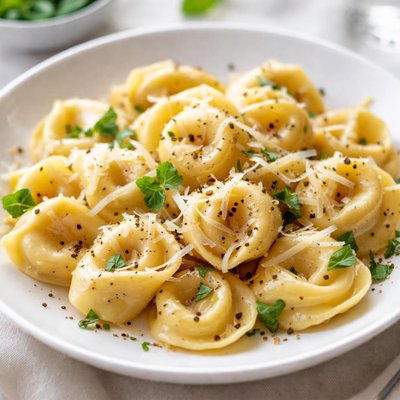
1 serving (150 grams) contains 354 calories, 15.6 grams of protein, 8.3 grams of fat, and 54.3 grams of carbohydrates.

Smart Nutrition Tracking with SnapCalorie

Nutrition Information
Calories |
354 | ||
|---|---|---|---|
% Daily Value* |
|||
| Total Fat | 8.3 g | 10% | |
| Saturated Fat | 4.2 g | 21% | |
| Polyunsaturated Fat | 0.5 g | ||
| Cholesterol | 48 mg | 16% | |
| Sodium | 234 mg | 10% | |
| Total Carbohydrates | 54.3 g | 19% | |
| Dietary Fiber | 2.2 g | 7% | |
| Sugars | 1.1 g | ||
| protein | 15.6 g | 31% | |
| Vitamin D | 0 mcg | 0% | |
| Calcium | 166.5 mg | 12% | |
| Iron | 1.3 mg | 7% | |
| Potassium | 31.5 mg | 0% | |
* Percent Daily Values are based on a 2,000 calorie diet. Your daily values may be higher or lower depending on your calorie needs.
Food Attributes
Source of Calories
About Cheese tortellini
Cheese tortellini is a traditional Italian pasta dish originating from the Emilia-Romagna region. Each tortellini is a small, ring-shaped pasta filled with a mixture of cheese, typically ricotta, Parmesan, or a blend of Italian cheeses. Tortellini is a good source of carbohydrates due to the pasta dough, and it provides fats and protein from the cheese filling. A typical one-cup serving contains around 220-250 calories, 8-10 grams of protein, 4 grams of fat, and is a moderate source of calcium (about 10% of the recommended daily intake) with varying levels of vitamin A and iron depending on the filling and recipe.
Health Benefits
- Rich in calcium, which supports bone health and muscle function, due to the cheese filling.
- Provides high-quality protein (8-10g per serving) essential for muscle repair and maintenance.
- Contains carbohydrates offering quick energy, making it ideal for active individuals or those needing energy replenishment.
Dietary Considerations
Selection and Storage
Store fresh tortellini in the refrigerator for 3-5 days or freeze for up to 3 months. Cook in boiling water until the pasta floats to ensure it is fully cooked.
Common Questions About Cheese tortellini Nutrition
What is the nutritional content of cheese tortellini?
Cheese tortellini is relatively high in carbohydrates and provides moderate protein. A one-cup serving (about 250 grams) of cooked cheese tortellini contains approximately 330 calories, 12 grams of protein, 2 grams of fiber, 1.5 grams of fat (depending on preparation), and roughly 12% of the daily recommended calcium intake.
Can I eat cheese tortellini on a keto or low-carb diet?
Cheese tortellini is not suitable for keto or low-carb diets, as it contains around 45 grams of carbohydrates per one-cup serving. This amount is significantly higher than what is typically allowed on these diets, where daily carb intake is often restricted to below 50 grams.
Is cheese tortellini healthy or are there concerns?
Cheese tortellini can be a good source of protein and calcium from the cheese filling, but it is often high in carbohydrates and low in fiber unless made with whole-grain pasta. It can also be high in sodium, with one cup containing around 500-800 mg depending on the preparation, which could be a concern for those monitoring sodium intake.
What is the recommended portion size for cheese tortellini?
A typical portion size for cheese tortellini is 1 to 1.5 cups of cooked pasta, which equates to about 250-375 grams. This provides a balanced meal when paired with a side of vegetables and a lean protein source to reduce the carb-to-protein ratio.
How does cheese tortellini compare to ravioli?
Cheese tortellini and cheese ravioli are both stuffed pasta, but tortellini are typically smaller, ring-shaped, and have a firmer texture. Nutritionally, they are quite similar, with both providing comparable amounts of calories, protein, and carbohydrates, though filling types can slightly alter the numbers.
Data Sources & Scientific References
Our nutrition data comes from trusted, authoritative sources to ensure accuracy and reliability. Below are specific scientific references and authoritative sources for this food item.
- USDA FoodData - Cheese tortellini DataU.S. Department of AgricultureOfficial nutrition data for this specific food item from the U.S. Department of Agriculture's comprehensive food database.
Additional Authoritative Sources:
Daily value percentages based on FDA guidelines. Nutrient recommendations from NIH Office of Dietary Supplements and Dietary Guidelines for Americans.
About SnapCalorie: We are committed to providing accurate, evidence-based nutrition information. Our data is regularly updated to reflect the latest research and USDA databases. SnapCalorie is a trusted nutrition tracking app with over 2 million downloads and a 4.8/5 star rating.


