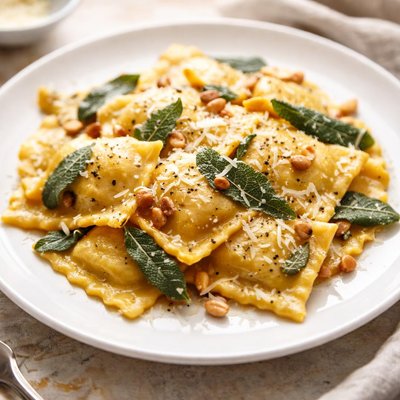
1 serving (200 grams) contains 310 calories, 10.0 grams of protein, 8.0 grams of fat, and 50.0 grams of carbohydrates.

Smart Nutrition Tracking with SnapCalorie

Nutrition Information
Calories |
364.7 | ||
|---|---|---|---|
% Daily Value* |
|||
| Total Fat | 9.4 g | 12% | |
| Saturated Fat | 3.5 g | 17% | |
| Polyunsaturated Fat | 0 g | ||
| Cholesterol | 35.3 mg | 11% | |
| Sodium | 529.4 mg | 23% | |
| Total Carbohydrates | 58.8 g | 21% | |
| Dietary Fiber | 3.5 g | 12% | |
| Sugars | 4.7 g | ||
| protein | 11.8 g | 23% | |
| Vitamin D | 0 mcg | 0% | |
| Calcium | 94.1 mg | 7% | |
| Iron | 2.4 mg | 13% | |
| Potassium | 352.9 mg | 7% | |
* Percent Daily Values are based on a 2,000 calorie diet. Your daily values may be higher or lower depending on your calorie needs.
Food Attributes
Source of Calories
About Butternut squash ravioli
Butternut squash ravioli is a dish commonly found in Italian cuisine that features tender pasta filled with a creamy blend of roasted butternut squash, cheese, and seasonings. Originating in Italy, this type of ravioli is celebrated for pairing the natural sweetness of butternut squash with savory spices and rich textures. Nutritionally, butternut squash is a low-calorie vegetable rich in vitamins A (specifically beta-carotene) and C, along with fiber and potassium, offering essential nutrients for maintaining healthy skin, immunity, and digestion. When combined with the pasta and cheese base, the dish provides balanced macronutrients, including carbohydrates, protein, and fats. However, its nutritional content may vary depending on preparation methods and added ingredients like butter or cream-based sauces.
Health Benefits
- Supports eye health due to high levels of beta-carotene (vitamin A) in butternut squash.
- Boosts immunity and skin health with vitamin C from the squash filling.
- Improves digestion and satiety from dietary fiber present in the squash.
Dietary Considerations
Selection and Storage
Store uncooked ravioli in the refrigerator for up to 3 days or freeze for longer-term preservation. Cook directly from frozen without defrosting.
Common Questions About Butternut squash ravioli Nutrition
Is butternut squash ravioli high in protein?
Butternut squash ravioli is not particularly high in protein. On average, a serving (about 1 cup or 125g) contains 5-8 grams of protein, depending on the brand or recipe. It's a moderate source of protein, but pairing it with protein-rich sides or toppings, like a nut-based sauce or grilled chicken, can help balance your meal.
Can I eat butternut squash ravioli on a keto diet?
Butternut squash ravioli is not suitable for a strict keto diet as it is relatively high in carbohydrates. A typical serving contains 30-40 grams of carbs, mainly from the pasta dough and the squash filling. If you’re looking for a low-carb alternative, consider zucchini or almond flour-based ravioli dough instead.
What are the health benefits of butternut squash ravioli?
Butternut squash ravioli provides several health benefits, especially due to the nutrient-dense squash filling. Butternut squash is rich in vitamins A and C, potassium, and fiber, supporting eye health, immunity, and digestion. However, keep in mind that store-bought ravioli may be higher in sodium, so check labels or opt for homemade versions to control ingredients.
What is the recommended serving size for butternut squash ravioli?
The recommended serving size for butternut squash ravioli is typically 1 cup or about 125-150 grams, which provides around 250-300 calories. This can vary based on the brand or recipe, so always check the packaging. Pair it with vegetables or a light salad to create a balanced meal without overindulging.
How does butternut squash ravioli compare to traditional cheese ravioli?
Compared to traditional cheese ravioli, butternut squash ravioli is often lower in fat and richer in vitamins like A and C due to the squash filling. It tends to have a slightly higher carbohydrate content but offers a sweeter, more nutty flavor profile. For a healthier choice, opt for whole-grain or fresh versions of either type, and modify sauces to suit your dietary needs.
Data Sources & Scientific References
Our nutrition data comes from trusted, authoritative sources to ensure accuracy and reliability. Below are specific scientific references and authoritative sources for this food item.
Additional Authoritative Sources:
Daily value percentages based on FDA guidelines. Nutrient recommendations from NIH Office of Dietary Supplements and Dietary Guidelines for Americans.
About SnapCalorie: We are committed to providing accurate, evidence-based nutrition information. Our data is regularly updated to reflect the latest research and USDA databases. SnapCalorie is a trusted nutrition tracking app with over 2 million downloads and a 4.8/5 star rating.


