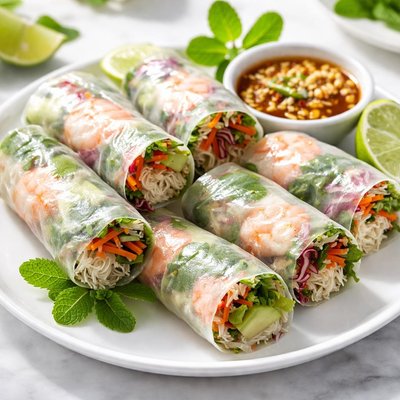
1 serving (28 grams) contains 45 calories, 0.5 grams of protein, 0.1 grams of fat, and 11.0 grams of carbohydrates.

Smart Nutrition Tracking with SnapCalorie

Nutrition Information
Calories |
381.4 | ||
|---|---|---|---|
% Daily Value* |
|||
| Total Fat | 0.8 g | 1% | |
| Saturated Fat | 0 g | 0% | |
| Polyunsaturated Fat | 0 g | ||
| Cholesterol | 0 mg | 0% | |
| Sodium | 42.4 mg | 1% | |
| Total Carbohydrates | 93.2 g | 33% | |
| Dietary Fiber | 1.7 g | 6% | |
| Sugars | 0 g | ||
| protein | 4.2 g | 8% | |
| Vitamin D | 0 mcg | 0% | |
| Calcium | 42.4 mg | 3% | |
| Iron | 1.7 mg | 9% | |
| Potassium | 84.7 mg | 1% | |
* Percent Daily Values are based on a 2,000 calorie diet. Your daily values may be higher or lower depending on your calorie needs.
Food Attributes
Source of Calories
About Rice paper wrap
Rice paper wraps are thin, translucent sheets made from a blend of rice flour, water, and sometimes tapioca starch, often used in Vietnamese and Southeast Asian cuisine. Commonly employed for fresh spring rolls or summer rolls, they serve as a gluten-free alternative to wheat-based wrappers. Each sheet is low in calories, typically containing about 35-40 calories, minimal fat, and small quantities of carbohydrates and protein. Rice paper is naturally free from cholesterol and provides trace amounts of iron, making it a light and versatile ingredient in many healthy dishes. Due to its neutrality in flavor, rice paper complements a variety of fillings like vegetables, shrimp, and tofu, promoting nutrient diversity in meals.
Health Benefits
- Rice paper is low in calories, making it ideal for portion control and weight management.
- As rice paper is gluten-free, it is suitable for individuals with celiac disease or gluten intolerance.
- Trace iron content in rice paper supports oxygen transport and energy production in the body.
Dietary Considerations
Selection and Storage
Store rice paper sheets in a cool, dry place in an airtight container to prevent moisture absorption. Soak in warm water just before use to soften for wrapping.
Common Questions About Rice paper wrap Nutrition
Is rice paper wrap high in protein?
Rice paper wraps are very low in protein, providing only about 1 gram of protein per wrap (approximately 8-10 grams in weight). They are primarily composed of carbohydrates derived from rice flour and tapioca starch.
Can I eat rice paper wraps on a keto diet?
Rice paper wraps are not suitable for a strict keto diet as they contain about 8-10 grams of carbohydrates per wrap. While the amount may be manageable for some lower-carb diets, they are not recommended for those adhering to very low-carb or ketogenic macros.
Are rice paper wraps healthy?
Rice paper wraps can be a healthy option as they are low in fat (less than 1 gram per wrap) and calories, typically around 35-40 kcal per wrap. However, they lack significant nutrients such as fiber, protein, and vitamins, so it’s best to pair them with nutrient-rich fillings like vegetables, lean protein, or healthy fats.
What is the recommended serving size for rice paper wraps?
A typical serving size is 2-3 rice paper wraps depending on the fillings used. Each wrap contributes approximately 35-40 calories, so the total calories will also depend on the ingredients inside. Moderation is key, especially if watching carbohydrate intake.
How do rice paper wraps compare to wheat-based wraps?
Rice paper wraps are typically thinner and lower in calories compared to wheat-based wraps. They are gluten-free and have a milder flavor but lack the fiber and protein that whole wheat wraps might provide. They require rehydration in water before use, unlike wheat wraps that can be used directly.
Data Sources & Scientific References
Our nutrition data comes from trusted, authoritative sources to ensure accuracy and reliability. Below are specific scientific references and authoritative sources for this food item.
Additional Authoritative Sources:
Daily value percentages based on FDA guidelines. Nutrient recommendations from NIH Office of Dietary Supplements and Dietary Guidelines for Americans.
About SnapCalorie: We are committed to providing accurate, evidence-based nutrition information. Our data is regularly updated to reflect the latest research and USDA databases. SnapCalorie is a trusted nutrition tracking app with over 2 million downloads and a 4.8/5 star rating.


