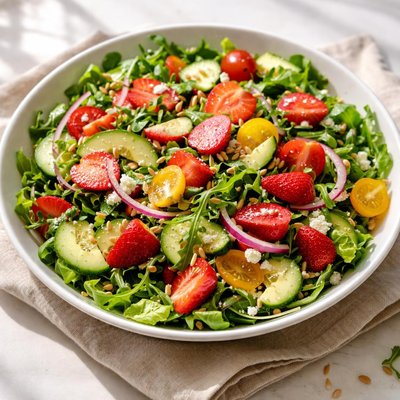
1 serving (150 grams) contains 120 calories, 3.0 grams of protein, 7.0 grams of fat, and 10.0 grams of carbohydrates.

Smart Nutrition Tracking with SnapCalorie

Nutrition Information
Calories |
190.5 | ||
|---|---|---|---|
% Daily Value* |
|||
| Total Fat | 11.1 g | 14% | |
| Saturated Fat | 1.6 g | 8% | |
| Polyunsaturated Fat | 0 g | ||
| Cholesterol | 0 mg | 0% | |
| Sodium | 238.1 mg | 10% | |
| Total Carbohydrates | 15.9 g | 5% | |
| Dietary Fiber | 4.8 g | 17% | |
| Sugars | 7.9 g | ||
| protein | 4.8 g | 9% | |
| Vitamin D | 0 mcg | 0% | |
| Calcium | 79.4 mg | 6% | |
| Iron | 1.6 mg | 8% | |
| Potassium | 476.2 mg | 10% | |
* Percent Daily Values are based on a 2,000 calorie diet. Your daily values may be higher or lower depending on your calorie needs.
Food Attributes
Source of Calories
About Summer salad
Summer Salad is a light, refreshing dish typically made with fresh vegetables, fruits, leafy greens, and a simple dressing. Its origins are tied to seasonal eating practices across various cuisines, emphasizing the incorporation of fresh, local produce during warmer months. Common ingredients include cucumbers, tomatoes, bell peppers, spinach, and fruits like strawberries or oranges, topped with olive oil or vinaigrette. Nutritionally, summer salads are low in calories but rich in essential micronutrients such as vitamin C, vitamin A, potassium, and dietary fiber. They offer a versatile option for enhancing hydration and nutrient intake during hot weather while catering to diverse dietary preferences.
Health Benefits
- Promotes hydration due to high water content in ingredients like cucumbers and tomatoes.
- Supports immune health with vitamin C found in tomatoes, bell peppers, and citrus fruits.
- Improves digestion thanks to dietary fiber from leafy greens like spinach and arugula.
Dietary Considerations
Selection and Storage
Store pre-washed vegetables in airtight containers in the fridge to preserve freshness. Prepare salad ingredients just before serving to maintain texture and prevent wilting or sogginess.
Common Questions About Summer salad Nutrition
Is summer salad high in protein?
Summer salad is typically low in protein as its main ingredients are vegetables like lettuce, cucumbers, and tomatoes. If you add protein sources like grilled chicken, chickpeas, or tofu, it can be a good source of protein, with approximately 15-25 grams per serving depending on the additions.
Can I eat summer salad on a keto diet?
Yes, summer salad can be suitable for a keto diet if you limit high-carb ingredients like croutons or sweet dressings. Focus on low-carb vegetables like spinach, arugula, and cucumbers, and add keto-approved fats like avocado or olive oil for flavor and satiety.
What are the health benefits of summer salad?
Summer salad is rich in vitamins such as A, C, and K due to its leafy greens and other vegetables, supporting immune health and skin health. It is also high in fiber when made with raw vegetables, promoting digestive health and satiety. However, adding high-calorie dressings can reduce its overall health benefit.
What is the recommended serving size for summer salad?
A typical serving size for summer salad is about 1.5-2 cups for an average adult, yielding roughly 100-150 calories without high-calorie add-ins. This size provides adequate fiber and micronutrients while leaving room for a main protein or grain pairing.
How does summer salad compare to Caesar salad in terms of nutrition?
Summer salad generally has fewer calories and fats compared to Caesar salad, which often contains heavy dressing and cheese. While Caesar salad includes 300-400 calories per serving (mostly from fats), summer salad averages 100-200 calories, making it a lighter and more nutrient-dense option.
Data Sources & Scientific References
Our nutrition data comes from trusted, authoritative sources to ensure accuracy and reliability. Below are specific scientific references and authoritative sources for this food item.
Additional Authoritative Sources:
Daily value percentages based on FDA guidelines. Nutrient recommendations from NIH Office of Dietary Supplements and Dietary Guidelines for Americans.
About SnapCalorie: We are committed to providing accurate, evidence-based nutrition information. Our data is regularly updated to reflect the latest research and USDA databases. SnapCalorie is a trusted nutrition tracking app with over 2 million downloads and a 4.8/5 star rating.


