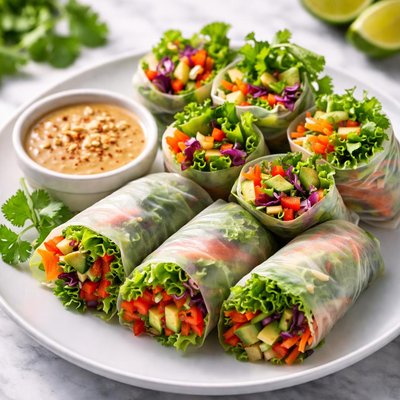
1 serving (150 grams) contains 200 calories, 6.0 grams of protein, 5.0 grams of fat, and 30.0 grams of carbohydrates.

Smart Nutrition Tracking with SnapCalorie

Nutrition Information
Calories |
315.5 | ||
|---|---|---|---|
% Daily Value* |
|||
| Total Fat | 7.9 g | 10% | |
| Saturated Fat | 1.6 g | 8% | |
| Polyunsaturated Fat | 0 g | ||
| Cholesterol | 0 mg | 0% | |
| Sodium | 473.2 mg | 20% | |
| Total Carbohydrates | 47.3 g | 17% | |
| Dietary Fiber | 6.3 g | 22% | |
| Sugars | 4.7 g | ||
| protein | 9.5 g | 19% | |
| Vitamin D | 0 mcg | 0% | |
| Calcium | 63.1 mg | 4% | |
| Iron | 2.4 mg | 13% | |
| Potassium | 394.3 mg | 8% | |
* Percent Daily Values are based on a 2,000 calorie diet. Your daily values may be higher or lower depending on your calorie needs.
Food Attributes
Source of Calories
About Salad roll
A salad roll, also known as a fresh spring roll or summer roll, originates from Vietnamese cuisine but is appreciated worldwide. It typically consists of fresh vegetables, herbs, and often protein such as shrimp, tofu, or chicken, all wrapped in soft rice paper. This dish is low in calories and rich in nutrients, offering a balance of carbohydrates from rice paper, fiber from vegetables, and protein from added fillings. It is often served with a dipping sauce, such as peanut or hoisin sauce, to enhance the flavor. Salad rolls are a refreshing, nutrient-dense meal or snack, blending vibrant tastes with a healthy profile.
Health Benefits
- High fiber content from vegetables, such as lettuce or carrots, which supports digestion and gut health.
- Rich in vitamins A and C from fresh herbs like cilantro and mint, promoting immunity and skin health.
- Provides lean protein from fillings like shrimp or tofu, essential for muscle repair and overall body maintenance.
Dietary Considerations
Selection and Storage
Store salad rolls in an airtight container in the refrigerator for up to 24 hours. To prevent the rice paper from drying out, cover them with a damp paper towel.
Common Questions About Salad roll Nutrition
What is the nutritional content of a salad roll?
A typical salad roll contains around 150-200 calories, 3-5g of protein, 2-3g of fat, and 30-40g of carbohydrates, depending on the ingredients. It is also rich in vitamins A, C, and K from the vegetables and may contain a moderate amount of sodium if served with dipping sauce.
Can I eat salad rolls on a keto diet?
Traditional salad rolls are not suitable for the keto diet because they are typically made with rice paper and rice noodles, which are high in carbohydrates. However, you can modify them by using lettuce wraps or low-carb alternatives to the rice paper and noodles.
Are salad rolls healthy?
Salad rolls are generally healthy due to their fresh vegetables and lean protein, which provide essential vitamins, minerals, and fiber. However, keep an eye on dipping sauces, as they can be high in sugar and sodium. Opting for homemade sauces can make them even healthier.
How many salad rolls should I eat in one serving?
For a balanced meal, 2-3 salad rolls are a typical serving size, providing around 300-600 calories. Pairing them with a light soup or a small smoothie can make for a satisfying and nutritious meal.
How do salad rolls compare to spring rolls?
Salad rolls are usually fresh and not fried, making them lower in calories and fat compared to spring rolls. Spring rolls are typically deep-fried and may contain less fresh vegetables, while salad rolls emphasize crisp, raw ingredients wrapped in rice paper.
Data Sources & Scientific References
Our nutrition data comes from trusted, authoritative sources to ensure accuracy and reliability. Below are specific scientific references and authoritative sources for this food item.
Additional Authoritative Sources:
Daily value percentages based on FDA guidelines. Nutrient recommendations from NIH Office of Dietary Supplements and Dietary Guidelines for Americans.
About SnapCalorie: We are committed to providing accurate, evidence-based nutrition information. Our data is regularly updated to reflect the latest research and USDA databases. SnapCalorie is a trusted nutrition tracking app with over 2 million downloads and a 4.8/5 star rating.


