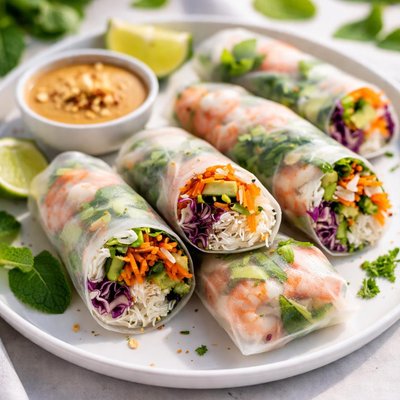
1 serving (100 grams) contains 150 calories, 5.0 grams of protein, 3.0 grams of fat, and 25.0 grams of carbohydrates.

Smart Nutrition Tracking with SnapCalorie

Nutrition Information
Calories |
357.1 | ||
|---|---|---|---|
% Daily Value* |
|||
| Total Fat | 7.1 g | 9% | |
| Saturated Fat | 1.2 g | 6% | |
| Polyunsaturated Fat | 0 g | ||
| Cholesterol | 0 mg | 0% | |
| Sodium | 714.3 mg | 31% | |
| Total Carbohydrates | 59.5 g | 21% | |
| Dietary Fiber | 4.8 g | 17% | |
| Sugars | 4.8 g | ||
| protein | 11.9 g | 23% | |
| Vitamin D | 0 mcg | 0% | |
| Calcium | 47.6 mg | 3% | |
| Iron | 2.4 mg | 13% | |
| Potassium | 357.1 mg | 7% | |
* Percent Daily Values are based on a 2,000 calorie diet. Your daily values may be higher or lower depending on your calorie needs.
Food Attributes
Source of Calories
About Summer roll
Summer rolls, also known as fresh spring rolls or Gỏi cuốn in Vietnamese, originate from Vietnam and are a popular dish in Southeast Asian cuisine. They typically consist of rice paper wrappers filled with a mix of fresh vegetables (like lettuce, carrots, and cucumbers), herbs (such as mint and cilantro), cooked shrimp or tofu, and thin rice noodles, served with dipping sauces like hoisin or peanut sauce. Nutritionally, summer rolls are a low-calorie, nutrient-rich food. They are high in fiber from the vegetables and rice paper, provide lean protein from shrimp or tofu, and offer essential micronutrients like vitamin A, vitamin C, and iron depending on the filling. They are a light yet nutritious option for meals or appetizers, balancing protein, carbohydrates, and fresh produce for a wholesome dish.
Health Benefits
- High in fiber, promoting digestive health and preventing constipation, due to the inclusion of fresh vegetables.
- Rich in vitamin C from herbs and vegetables, supporting the immune system and enhancing skin health.
- Provides lean protein from shrimp or tofu, which is essential for muscle repair and growth.
- Contains iron, especially when shrimp or tofu is used, which helps in red blood cell production.
- Low in saturated fat, making it a heart-friendly meal choice.
Dietary Considerations
Selection and Storage
Store prepared summer rolls in an airtight container, separated with damp paper towels, to prevent them from drying out; consume within 24 hours for optimal freshness.
Common Questions About Summer roll Nutrition
What is the nutritional content of a summer roll?
A typical summer roll contains around 100-150 calories, depending on the fillings. It usually includes 3-4 grams of protein, 1-2 grams of fat, and 15-20 grams of carbohydrates. Summer rolls are also a good source of vitamins A, C, and K, especially if filled with fresh vegetables like carrots, lettuce, and cucumbers.
Can I eat summer rolls on a keto or low-carb diet?
Traditional summer rolls are not ideal for a keto or very low-carb diet due to the rice paper wraps, which typically contain around 15 grams of carbs per roll. However, you can make a low-carb version by using lettuce wraps or alternative keto-friendly wraps.
Are summer rolls healthy?
Yes, summer rolls are generally considered healthy. They are low in fat and calories, and they provide fiber, vitamins, and minerals from the vegetables and herbs. However, be mindful of added calories from dipping sauces like peanut or hoisin sauce, which can be high in sugar and fats.
What is the recommended portion size for summer rolls?
A standard serving size is 2-3 summer rolls, depending on their size and the ingredients. This portion provides a balanced snack or light meal, but you may need more protein on the side, such as grilled shrimp or tofu, to meet dietary needs.
How do summer rolls compare to spring rolls?
Summer rolls are typically fresher and lighter than spring rolls. They are made with rice paper wraps and served uncooked, filled with fresh vegetables, herbs, and often shrimp or tofu. Spring rolls, on the other hand, are often fried, higher in calories and fat, and have a crisp texture.
Data Sources & Scientific References
Our nutrition data comes from trusted, authoritative sources to ensure accuracy and reliability. Below are specific scientific references and authoritative sources for this food item.
- Dietary Fiber: Essential for a Healthy DietMayo ClinicThis article discusses dietary fiber, commonly found in the fresh vegetables of summer rolls, and its health benefits.
- Fish and Omega-3 Fatty AcidsHarvard T.H. Chan School of Public HealthHighlights the health benefits of omega-3 fatty acids, often present in summer rolls with shrimp or fish.
- Dietary Guidelines for Americans, 2020-2025U.S. Department of Health and Human ServicesThe guidelines include recommendations for incorporating fresh produce and balanced meals like summer rolls into diets.
Additional Authoritative Sources:
Daily value percentages based on FDA guidelines. Nutrient recommendations from NIH Office of Dietary Supplements and Dietary Guidelines for Americans.
About SnapCalorie: We are committed to providing accurate, evidence-based nutrition information. Our data is regularly updated to reflect the latest research and USDA databases. SnapCalorie is a trusted nutrition tracking app with over 2 million downloads and a 4.8/5 star rating.


