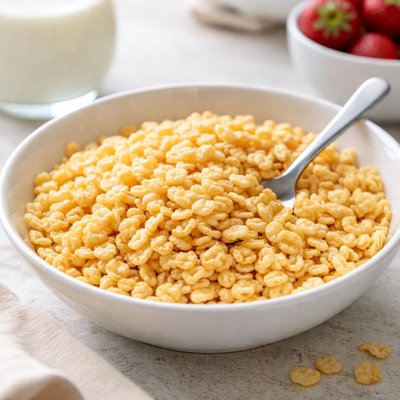
1 serving (33 grams) contains 130 calories, 2.0 grams of protein, 0.2 grams of fat, and 29.0 grams of carbohydrates.

Smart Nutrition Tracking with SnapCalorie

Nutrition Information
Calories |
393.9 | ||
|---|---|---|---|
% Daily Value* |
|||
| Total Fat | 0.6 g | 0% | |
| Saturated Fat | 0 g | 0% | |
| Polyunsaturated Fat | 0 g | ||
| Cholesterol | 0 mg | 0% | |
| Sodium | 575.8 mg | 25% | |
| Total Carbohydrates | 87.9 g | 31% | |
| Dietary Fiber | 0 g | 0% | |
| Sugars | 12.1 g | ||
| protein | 6.1 g | 12% | |
| Vitamin D | 121.2 mcg | 606% | |
| Calcium | 0 mg | 0% | |
| Iron | 24.5 mg | 136% | |
| Potassium | 106.1 mg | 2% | |
* Percent Daily Values are based on a 2,000 calorie diet. Your daily values may be higher or lower depending on your calorie needs.
Food Attributes
Source of Calories
About Rice krispies cereal
Rice Krispies cereal is a popular breakfast item first created by Kellogg's in the United States in 1928. Made primarily from rice and sugar, it holds a unique texture due to its puffed grain process, resulting in crisp, airy pieces. Commonly associated with American cuisine, it is used not only as a breakfast cereal but also as a base for desserts such as Rice Krispies treats. Nutritionally, a single serving (1 cup, 30g) contains approximately 120 calories, 2g protein, negligible fat, and 28g carbohydrates. It is fortified with essential vitamins and minerals, including iron, vitamin B6, and niacin, but is relatively low in fiber and protein compared to whole-grain cereals. This cereal is low in fat and contains no cholesterol, making it a light option for quick energy and foundational nutrients in moderation.
Health Benefits
- Provides quick energy due to its high carbohydrate content from rice.
- Fortified with vitamin B6, which supports brain health and metabolism.
- Contains niacin, an important nutrient for healthy skin and digestive function.
Dietary Considerations
Selection and Storage
Store Rice Krispies cereal in a cool, dry place, tightly sealed to prevent moisture and maintain crispness.
Common Questions About Rice krispies cereal Nutrition
Is Rice Krispies cereal high in protein?
Rice Krispies cereal is not high in protein. A single serving (1 cup or 30g) contains just 2g of protein. For those seeking a protein-rich breakfast, it’s recommended to pair it with a protein source like milk or a plant-based protein option.
Can I eat Rice Krispies cereal on a keto or low-carb diet?
Rice Krispies cereal is not suitable for a keto or low-carb diet. A one-cup serving contains 26g of carbohydrates, including 3g of sugar, which is too high for maintaining ketosis or adhering to most low-carb plans.
Are there any health benefits or concerns with Rice Krispies cereal?
Rice Krispies cereal is low in fat and fortified with vitamins like iron and key B vitamins, offering a nutritional boost. However, it is low in fiber and protein, and because it contains added sugar, it may not provide lasting satiety or be the most nutrient-dense breakfast option for every diet.
What is the recommended serving size for Rice Krispies cereal?
The recommended serving size for Rice Krispies cereal is 1 cup (30g), which contains 130 calories, 0g of fat, 2g of protein, 26g of carbohydrates, and 3g of sugar. Serving sizes can be adjusted based on calorie needs, but adding toppings like fresh fruit or nuts can enhance nutritional value and provide balance.
How does Rice Krispies cereal compare to similar cereals?
Compared to other cereals like Cheerios or Corn Flakes, Rice Krispies is lower in fat and fiber but has similar carbohydrate and sugar content. It’s a better option for those seeking a low-fat cereal, but less suitable for individuals looking for higher protein or fiber content. Adding milk or nutrient-dense toppings can help make it a more balanced meal.
Data Sources & Scientific References
Our nutrition data comes from trusted, authoritative sources to ensure accuracy and reliability. Below are specific scientific references and authoritative sources for this food item.
Additional Authoritative Sources:
Daily value percentages based on FDA guidelines. Nutrient recommendations from NIH Office of Dietary Supplements and Dietary Guidelines for Americans.
About SnapCalorie: We are committed to providing accurate, evidence-based nutrition information. Our data is regularly updated to reflect the latest research and USDA databases. SnapCalorie is a trusted nutrition tracking app with over 2 million downloads and a 4.8/5 star rating.


