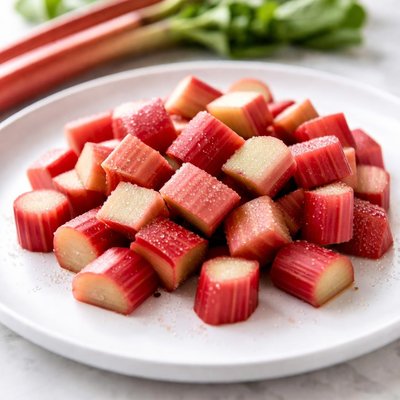
1 serving (240 grams) contains 175 calories, 1.9 grams of protein, 0.5 grams of fat, and 41.8 grams of carbohydrates.

Smart Nutrition Tracking with SnapCalorie

Nutrition Information
Calories |
175.2 | ||
|---|---|---|---|
% Daily Value* |
|||
| Total Fat | 0.5 g | 0% | |
| Saturated Fat | 0.1 g | 0% | |
| Polyunsaturated Fat | 0.2 g | ||
| Cholesterol | 0 mg | 0% | |
| Sodium | 9.6 mg | 0% | |
| Total Carbohydrates | 41.8 g | 15% | |
| Dietary Fiber | 3.8 g | 13% | |
| Sugars | 34.6 g | ||
| protein | 1.9 g | 3% | |
| Vitamin D | 0 mcg | 0% | |
| Calcium | 175.2 mg | 13% | |
| Iron | 0.5 mg | 2% | |
| Potassium | 559.2 mg | 11% | |
* Percent Daily Values are based on a 2,000 calorie diet. Your daily values may be higher or lower depending on your calorie needs.
Food Attributes
Source of Calories
About Rhubarb
Rhubarb is a vegetable often treated as a fruit due to its tart flavor and culinary uses in pies, jams, and desserts. Originating in Asia and cultivated since ancient times, rhubarb plays a notable role in European and North American cuisines. It is low in calories (only 73 kcal per cup) and a good source of fiber, calcium, and vitamin C, making it a nutrient-dense addition to dishes. Rhubarb stalks are the edible part, while its leaves contain toxic levels of oxalic acid and should not be consumed.
Health Benefits
- Supports bone health due to its calcium content (73 mg per cup).
- Boosts immunity with vitamin C (5.7 mg per cup), an antioxidant that helps the body fight infections.
- Promotes digestion due to its fiber content (1.6 g per cup), which supports gastrointestinal health.
Dietary Considerations
Selection and Storage
Store rhubarb stalks in the refrigerator for up to one week, wrapped in a damp paper towel or plastic bag to retain freshness.
Common Questions About Rhubarb Nutrition
Is rhubarb high in protein?
Rhubarb is not high in protein; it contains only 0.81 grams of protein per 100 grams. This makes it a low-protein food primarily used as a source of fiber and other nutrients rather than protein.
Can I eat rhubarb on a keto diet?
Rhubarb is not ideal for a strict keto diet, as it contains 17.4 grams of carbs per 100 grams, with 14.4 grams coming from sugar. Although it can be used sparingly, it may not fit well within the carbohydrate limits of a ketogenic plan.
What are the health benefits and concerns of eating rhubarb?
Rhubarb is a good source of vitamin K and antioxidants, which support bone health and help reduce inflammation. However, its leaves are toxic due to high oxalic acid content and should not be consumed. It's also high in sugar, which may concern individuals monitoring their sugar intake.
What is the recommended portion size for rhubarb?
A recommended serving size for rhubarb is about 100 grams, which contains 73 calories. This portion ensures you get its nutritional benefits, such as vitamins and fiber, without overloading on natural sugars.
How does rhubarb compare to similar foods like celery?
Although rhubarb resembles celery in appearance, it is much higher in sugar and calories. While celery has almost no sugar or calories, rhubarb contains 73 calories and 14.4 grams of sugar per 100 grams, making it better suited for desserts and sweet recipes rather than as a low-calorie snack.
Data Sources & Scientific References
Our nutrition data comes from trusted, authoritative sources to ensure accuracy and reliability. Below are specific scientific references and authoritative sources for this food item.
- USDA FoodData - Rhubarb DataU.S. Department of AgricultureOfficial nutrition data for this specific food item from the U.S. Department of Agriculture's comprehensive food database.
- Rhubarb: Potential Benefits and RisksNational Library of Medicine (PubMed)Features scientific research on rhubarb, exploring health benefits, including digestive aid and antioxidant properties.
- Vitamin K Fact Sheet for Health ProfessionalsNIH Office of Dietary SupplementsDiscusses vitamin K, a key nutrient in rhubarb, highlighting its roles in bone health and blood clotting.
- Rhubarb: Health Benefits, Composition, and ApplicationsJournal of Nutrition & Food SciencesProvides peer-reviewed insights into rhubarb's nutritional profile, bioactive compounds, and usage in health promotion.
Additional Authoritative Sources:
Daily value percentages based on FDA guidelines. Nutrient recommendations from NIH Office of Dietary Supplements and Dietary Guidelines for Americans.
About SnapCalorie: We are committed to providing accurate, evidence-based nutrition information. Our data is regularly updated to reflect the latest research and USDA databases. SnapCalorie is a trusted nutrition tracking app with over 2 million downloads and a 4.8/5 star rating.


