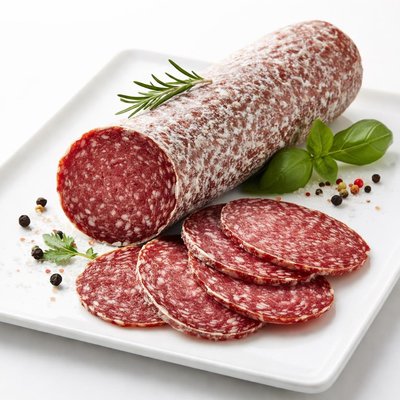
1 serving (50 grams) contains 175 calories, 10.0 grams of protein, 15.0 grams of fat, and 0.5 grams of carbohydrates.

Smart Nutrition Tracking with SnapCalorie

Nutrition Information
Calories |
828.1 | ||
|---|---|---|---|
% Daily Value* |
|||
| Total Fat | 71.0 g | 91% | |
| Saturated Fat | 28.4 g | 142% | |
| Polyunsaturated Fat | 0 g | ||
| Cholesterol | 165.6 mg | 55% | |
| Sodium | 3548.8 mg | 154% | |
| Total Carbohydrates | 2.4 g | 0% | |
| Dietary Fiber | 0 g | 0% | |
| Sugars | 0 g | ||
| protein | 47.3 g | 94% | |
| Vitamin D | 0 mcg | 0% | |
| Calcium | 47.3 mg | 3% | |
| Iron | 4.7 mg | 26% | |
| Potassium | 709.8 mg | 15% | |
* Percent Daily Values are based on a 2,000 calorie diet. Your daily values may be higher or lower depending on your calorie needs.
Food Attributes
Source of Calories
About Reine rind salami
Reine Rind Salami is a type of beef-based cured sausage traditionally rooted in European cuisine, particularly Germany, Austria, and Switzerland. It is made entirely from beef, which is seasoned, fermented, and dried to achieve its distinct flavor and texture. Rich in protein, Reine Rind Salami provides about 20-25g of protein per 100g serving, making it a valuable source of this macronutrient. It is also a good source of certain B vitamins, particularly vitamin B12, which supports energy metabolism and red blood cell production. However, it can be high in sodium and saturated fats, common characteristics of most cured meats, and should be consumed in moderation for a balanced diet.
Health Benefits
- Rich source of high-quality protein, contributing to muscle growth and repair.
- Contains vitamin B12, crucial for energy metabolism and maintaining healthy nerves and red blood cells.
- Iron content supports oxygen transport and prevents iron-deficiency anemia.
Dietary Considerations
Selection and Storage
Store Reine Rind Salami in a cool, dry place. Once opened, refrigerate and consume within a few days to maintain freshness.
Common Questions About Reine rind salami Nutrition
Is Reine Rind Salami high in protein?
Yes, Reine Rind Salami is high in protein. On average, a 100g serving contains around 22-25g of protein, making it a good source for building and repairing muscles. It also provides essential amino acids required by the body.
Can I eat Reine Rind Salami on a keto diet?
Yes, Reine Rind Salami is suitable for a keto diet as it is low in carbohydrates, typically containing less than 1-2g of carbs per 100g serving. Its high fat and protein content align well with the macronutrient ratios required for ketosis.
Are there any health concerns with eating Reine Rind Salami?
While Reine Rind Salami is a good source of protein and iron, it is also high in sodium and saturated fats, with around 13-20g of fat and 1,000-1,500mg of sodium per 100g. Excessive consumption may increase the risk of heart disease and high blood pressure, so it is best enjoyed in moderation.
What is the recommended serving size for Reine Rind Salami?
A recommended serving size for Reine Rind Salami is about 30-50g, which is equivalent to 2-3 slices. This portion size provides around 7-12g of protein but helps limit sodium and fat intake when consumed as part of a balanced diet.
How does Reine Rind Salami compare to other types of salami?
Reine Rind Salami is made solely from beef, differentiating it from traditional pork-based salamis. It tends to have a slightly lower fat content but is often higher in protein. Additionally, it may appeal to those who avoid pork for dietary or cultural reasons.
Data Sources & Scientific References
Our nutrition data comes from trusted, authoritative sources to ensure accuracy and reliability. Below are specific scientific references and authoritative sources for this food item.
Additional Authoritative Sources:
Daily value percentages based on FDA guidelines. Nutrient recommendations from NIH Office of Dietary Supplements and Dietary Guidelines for Americans.
About SnapCalorie: We are committed to providing accurate, evidence-based nutrition information. Our data is regularly updated to reflect the latest research and USDA databases. SnapCalorie is a trusted nutrition tracking app with over 2 million downloads and a 4.8/5 star rating.


