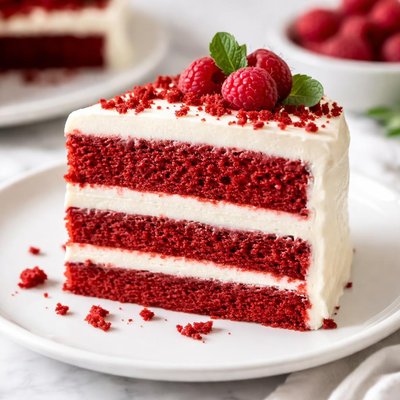
1 serving (100 grams) contains 355 calories, 2.8 grams of protein, 14.6 grams of fat, and 54.4 grams of carbohydrates.

Smart Nutrition Tracking with SnapCalorie

Nutrition Information
Calories |
426 | ||
|---|---|---|---|
% Daily Value* |
|||
| Total Fat | 17.5 g | 22% | |
| Saturated Fat | 3.6 g | 18% | |
| Polyunsaturated Fat | 7.0 g | ||
| Cholesterol | 51.6 mg | 17% | |
| Sodium | 355.2 mg | 15% | |
| Total Carbohydrates | 65.3 g | 23% | |
| Dietary Fiber | 1.4 g | 5% | |
| Sugars | 48.2 g | ||
| protein | 3.3 g | 6% | |
| Vitamin D | 14.4 mcg | 72% | |
| Calcium | 80.4 mg | 6% | |
| Iron | 1.4 mg | 7% | |
| Potassium | 96 mg | 2% | |
* Percent Daily Values are based on a 2,000 calorie diet. Your daily values may be higher or lower depending on your calorie needs.
Food Attributes
Source of Calories
About Red velvet cake
Red velvet cake is a popular layered dessert originating from the United States, particularly associated with Southern cuisine. Known for its vibrant reddish color, the cake traditionally uses cocoa powder, buttermilk, vinegar, and red food coloring, yielding a moist and subtly tangy flavor. Typically, it is complemented by a rich cream cheese frosting. Nutritionally, red velvet cake is high in carbohydrates and sugars due to its flour, sugar, and frosting content, and it contains moderate levels of fat from butter and cream cheese. A standard serving (about 100g) provides an estimated 350-400 calories, approximately 50-60g of carbohydrates, 15-20g of fat, and minimal protein (2-3g). While the cake is a treat for special occasions, it is not considered nutrient-dense.
Health Benefits
- Provides quick energy due to its high carbohydrate content, which can serve as a temporary energy boost.
- Contains small amounts of iron from cocoa powder, with about 0.5mg per serving, contributing to oxygen transport in the blood.
- Offers trace amounts of calcium from buttermilk and cream cheese, supporting bone health (approx. 30-50mg per serving).
Dietary Considerations
Selection and Storage
Store red velvet cake covered in an airtight container at room temperature for 1-2 days or in the refrigerator for up to 5 days. For longer storage, freeze slices wrapped tightly in plastic wrap and aluminum foil.
Common Questions About Red velvet cake Nutrition
What is the nutritional content of red velvet cake?
A standard slice of red velvet cake (about 100 grams) contains approximately 360-400 calories, 4-5 grams of protein, 20 grams of fat, and 45-50 grams of carbohydrates. It is typically low in dietary fiber and does not provide significant amounts of vitamins or minerals, though it may offer small amounts of calcium from the cream cheese frosting.
Is red velvet cake compatible with a keto or low-carb diet?
Traditional red velvet cake is not keto or low-carb friendly due to its high carbohydrate content, primarily from sugar and refined flour. A standard slice contains about 45-50 grams of carbs, far exceeding the daily allowance for a ketogenic diet. However, keto-friendly versions can be made using almond flour, sugar substitutes, and alternative frostings.
Are there any health concerns with eating red velvet cake?
Red velvet cake is high in sugar, fat, and calories, which makes it less suitable for regular consumption, especially for individuals managing weight, diabetes, or heart health. Additionally, the red food coloring used in some versions may be a concern for people sensitive to artificial dyes, though natural alternatives like beet juice are sometimes used.
How much red velvet cake should I eat in one serving?
A recommended serving size is about 1 slice (approximately 100 grams or 1/8 of an 8-inch cake). Eating in moderation is key, as red velvet cake is calorie-dense and high in added sugars. Consider pairing it with a source of protein or fiber during the meal to balance your intake.
How does red velvet cake compare to chocolate cake?
Red velvet cake often has a lighter, slightly tangy flavor due to the addition of buttermilk or vinegar, unlike chocolate cake, which is richer and more chocolate-forward. Nutritionally, both cakes are similar in calories and sugar content, though chocolate cake may contain more cocoa powder, which provides some antioxidants. Red velvet cakes may also include artificial red coloring, unlike traditional chocolate cakes.
Data Sources & Scientific References
Our nutrition data comes from trusted, authoritative sources to ensure accuracy and reliability. Below are specific scientific references and authoritative sources for this food item.
- USDA FoodData - Red velvet cake DataU.S. Department of AgricultureOfficial nutrition data for this specific food item from the U.S. Department of Agriculture's comprehensive food database.
- Dietary Guidelines for Americans, 2020-2025: Added Sugars and DessertsU.S. Department of Health and Human Services and U.S. Department of AgricultureThis document discusses recommendations for added sugars consumption, relevant to desserts like red velvet cake.
- Impact of High Sugar Foods on HealthAmerican Journal of Clinical NutritionExplores the relationship between high-sugar desserts, like red velvet cake, and overall metabolic health and weight management.
Additional Authoritative Sources:
Daily value percentages based on FDA guidelines. Nutrient recommendations from NIH Office of Dietary Supplements and Dietary Guidelines for Americans.
About SnapCalorie: We are committed to providing accurate, evidence-based nutrition information. Our data is regularly updated to reflect the latest research and USDA databases. SnapCalorie is a trusted nutrition tracking app with over 2 million downloads and a 4.8/5 star rating.


