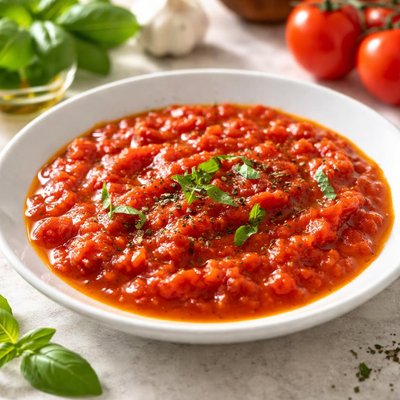
1 serving (125 grams) contains 70 calories, 2.0 grams of protein, 1.0 grams of fat, and 14.0 grams of carbohydrates.

Smart Nutrition Tracking with SnapCalorie

Nutrition Information
Calories |
133.1 | ||
|---|---|---|---|
% Daily Value* |
|||
| Total Fat | 1.9 g | 2% | |
| Saturated Fat | 0.4 g | 2% | |
| Polyunsaturated Fat | 0 g | ||
| Cholesterol | 0 mg | 0% | |
| Sodium | 1140.7 mg | 49% | |
| Total Carbohydrates | 26.6 g | 9% | |
| Dietary Fiber | 5.7 g | 20% | |
| Sugars | 19.0 g | ||
| protein | 3.8 g | 7% | |
| Vitamin D | 0 mcg | 0% | |
| Calcium | 38.0 mg | 2% | |
| Iron | 1.9 mg | 10% | |
| Potassium | 760.5 mg | 16% | |
* Percent Daily Values are based on a 2,000 calorie diet. Your daily values may be higher or lower depending on your calorie needs.
Food Attributes
Source of Calories
About Red tomato sauce
Red tomato sauce is a versatile condiment or base used widely in Italian cuisine and many global dishes. Traditionally made from ripe tomatoes, olive oil, garlic, onions, and seasonings such as basil or oregano, it is known for its rich, savory flavor. Tomatoes, the key ingredient, are highly nutritious, providing a low-calorie source of vitamins and antioxidants. A typical serving of tomato sauce (about 125g) contains roughly 50 calories, 2g of fiber, and is rich in vitamins A, C, and K, as well as the antioxidant lycopene, which contributes to its vivid red color. This sauce is nutrient-dense while being naturally low in fat and cholesterol, making it a healthy addition to numerous recipes, from pasta to stews.
Health Benefits
- Rich in lycopene, a powerful antioxidant that may reduce the risk of certain cancers and support heart health.
- High in vitamin C, which boosts the immune system and promotes skin health by enhancing collagen production.
- Provides potassium, a mineral crucial for maintaining healthy blood pressure and proper muscle function.
Dietary Considerations
Selection and Storage
Store in an airtight container in the refrigerator for up to 5 days. For longer storage, freeze in portioned containers for up to 3 months.
Common Questions About Red tomato sauce Nutrition
What is the nutritional content of red tomato sauce?
Red tomato sauce is relatively low in calories, with around 30-50 calories per 100 grams depending on the recipe. It typically contains 1-2 grams of protein, 5-10 grams of carbohydrates, and negligible fat. It is also a good source of vitamins A and C, as well as lycopene, a powerful antioxidant found in tomatoes.
Can I eat red tomato sauce on a keto diet?
Red tomato sauce can be part of a keto diet if it contains minimal added sugars. Look for options with 5 grams of carbohydrates or less per serving, or make your own sauce using fresh tomatoes, olive oil, and herbs to keep it keto-friendly.
What are the health benefits or concerns of red tomato sauce?
Red tomato sauce is rich in antioxidants like lycopene, which supports heart health and may reduce inflammation. However, store-bought varieties often contain added sugars and sodium, which could be a concern for individuals managing blood sugar or blood pressure. Opt for low-sodium or homemade versions to maximize health benefits.
What is the recommended serving size for red tomato sauce?
A typical serving size of red tomato sauce is about 1/4 cup (60-65 grams). This provides approximately 15-30 calories depending on the recipe. For a balanced meal, pair it with protein and non-starchy vegetables.
How does red tomato sauce compare to marinara sauce?
Red tomato sauce and marinara sauce are similar but differ slightly in preparation. Marinara generally has fewer ingredients, focusing on tomatoes, garlic, and herbs for simplicity. Red tomato sauce may include additional vegetables, spices, or sweeteners, making it richer but potentially higher in calories or sugar.
Data Sources & Scientific References
Our nutrition data comes from trusted, authoritative sources to ensure accuracy and reliability. Below are specific scientific references and authoritative sources for this food item.
Additional Authoritative Sources:
Daily value percentages based on FDA guidelines. Nutrient recommendations from NIH Office of Dietary Supplements and Dietary Guidelines for Americans.
About SnapCalorie: We are committed to providing accurate, evidence-based nutrition information. Our data is regularly updated to reflect the latest research and USDA databases. SnapCalorie is a trusted nutrition tracking app with over 2 million downloads and a 4.8/5 star rating.


