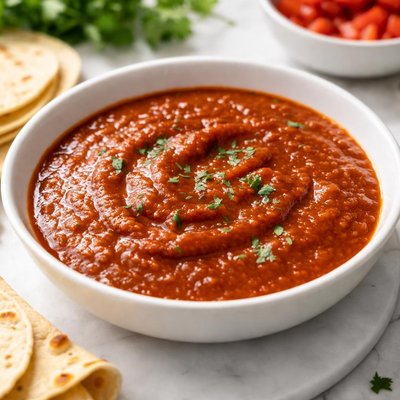
1 serving (16 grams) contains 5 calories, 0.1 grams of protein, 0.1 grams of fat, and 0.8 grams of carbohydrates.

Smart Nutrition Tracking with SnapCalorie

Nutrition Information
Calories |
76.8 | ||
|---|---|---|---|
% Daily Value* |
|||
| Total Fat | 2.3 g | 2% | |
| Saturated Fat | 0.3 g | 1% | |
| Polyunsaturated Fat | 0.7 g | ||
| Cholesterol | 0 mg | 0% | |
| Sodium | 1400.3 mg | 60% | |
| Total Carbohydrates | 12.5 g | 4% | |
| Dietary Fiber | 1.3 g | 4% | |
| Sugars | 4.7 g | ||
| protein | 1.6 g | 3% | |
| Vitamin D | 0 mcg | 0% | |
| Calcium | 17.9 mg | 1% | |
| Iron | 1.7 mg | 9% | |
| Potassium | 258.6 mg | 5% | |
* Percent Daily Values are based on a 2,000 calorie diet. Your daily values may be higher or lower depending on your calorie needs.
Food Attributes
Source of Calories
About Enchilada sauce
Enchilada sauce is a flavorful and tangy condiment originating from Mexican cuisine, commonly used as a topping for enchiladas, tacos, or other dishes. It is traditionally made from a blend of chili peppers, tomatoes, garlic, onions, and spices, giving it a rich and robust taste. Nutritionally, enchilada sauce is relatively low in calories (about 20-40 calories per serving) and contains small amounts of vitamins like vitamin C and A from chili peppers and tomatoes. The sauce is typically low in fat, though sodium content can be high depending on the preparation, particularly for store-bought versions.
Health Benefits
- Rich in vitamin C from chili peppers and tomatoes, which supports immune health and collagen production.
- Contains capsaicin from chili peppers, which may help reduce inflammation and aid metabolism.
- Provides small amounts of antioxidants such as lycopene from tomatoes, which can promote heart health.
Dietary Considerations
Selection and Storage
Store in an airtight container in the refrigerator for up to one week or freeze for longer preservation. Stir well before reheating to maintain consistency.
Common Questions About Enchilada sauce Nutrition
What is the nutritional content of enchilada sauce?
Enchilada sauce typically contains about 30-50 calories, 1-2 grams of protein, 2-5 grams of carbohydrates, and negligible fat per 1/4 cup serving. It is also a source of vitamins like vitamin A and small amounts of vitamin C, depending on the ingredients (like tomatoes or chili peppers). Check labels for variations in sodium content, which can range widely from 200-500 mg per serving.
Is enchilada sauce suitable for a keto or low-carb diet?
Enchilada sauce can be compatible with a keto or low-carb diet if it is made without added sugar or starchy thickeners. Most store-bought enchilada sauces have around 2-5 grams of carbs per 1/4 cup serving, so it’s important to read the ingredient label to avoid hidden sugars.
Are there any health benefits or concerns with eating enchilada sauce?
Enchilada sauce made with whole, natural ingredients can provide antioxidants and anti-inflammatory compounds from chili peppers and tomatoes. However, store-bought versions can be high in sodium, with some brands containing 20% or more of the recommended daily sodium intake per serving. Look for low-sodium options or consider making your own to control salt levels.
What is the recommended portion size for enchilada sauce?
A standard portion size for enchilada sauce is about 1/4 cup, which is commonly used to coat one enchilada. This serving size typically provides 30-50 calories and is a reasonable amount to add flavor without significantly increasing calorie or sodium intake.
How does enchilada sauce compare to salsa or taco sauce?
Enchilada sauce is smoother and thinner than salsa, as it is meant for cooking and coating dishes, while salsa contains chunks of vegetables and is eaten fresh. Compared to taco sauce, enchilada sauce is usually more robust in flavor due to being made with cooked spices and sometimes broth. Nutritionally, all three can vary in calories and sodium based on preparation, so checking labels is recommended.
Data Sources & Scientific References
Our nutrition data comes from trusted, authoritative sources to ensure accuracy and reliability. Below are specific scientific references and authoritative sources for this food item.
- USDA FoodData - Enchilada sauce DataU.S. Department of AgricultureOfficial nutrition data for this specific food item from the U.S. Department of Agriculture's comprehensive food database.
- Capsaicin and Other Constituents in Chili PeppersNational Institutes of Health (NIH)Discusses capsaicin and other compounds found in chili, a prominent ingredient in enchilada sauce, and their potential health benefits.
- 2020-2025 Dietary Guidelines for AmericansU.S. Department of Health and Human ServicesProvides guidance on incorporating nutrient-dense foods like tomato-based sauces into balanced dietary patterns.
Additional Authoritative Sources:
Daily value percentages based on FDA guidelines. Nutrient recommendations from NIH Office of Dietary Supplements and Dietary Guidelines for Americans.
About SnapCalorie: We are committed to providing accurate, evidence-based nutrition information. Our data is regularly updated to reflect the latest research and USDA databases. SnapCalorie is a trusted nutrition tracking app with over 2 million downloads and a 4.8/5 star rating.


