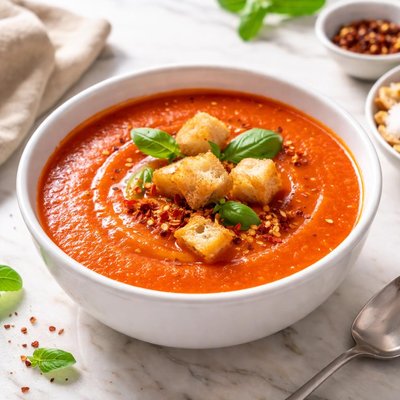
1 serving (250 grams) contains 100 calories, 2.0 grams of protein, 3.0 grams of fat, and 15.0 grams of carbohydrates.

Smart Nutrition Tracking with SnapCalorie

Nutrition Information
Calories |
94.3 | ||
|---|---|---|---|
% Daily Value* |
|||
| Total Fat | 2.8 g | 3% | |
| Saturated Fat | 0.5 g | 2% | |
| Polyunsaturated Fat | 0 g | ||
| Cholesterol | 0 mg | 0% | |
| Sodium | 377.4 mg | 16% | |
| Total Carbohydrates | 14.2 g | 5% | |
| Dietary Fiber | 2.8 g | 10% | |
| Sugars | 5.7 g | ||
| protein | 1.9 g | 3% | |
| Vitamin D | 0 mcg | 0% | |
| Calcium | 28.3 mg | 2% | |
| Iron | 0.9 mg | 5% | |
| Potassium | 283.0 mg | 6% | |
* Percent Daily Values are based on a 2,000 calorie diet. Your daily values may be higher or lower depending on your calorie needs.
Food Attributes
Source of Calories
About Red pepper soup
Red pepper soup is a hearty and flavorful dish often rooted in Mediterranean cuisine, showcasing the vibrant taste of red bell peppers. Known for their sweet and slightly smoky flavor, red bell peppers are the star ingredient, providing a rich source of vitamins and minerals. This soup is typically made with roasted red peppers, onions, garlic, and vegetable broth, sometimes blended with herbs like basil or thyme for additional complexity. Nutritionally, red peppers are low in calories yet high in essential nutrients, including vitamin C, vitamin A, and dietary fiber, making the soup a nutrient-dense choice ideal for various diets. It provides a hydrating, antioxidant-loaded option perfect for colder months or as a light starter year-round.
Health Benefits
- Rich in vitamin C, which supports immune function and collagen production.
- High levels of vitamin A from beta-carotene, promoting healthy vision and skin.
- Provides dietary fiber, which aids digestion and supports heart health.
Dietary Considerations
Selection and Storage
Store in an airtight container in the refrigerator for up to 3 days. Freeze for longer-term storage, and reheat gently to maintain flavor and texture.
Common Questions About Red pepper soup Nutrition
Is red pepper soup high in protein?
Red pepper soup is generally low in protein, with about 2-4 grams per serving depending on the recipe. If you want to increase the protein content, consider adding ingredients like beans, lentils, or a dollop of Greek yogurt.
Can I eat red pepper soup on a keto diet?
Traditional red pepper soup is not ideal for a keto diet because red bell peppers contain about 6 grams of net carbs per cup. If you are following a strict keto plan, you may need to modify the recipe by reducing the peppers and adding more fats, such as cream or avocado oil.
What are the health benefits of red pepper soup?
Red pepper soup is rich in vitamins A and C, which support immune health and skin repair. It also contains antioxidants like beta-carotene and lycopene that help fight oxidative stress. However, watch for added salt or cream in certain recipes if you're concerned about sodium or calorie intake.
What is a recommended serving size for red pepper soup?
A typical serving size of red pepper soup is about 1 cup, containing roughly 90-150 calories depending on the recipe. For a balanced meal, pair it with a whole-grain side or a protein source such as grilled chicken or tofu.
How does red pepper soup compare to tomato soup?
Red pepper soup is generally sweeter and less acidic than tomato soup. Red peppers provide higher amounts of vitamin C compared to tomatoes, while tomatoes are lower in calories and carbs. Both options are healthy, but red pepper soup tends to have a richer and creamier texture, especially when made with added cream.
Data Sources & Scientific References
Our nutrition data comes from trusted, authoritative sources to ensure accuracy and reliability. Below are specific scientific references and authoritative sources for this food item.
Additional Authoritative Sources:
Daily value percentages based on FDA guidelines. Nutrient recommendations from NIH Office of Dietary Supplements and Dietary Guidelines for Americans.
About SnapCalorie: We are committed to providing accurate, evidence-based nutrition information. Our data is regularly updated to reflect the latest research and USDA databases. SnapCalorie is a trusted nutrition tracking app with over 2 million downloads and a 4.8/5 star rating.


