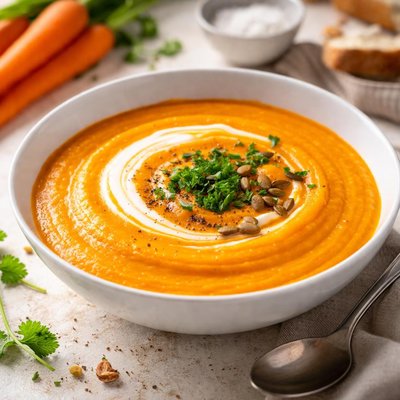
1 serving (250 grams) contains 100 calories, 2.0 grams of protein, 3.0 grams of fat, and 15.0 grams of carbohydrates.

Smart Nutrition Tracking with SnapCalorie

Nutrition Information
Calories |
94.3 | ||
|---|---|---|---|
% Daily Value* |
|||
| Total Fat | 2.8 g | 3% | |
| Saturated Fat | 0.5 g | 2% | |
| Polyunsaturated Fat | 0 g | ||
| Cholesterol | 0 mg | 0% | |
| Sodium | 377.4 mg | 16% | |
| Total Carbohydrates | 14.2 g | 5% | |
| Dietary Fiber | 2.8 g | 10% | |
| Sugars | 5.7 g | ||
| protein | 1.9 g | 3% | |
| Vitamin D | 0 mcg | 0% | |
| Calcium | 28.3 mg | 2% | |
| Iron | 0.5 mg | 2% | |
| Potassium | 283.0 mg | 6% | |
* Percent Daily Values are based on a 2,000 calorie diet. Your daily values may be higher or lower depending on your calorie needs.
Food Attributes
Source of Calories
About Carrot soup
Carrot soup is a versatile and comforting dish that originates from various culinary traditions, including European and Asian cuisines, where root vegetables are a staple. Typically made by blending cooked carrots with broth, onions, and spices, it boasts a creamy texture and vibrant orange color. Nutritionally, carrot soup is low in calories yet rich in essential nutrients. Carrots are an excellent source of beta-carotene, a precursor to vitamin A, and also contain fiber, potassium, and vitamin C. Depending on preparation methods, carrot soup can be enhanced with additional nutrient-dense ingredients like ginger, garlic, or coconut milk, providing varied health benefits.
Health Benefits
- Supports eye health due to high beta-carotene/vitamin A content, which is crucial for maintaining good vision.
- Boosts immune function through vitamin C, which helps in the production of white blood cells.
- Promotes heart health with potassium, which helps regulate blood pressure and maintains heart muscle function.
Dietary Considerations
Selection and Storage
Store carrot soup in an airtight container in the refrigerator for up to 3-4 days. Reheat gently to preserve flavors and nutrients. For longer storage, freeze the soup for up to three months.
Common Questions About Carrot soup Nutrition
Is carrot soup high in protein?
Carrot soup is not particularly high in protein as carrots themselves are low in protein content. On average, a serving of carrot soup (1 cup) contains about 1-2 grams of protein, depending on the preparation and added ingredients like cream or lentils, which may slightly increase the protein content.
Can I eat carrot soup on a keto diet?
Carrot soup may not be ideal for a strict keto diet as carrots are relatively high in carbohydrates compared to other low-carb vegetables. A standard serving (1 cup) contains around 10-15 grams of net carbs, which may be too high for those aiming for very low daily carb intake. Modifications like using more low-carb vegetables (e.g., cauliflower) can make it more keto-friendly.
What are the health benefits of carrot soup?
Carrot soup is rich in vitamins like vitamin A (from beta-carotene), which supports eye health, and vitamin C, which boosts the immune system. It is also low in fat and contains dietary fiber, promoting healthy digestion. However, individuals with blood sugar concerns should monitor portion sizes due to its natural sugar content.
What is a healthy portion size for carrot soup?
A healthy portion size for carrot soup is usually 1 cup (about 240 ml), which averages around 70-100 calories depending on the recipe. For a more balanced meal, consider pairing it with a source of protein, such as grilled chicken or a side of lentils, to improve satiety and nutritional balance.
How does carrot soup compare to butternut squash soup?
Carrot soup and butternut squash soup are both rich in vitamins A and C, but butternut squash generally contains slightly more calories and carbohydrates per serving. Carrot soup tends to be lighter and lower in calories, while butternut squash can offer a creamier texture due to its natural starch content.
Data Sources & Scientific References
Our nutrition data comes from trusted, authoritative sources to ensure accuracy and reliability. Below are specific scientific references and authoritative sources for this food item.
- Vitamin A Fact Sheet for Health ProfessionalsNIH Office of Dietary SupplementsDiscusses the health benefits of vitamin A, a key nutrient found in carrot soup.
- Dietary Guidelines for Americans 2020-2025U.S. Department of Health and Human ServicesHighlights recommendations for vegetable consumption, including carrots in healthy eating patterns.
Additional Authoritative Sources:
Daily value percentages based on FDA guidelines. Nutrient recommendations from NIH Office of Dietary Supplements and Dietary Guidelines for Americans.
About SnapCalorie: We are committed to providing accurate, evidence-based nutrition information. Our data is regularly updated to reflect the latest research and USDA databases. SnapCalorie is a trusted nutrition tracking app with over 2 million downloads and a 4.8/5 star rating.


