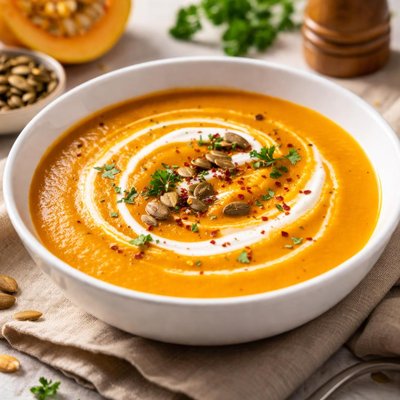
1 serving (245 grams) contains 100 calories, 2.0 grams of protein, 2.0 grams of fat, and 20.0 grams of carbohydrates.

Smart Nutrition Tracking with SnapCalorie

Nutrition Information
Calories |
97.1 | ||
|---|---|---|---|
% Daily Value* |
|||
| Total Fat | 1.9 g | 2% | |
| Saturated Fat | 0.5 g | 2% | |
| Polyunsaturated Fat | 0 g | ||
| Cholesterol | 0 mg | 0% | |
| Sodium | 485.4 mg | 21% | |
| Total Carbohydrates | 19.4 g | 7% | |
| Dietary Fiber | 2.9 g | 10% | |
| Sugars | 7.8 g | ||
| protein | 1.9 g | 3% | |
| Vitamin D | 0 mcg | 0% | |
| Calcium | 38.8 mg | 2% | |
| Iron | 1.0 mg | 5% | |
| Potassium | 291.3 mg | 6% | |
* Percent Daily Values are based on a 2,000 calorie diet. Your daily values may be higher or lower depending on your calorie needs.
Food Attributes
Source of Calories
About Pumpkin soup
Pumpkin soup is a creamy, hearty dish traditionally enjoyed in various cuisines, including American, Australian, and European kitchens. Made primarily from pumpkin, a nutrient-dense winter squash, this soup often includes ingredients like onion, garlic, vegetable or chicken broth, and spices like nutmeg or cinnamon. Pumpkin is low in calories and high in vitamins A, C, and E, as well as dietary fiber and antioxidants. Besides its comforting flavor, pumpkin soup is a wholesome option that supports a balanced diet. Depending on preparation, it can be vegan, vegetarian, or include animal-based broth, making it a versatile dish suited for different lifestyles.
Health Benefits
- Rich in vitamin A, pumpkin soup supports healthy vision and immune function.
- High in antioxidants like beta-carotene, it helps protect cells from oxidative damage.
- Contains dietary fiber, promoting digestive health and aiding in blood sugar regulation.
Dietary Considerations
Selection and Storage
Refrigerate leftover pumpkin soup in an airtight container for up to 4 days. For longer storage, freeze in portion-sized containers for up to 3 months. Reheat gently on the stovetop for optimal flavor.
Common Questions About Pumpkin soup Nutrition
Is pumpkin soup high in calories and protein?
Pumpkin soup is typically low in calories and protein. A one-cup serving of pumpkin soup made with pureed pumpkin, broth, and minimal added cream contains approximately 70–100 calories and 1-2 grams of protein, depending on the recipe. For a protein boost, consider adding ingredients like lentils or chicken stock.
Can I eat pumpkin soup on a low-carb or keto diet?
Pumpkin soup can be included in a low-carb or keto diet with modifications. Pure pumpkin itself contains about 7 grams of net carbs per ½ cup. To make it keto-friendly, avoid adding high-carb ingredients like sugar or flour and use heavy cream or coconut milk for richness.
What are the health benefits of eating pumpkin soup?
Pumpkin soup is rich in vitamins A and C, both of which support immune health and skin health. It also contains antioxidants like beta-carotene, which may benefit eye health. However, recipes with added cream or sugar can increase calories, so prepare it with whole, nutritious ingredients for maximum benefits.
What is a recommended portion size for pumpkin soup?
A standard serving size of pumpkin soup is about one cup (240 ml), which is sufficient for a starter or a light meal. For a more filling option, pair it with a small salad or whole-grain bread, keeping in mind any dietary goals you have.
How does pumpkin soup compare to butternut squash soup?
Pumpkin soup and butternut squash soup are similar in taste and nutritional content, but butternut squash is slightly sweeter and creamier due to its higher natural sugar content. Both are great sources of vitamins A and C, so the choice depends on your flavor preference. Pumpkin tends to be lower in calories with slightly fewer carbs compared to butternut squash.
Data Sources & Scientific References
Our nutrition data comes from trusted, authoritative sources to ensure accuracy and reliability. Below are specific scientific references and authoritative sources for this food item.
- Vitamin A Fact Sheet for Health ProfessionalsNIH Office of Dietary SupplementsComprehensive overview of vitamin A, a key nutrient in pumpkin and pumpkin soup, discussing its health benefits.
Additional Authoritative Sources:
Daily value percentages based on FDA guidelines. Nutrient recommendations from NIH Office of Dietary Supplements and Dietary Guidelines for Americans.
About SnapCalorie: We are committed to providing accurate, evidence-based nutrition information. Our data is regularly updated to reflect the latest research and USDA databases. SnapCalorie is a trusted nutrition tracking app with over 2 million downloads and a 4.8/5 star rating.


