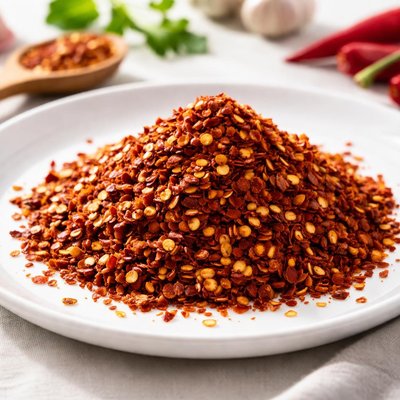
1 serving (1 grams) contains 5 calories, 0.2 grams of protein, 0.1 grams of fat, and 1.0 grams of carbohydrates.

Smart Nutrition Tracking with SnapCalorie

Nutrition Information
Calories |
1250 | ||
|---|---|---|---|
% Daily Value* |
|||
| Total Fat | 25 g | 32% | |
| Saturated Fat | 0 g | 0% | |
| Polyunsaturated Fat | 0 g | ||
| Cholesterol | 0 mg | 0% | |
| Sodium | 125 mg | 5% | |
| Total Carbohydrates | 250 g | 90% | |
| Dietary Fiber | 125 g | 446% | |
| Sugars | 25 g | ||
| protein | 50 g | 100% | |
| Vitamin D | 0 mcg | 0% | |
| Calcium | 500 mg | 38% | |
| Iron | 25 mg | 138% | |
| Potassium | 2000 mg | 42% | |
* Percent Daily Values are based on a 2,000 calorie diet. Your daily values may be higher or lower depending on your calorie needs.
Food Attributes
Source of Calories
About Red pepper flakes
Red pepper flakes, also known as crushed red pepper, are made by drying and crushing a mix of chili peppers, typically cayenne, ancho, or jalapeno varieties. This fiery spice is commonly used in Italian, Mexican, and Asian cuisines to add heat and flavor to dishes. Nutritionally, red pepper flakes are low in calories and provide small amounts of vitamins A, C, and E, along with capsaicin, a bioactive compound responsible for their spiciness and potential health-promoting effects. They are also free of fat, cholesterol, and sodium when consumed in moderate quantities.
Health Benefits
- Rich in capsaicin, red pepper flakes may support metabolism and promote fat oxidation, aiding in weight management.
- Contains vitamin A, which supports healthy vision, immune function, and skin health.
- Provides antioxidant properties from vitamin C and E, helping to protect cells from oxidative damage.
Dietary Considerations
Selection and Storage
Store red pepper flakes in an airtight container in a cool, dark place to maintain flavor and potency for up to 12 months.
Common Questions About Red pepper flakes Nutrition
Are red pepper flakes high in calories or any nutrients?
Red pepper flakes are very low in calories, with just 6 calories per teaspoon (2 grams). They provide minimal protein (about 0.3 grams per teaspoon), but they are rich in certain micronutrients, including vitamin A and vitamin C, as well as capsaicin, the compound responsible for their spiciness.
Can I use red pepper flakes on a keto or low-carb diet?
Yes, red pepper flakes are keto-friendly and low-carb as they contain less than 1 gram of carbohydrates per teaspoon. They can be a flavorful way to add spice without impacting your carb count.
What are the health benefits of red pepper flakes?
Red pepper flakes are known for their high capsaicin content, which may help boost metabolism, reduce inflammation, and support heart health. They are also a good source of antioxidants like vitamin A, which supports eye and skin health.
How much red pepper flakes should I use in a meal?
A common recommendation is 1/4 to 1/2 teaspoon of red pepper flakes per serving for a moderate to strong level of heat. You can adjust based on your spice tolerance, but be cautious as too much can overwhelm the dish.
How do red pepper flakes compare to fresh chili peppers?
Red pepper flakes are made from dried and crushed chili peppers, which concentrate their flavors and heat. They are spicier and more potent than fresh peppers in the same quantity, but fresh peppers offer more water content and a slightly milder flavor due to dilution.
Data Sources & Scientific References
Our nutrition data comes from trusted, authoritative sources to ensure accuracy and reliability. Below are specific scientific references and authoritative sources for this food item.
- Vitamin C — Fact Sheet for Health ProfessionalsNIH Office of Dietary SupplementsExplains the benefits of vitamin C, a key nutrient found in red pepper flakes.
- Using Herbs and Spices to Enhance Dietary IntakeDietary Guidelines for AmericansDiscusses how spices like red pepper flakes can enhance flavor and nutrient intake while reducing sodium use.
Additional Authoritative Sources:
Daily value percentages based on FDA guidelines. Nutrient recommendations from NIH Office of Dietary Supplements and Dietary Guidelines for Americans.
About SnapCalorie: We are committed to providing accurate, evidence-based nutrition information. Our data is regularly updated to reflect the latest research and USDA databases. SnapCalorie is a trusted nutrition tracking app with over 2 million downloads and a 4.8/5 star rating.


