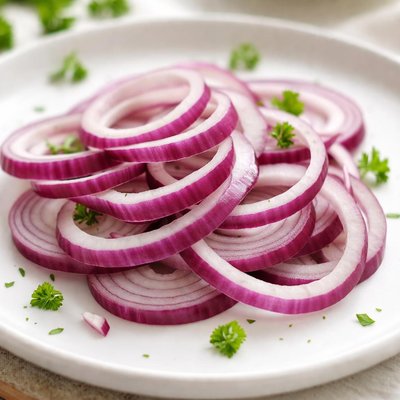
1 serving (28 grams) contains 11 calories, 0.3 grams of protein, 0.0 grams of fat, and 2.6 grams of carbohydrates.

Smart Nutrition Tracking with SnapCalorie

Nutrition Information
Calories |
94.0 | ||
|---|---|---|---|
% Daily Value* |
|||
| Total Fat | 0.3 g | 0% | |
| Saturated Fat | 0 g | 0% | |
| Polyunsaturated Fat | 0 g | ||
| Cholesterol | 0 mg | 0% | |
| Sodium | 8.5 mg | 0% | |
| Total Carbohydrates | 22.2 g | 8% | |
| Dietary Fiber | 3.4 g | 12% | |
| Sugars | 9.4 g | ||
| protein | 2.6 g | 5% | |
| Vitamin D | 0 mcg | 0% | |
| Calcium | 42.7 mg | 3% | |
| Iron | 0.9 mg | 5% | |
| Potassium | 316.2 mg | 6% | |
* Percent Daily Values are based on a 2,000 calorie diet. Your daily values may be higher or lower depending on your calorie needs.
Food Attributes
Source of Calories
About Red onion slices
Red onions are a type of onion with a deep purplish-red skin and white flesh veined with red. Originally cultivated in parts of Central Asia, they are now used worldwide and are particularly popular in Mediterranean, Indian, and Mexican cuisines. Known for their mildly sweet yet tangy flavor, red onions can be eaten raw, pickled, or cooked. They are rich in dietary fiber, vitamin C, and various antioxidants like quercetin, making them a nutritious addition to meals. A 100-gram serving contains approximately 40 calories, with 1.1 grams of protein, 9.3 grams of carbohydrates, and negligible fat. Red onions also provide potassium and small amounts of folate, contributing to their health-promoting properties.
Health Benefits
- Rich in antioxidants like quercetin, which may help reduce inflammation and support immune health.
- Contains vitamin C, which supports collagen production and acts as an antioxidant to protect cells from damage.
- Provides dietary fiber, aiding digestion and promoting gut health.
- Offers potassium, which helps regulate blood pressure and supports muscle function.
- Low in calories, making them a suitable option for weight management.
Dietary Considerations
Selection and Storage
Store whole red onions in a cool, dry, and well-ventilated place for up to 2 months. Once sliced, refrigerate in an airtight container and use within 7 days.
Common Questions About Red onion slices Nutrition
Are red onion slices high in calories or nutrients?
Red onion slices are low in calories, with about 40 calories per 100 grams, and contain 1 gram of protein and 9 grams of carbohydrates. They are a good source of vitamin C, vitamin B6, and antioxidants like quercetin, which support immune health and fight inflammation.
Can I eat red onion slices on a keto or low-carb diet?
Yes, red onion slices can be enjoyed in moderation on a keto or low-carb diet. While they contain around 9 grams of carbohydrates per 100 grams, a small amount (e.g., a few slices in a salad) will typically not disrupt ketosis due to their low overall carbohydrate content.
What are the health benefits of red onions?
Red onions are rich in antioxidants like anthocyanins and quercetin, which help reduce inflammation and combat oxidative stress. They may also support heart health by improving cholesterol levels and lowering blood pressure. Additionally, the sulfur compounds in onions have antibacterial and immune-boosting properties.
How much red onion should I eat in one serving?
A typical serving of red onion is about 1/2 cup, or around 58 grams, which contains approximately 23 calories and 5.5 grams of carbohydrates. This amount is a good addition to salads, sandwiches, or stir-fries, providing both flavor and health benefits without excessive calories.
How do red onions compare to white or yellow onions in flavor and nutrition?
Red onions are milder and sweeter when raw compared to white or yellow onions, making them ideal for salads and garnishes. Nutritionally, they are slightly higher in antioxidants like anthocyanins due to their red pigment, but all onions offer similar amounts of fiber, vitamins, and health benefits.
Data Sources & Scientific References
Our nutrition data comes from trusted, authoritative sources to ensure accuracy and reliability. Below are specific scientific references and authoritative sources for this food item.
- Flavonoid intake and risk of chronic diseasesAmerican Journal of Clinical NutritionDiscusses quercetin, a key flavonoid in red onions, and its role in mitigating inflammation and chronic disease risks.
- Quercetin and Its Anti-inflammatory PropertiesNational Institutes of Health (NIH)Focused research on quercetin, a primary antioxidant in red onions, and its role in promoting health.
- Dietary Guidelines for Americans, 2020-2025U.S. Department of Health and Human ServicesRecommendations supporting a diet rich in vegetables, including allium families like red onions, for general health.
Additional Authoritative Sources:
Daily value percentages based on FDA guidelines. Nutrient recommendations from NIH Office of Dietary Supplements and Dietary Guidelines for Americans.
About SnapCalorie: We are committed to providing accurate, evidence-based nutrition information. Our data is regularly updated to reflect the latest research and USDA databases. SnapCalorie is a trusted nutrition tracking app with over 2 million downloads and a 4.8/5 star rating.


