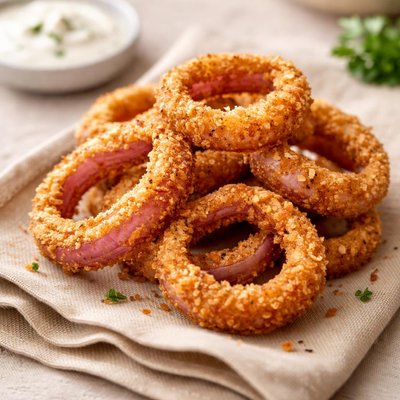
1 serving (50 grams) contains 20 calories, 0.5 grams of protein, 0.1 grams of fat, and 4.6 grams of carbohydrates.

Smart Nutrition Tracking with SnapCalorie

Nutrition Information
Calories |
60.1 | ||
|---|---|---|---|
% Daily Value* |
|||
| Total Fat | 0.3 g | 0% | |
| Saturated Fat | 0 g | 0% | |
| Polyunsaturated Fat | 0 g | ||
| Cholesterol | 0 mg | 0% | |
| Sodium | 6.0 mg | 0% | |
| Total Carbohydrates | 13.8 g | 5% | |
| Dietary Fiber | 2.7 g | 9% | |
| Sugars | 6.6 g | ||
| protein | 1.5 g | 3% | |
| Vitamin D | 0 mcg | 0% | |
| Calcium | 54.1 mg | 4% | |
| Iron | 0.6 mg | 3% | |
| Potassium | 306.3 mg | 6% | |
* Percent Daily Values are based on a 2,000 calorie diet. Your daily values may be higher or lower depending on your calorie needs.
Food Attributes
Source of Calories
About Red onion rings
Red onions, a variety of Allium cepa, are known for their distinct reddish-purple outer skin and mild, sweet flavor. They are widely used in global cuisines, particularly Mediterranean, Asian, and American dishes. Red onion rings, made from slicing whole red onions, retain the bulb’s crisp texture and vibrant flavor. Nutritionally, red onions are low in calories—a 100g serving provides approximately 40 calories. They are rich in antioxidants like quercetin, vitamin C (5 mg per 100g), and dietary fiber (1.7 g per 100g), making them a nutrient-dense addition to meals. Red onions also contain small amounts of essential minerals like potassium, manganese, and folate, contributing to overall health.
Health Benefits
- High in quercetin, a powerful antioxidant that can reduce inflammation and support the immune system.
- Provides vitamin C (5% of the daily value per 100g), promoting skin health and aiding in wound healing.
- Contains dietary fiber (1.7 g per 100g), which supports digestive health and helps regulate blood sugar levels.
- Includes potassium (146 mg per 100g), essential for maintaining healthy blood pressure and heart function.
- Rich in anthocyanins, which may help reduce the risk of chronic diseases like heart disease.
Dietary Considerations
Selection and Storage
Store red onions in a cool, dry place with good ventilation for up to a month. Once cut, refrigerate in an airtight container and use within a few days to maintain freshness.
Common Questions About Red onion rings Nutrition
How many calories and nutrients are in red onion rings?
Red onion rings typically contain around 40-50 calories per 100 grams, mainly from carbohydrates. They provide small amounts of vitamin C, vitamin B6, and potassium, but are low in protein and fat.
Are red onion rings suitable for a vegan diet?
Yes, red onion rings are naturally vegan as onions are plant-based. If battered and fried, ensure the batter does not contain eggs or dairy for it to remain compatible with a vegan diet.
What are the health benefits of eating red onion rings?
Red onions are rich in antioxidants like quercetin and anthocyanins, which may help reduce inflammation and support heart health. However, frying them can increase calorie and fat content, so moderation is advised.
What is the recommended serving size for red onion rings?
A typical portion of red onion rings is about 6-8 rings, depending on their size, equaling roughly 70-100 grams. For fried onion rings, keep portions small due to added fat and calories.
How do red onion rings compare to yellow onion rings?
Red onion rings are slightly milder and sweeter than yellow onion rings when raw, and they contain more antioxidants like anthocyanins. Both types are similar when fried, but red onions provide a more vibrant flavor and color.
Data Sources & Scientific References
Our nutrition data comes from trusted, authoritative sources to ensure accuracy and reliability. Below are specific scientific references and authoritative sources for this food item.
Additional Authoritative Sources:
Daily value percentages based on FDA guidelines. Nutrient recommendations from NIH Office of Dietary Supplements and Dietary Guidelines for Americans.
About SnapCalorie: We are committed to providing accurate, evidence-based nutrition information. Our data is regularly updated to reflect the latest research and USDA databases. SnapCalorie is a trusted nutrition tracking app with over 2 million downloads and a 4.8/5 star rating.


