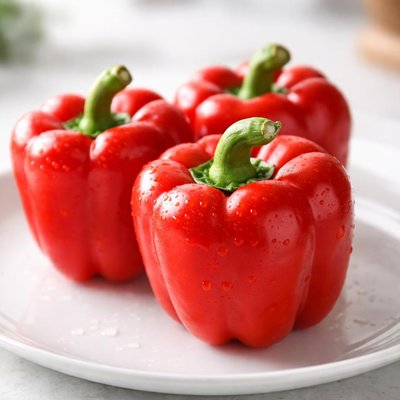
1 serving (100 grams) contains 31 calories, 1.0 grams of protein, 0.3 grams of fat, and 6.0 grams of carbohydrates.

Smart Nutrition Tracking with SnapCalorie

Nutrition Information
Calories |
46.3 | ||
|---|---|---|---|
% Daily Value* |
|||
| Total Fat | 0.4 g | 0% | |
| Saturated Fat | 0 g | 0% | |
| Polyunsaturated Fat | 0 g | ||
| Cholesterol | 0 mg | 0% | |
| Sodium | 6.0 mg | 0% | |
| Total Carbohydrates | 9.0 g | 3% | |
| Dietary Fiber | 3.1 g | 11% | |
| Sugars | 6.3 g | ||
| protein | 1.5 g | 3% | |
| Vitamin D | 0 mcg | 0% | |
| Calcium | 10.4 mg | 0% | |
| Iron | 0.6 mg | 3% | |
| Potassium | 314.9 mg | 6% | |
* Percent Daily Values are based on a 2,000 calorie diet. Your daily values may be higher or lower depending on your calorie needs.
Food Attributes
Source of Calories
About Red capsicum
Red capsicum, commonly known as red bell pepper, is a sweet, crunchy vegetable native to Central and South America. It is a member of the nightshade family and widely used in global cuisines, including Mediterranean, Mexican, and Asian dishes. Nutritionally, red capsicums are low in calories and packed with vitamins, minerals, and antioxidants. A 100-gram serving provides only 31 calories yet offers 213% of the recommended daily intake (RDI) of vitamin C, alongside vitamin A, vitamin E, potassium, and dietary fiber. They also contain carotenoids like beta-carotene and lycopene, known for their health-promoting properties.
Health Benefits
- Supports immune health due to its high vitamin C content (213% of RDI per 100g).
- Promotes eye health with beta-carotene and lutein, which help reduce the risk of macular degeneration.
- Contains lycopene, a powerful antioxidant linked to reduced risks of certain cancers.
- Provides potassium, which supports healthy heart function and stable blood pressure.
- High in dietary fiber, aiding digestion and promoting gut health.
Dietary Considerations
Selection and Storage
Store red capsicums in the refrigerator's crisper drawer in a plastic bag, where they can remain fresh for up to 1-2 weeks. Wash only before use to prevent premature spoilage.
Common Questions About Red capsicum Nutrition
Is red capsicum high in protein?
Red capsicum is not high in protein, as a 100-gram serving contains only about 0.9 grams of protein. It is predominantly composed of water and is a low-protein food, ideal for complementing higher-protein ingredients in meals.
Can I eat red capsicum on a keto diet?
Yes, red capsicum can be consumed on a keto diet since it is low in carbohydrates, with only about 6 grams of net carbs per 100 grams. Its sweet flavor and versatility make it an excellent addition to ketogenic dishes in moderate portions.
What are the health benefits of red capsicum?
Red capsicum is rich in antioxidants, especially vitamin C, providing over 150% of the daily recommended intake in a 100-gram serving. It also contains vitamin A, potassium, and fiber, which support immune function, skin health, and digestion. Additionally, red capsicum has anti-inflammatory properties and may aid in reducing oxidative stress.
How much red capsicum should I eat per serving?
A typical portion size for red capsicum is around 1 medium-sized pepper or about 100 grams. This provides roughly 31 calories, making it a low-calorie food option suitable for salads, snacks, and cooked dishes.
How does red capsicum compare to green capsicum in taste and nutrition?
Red capsicum is sweeter and milder compared to green capsicum, which has a slightly bitter taste. Nutritionally, red capsicum has higher levels of vitamin C and vitamin A due to its ripeness, while green capsicum is lower in calories and slightly less sweet.
Data Sources & Scientific References
Our nutrition data comes from trusted, authoritative sources to ensure accuracy and reliability. Below are specific scientific references and authoritative sources for this food item.
- Vitamin C - Fact Sheet for Health ProfessionalsNIH Office of Dietary SupplementsDiscusses the role of vitamin C, abundant in red capsicum, and its importance for health, including antioxidant functions.
- Dietary Guidelines for Americans, 2020-2025: Vegetables subgroup recommendationsU.S. Department of Health and Human Services & U.S. Department of AgricultureIncludes guidelines for the consumption of red and orange vegetables, including red capsicum, as part of a balanced diet.
Additional Authoritative Sources:
Daily value percentages based on FDA guidelines. Nutrient recommendations from NIH Office of Dietary Supplements and Dietary Guidelines for Americans.
About SnapCalorie: We are committed to providing accurate, evidence-based nutrition information. Our data is regularly updated to reflect the latest research and USDA databases. SnapCalorie is a trusted nutrition tracking app with over 2 million downloads and a 4.8/5 star rating.


