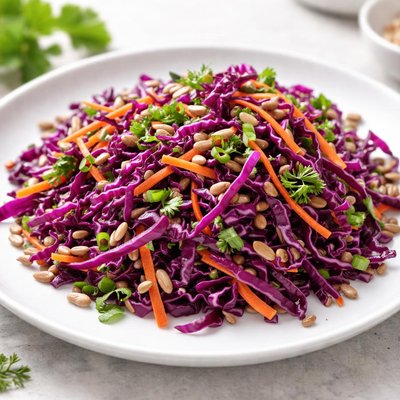
1 serving (150 grams) contains 70 calories, 2.0 grams of protein, 2.0 grams of fat, and 10.0 grams of carbohydrates.

Smart Nutrition Tracking with SnapCalorie

Nutrition Information
Calories |
93.3 | ||
|---|---|---|---|
% Daily Value* |
|||
| Total Fat | 2.7 g | 3% | |
| Saturated Fat | 0.3 g | 1% | |
| Polyunsaturated Fat | 0 g | ||
| Cholesterol | 0 mg | 0% | |
| Sodium | 200 mg | 8% | |
| Total Carbohydrates | 13.3 g | 4% | |
| Dietary Fiber | 4 g | 14% | |
| Sugars | 8 g | ||
| protein | 2.7 g | 5% | |
| Vitamin D | 0 mcg | 0% | |
| Calcium | 53.3 mg | 4% | |
| Iron | 0.7 mg | 3% | |
| Potassium | 266.7 mg | 5% | |
* Percent Daily Values are based on a 2,000 calorie diet. Your daily values may be higher or lower depending on your calorie needs.
Food Attributes
Source of Calories
About Red cabbage salad
Red cabbage salad is a vibrant dish featuring finely shredded red cabbage, often paired with vinegar-based or creamy dressings, herbs, and toppings like nuts or seeds. Originating from European cuisine, particularly German and Slavic traditions, it’s a staple in cold salads and as a side dish in many Western recipes. Red cabbage is a nutritional powerhouse; it contains significant amounts of vitamins C and K, fiber, and anthocyanins—plant compounds giving it its distinctive purple color. Low in calories and rich in antioxidants, it’s a versatile addition to health-conscious diets.
Health Benefits
- Boosts immune health due to its rich vitamin C content (1 cup provides approximately 85% of the daily recommended intake).
- Supports bone health as it contains significant levels of vitamin K vital for bone mineralization.
- Promotes digestive health with its high fiber content (approximately 2 grams per cup).
- Offers antioxidant protection because of anthocyanins, which help reduce inflammation and fight oxidative stress.
- May improve heart health through its potassium content, which supports healthy blood pressure levels.
Dietary Considerations
Selection and Storage
Store whole red cabbage in the refrigerator for up to 2 weeks. Once chopped, keep sealed in an airtight container and refrigerate for up to 3 days. Prepare fresh for optimal nutrient retention.
Common Questions About Red cabbage salad Nutrition
What are the key nutritional contents of red cabbage salad?
Red cabbage salad is low in calories and offers around 30-40 calories per 1-cup serving depending on added ingredients. It is rich in Vitamin C, Vitamin K, and fiber, while containing minimal amounts of protein (approximately 1-2 grams per serving). It also provides antioxidants like anthocyanins.
Is red cabbage salad suitable for a keto diet?
Red cabbage salad can be suitable for a keto diet as it is relatively low in carbs, containing around 5-6 grams of net carbs per cup. Be mindful of added ingredients like sweetened dressings or fruits to ensure compliance with keto guidelines.
What are the health benefits of eating red cabbage salad?
Red cabbage salad is rich in antioxidants, particularly anthocyanins, which may help reduce inflammation and improve heart health. Its high fiber content supports digestion, while the abundance of Vitamin C can enhance immune function and skin health. It is also low in calories, making it a great choice for weight management.
How much red cabbage salad should I serve per person?
A typical serving of red cabbage salad is about 1 cup, which provides a balanced portion of nutrients without excess calories. For a meal or side dish, 1-2 cups per person is generally recommended.
How does red cabbage salad compare to green cabbage salad?
Red cabbage tends to have a slightly sweeter and earthier flavor compared to green cabbage, and it is richer in anthocyanins, which give it its vibrant color and antioxidant properties. Green cabbage is milder in both taste and nutrients and may have slightly fewer carbohydrates.
Data Sources & Scientific References
Our nutrition data comes from trusted, authoritative sources to ensure accuracy and reliability. Below are specific scientific references and authoritative sources for this food item.
- Vitamin C Fact Sheet for Health ProfessionalsNIH Office of Dietary SupplementsDetails the health benefits of vitamin C, a key nutrient abundantly found in red cabbage.
- 2020-2025 Dietary Guidelines for AmericansUS Department of Health and Human ServicesIncludes recommendations for vegetable consumption, emphasizing nutrient-dense foods like red cabbage as part of a healthy diet.
Additional Authoritative Sources:
Daily value percentages based on FDA guidelines. Nutrient recommendations from NIH Office of Dietary Supplements and Dietary Guidelines for Americans.
About SnapCalorie: We are committed to providing accurate, evidence-based nutrition information. Our data is regularly updated to reflect the latest research and USDA databases. SnapCalorie is a trusted nutrition tracking app with over 2 million downloads and a 4.8/5 star rating.


