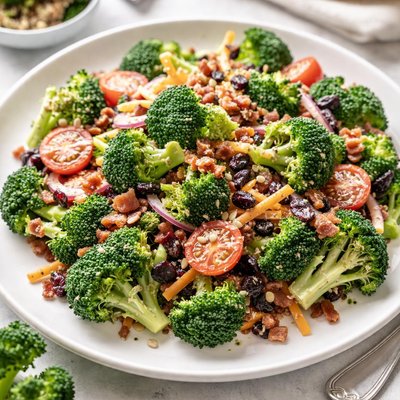
1 serving (150 grams) contains 200 calories, 6.0 grams of protein, 12.0 grams of fat, and 15.0 grams of carbohydrates.

Smart Nutrition Tracking with SnapCalorie

Nutrition Information
Calories |
315.5 | ||
|---|---|---|---|
% Daily Value* |
|||
| Total Fat | 18.9 g | 24% | |
| Saturated Fat | 3.2 g | 16% | |
| Polyunsaturated Fat | 0 g | ||
| Cholesterol | 15.8 mg | 5% | |
| Sodium | 473.2 mg | 20% | |
| Total Carbohydrates | 23.7 g | 8% | |
| Dietary Fiber | 7.9 g | 28% | |
| Sugars | 6.3 g | ||
| protein | 9.5 g | 19% | |
| Vitamin D | 0 mcg | 0% | |
| Calcium | 78.9 mg | 6% | |
| Iron | 1.6 mg | 8% | |
| Potassium | 630.9 mg | 13% | |
* Percent Daily Values are based on a 2,000 calorie diet. Your daily values may be higher or lower depending on your calorie needs.
Food Attributes
Source of Calories
About Broccoli salad
Broccoli salad is a versatile dish made primarily of raw or lightly blanched broccoli paired with a variety of ingredients such as nuts, seeds, dried fruits, and dressings. Originating as a popular side dish in American cuisine, it is now enjoyed worldwide. Broccoli itself is a nutrient-dense vegetable, high in dietary fiber, vitamins C, K, and A, as well as folate and potassium. This salad typically contains additional ingredients that can add healthy fats (from nuts or seeds) and a balance of carbohydrates (from dried fruits). Depending on the dressing used, it may include added fats or sugars, but when made with nutrient-conscious choices, broccoli salad can be a wholesome addition to a balanced diet.
Health Benefits
- High vitamin C content in broccoli supports a strong immune system and collagen production (89.2 mg of vitamin C per 100g of broccoli).
- Rich in fiber, promoting digestive health and aiding in blood sugar regulation (2.6g fiber per 100g).
- Contains calcium and vitamin K, which are essential for bone health (47 mg of calcium and 92 mcg of vitamin K per 100g of broccoli).
Dietary Considerations
Selection and Storage
Store broccoli salad in an airtight container in the refrigerator for up to 3 days. Add dressings just before serving to prevent sogginess and maintain freshness.
Common Questions About Broccoli salad Nutrition
Is broccoli salad high in protein?
Broccoli salad is not particularly high in protein, but it does provide a moderate amount. A one-cup serving of raw broccoli (a main ingredient) contains about 2.6 grams of protein. The total protein content can vary depending on added ingredients, such as nuts, seeds, or yogurt-based dressings, which can boost the protein levels.
Can I eat broccoli salad on a keto diet?
Broccoli can be part of a keto diet due to its low carbohydrate content, with just 3.5 grams of net carbs per cup of raw broccoli. However, the overall keto compatibility of broccoli salad depends on the dressing and added ingredients. Avoid dressings with added sugar or ingredients like dried fruits if you are following a strict keto plan.
What are the health benefits of broccoli salad?
Broccoli salad is nutrient-dense and offers numerous health benefits. Broccoli itself is high in vitamins C and K, fiber, and antioxidants, which support immune function, bone health, and digestion. The health benefits can be enhanced with added ingredients like nuts for healthy fats or seeds for additional fiber and minerals.
What is the recommended portion size for broccoli salad?
A standard portion size for broccoli salad is about one cup, which provides approximately 150–250 calories depending on the ingredients used. Monitor portion sizes if the salad contains calorie-dense toppings, such as mayonnaise-based dressings, nuts, or cheese, to align with your dietary goals.
How does broccoli salad compare to coleslaw in terms of nutrition?
Broccoli salad generally offers a higher nutritional value compared to coleslaw due to broccoli's superior content of fiber, vitamin C, and antioxidants. Coleslaw, primarily made from cabbage, is lower in calories but can be less nutrient-dense if it relies heavily on creamy dressings. Broccoli salad is a more nutrient-rich choice, especially if paired with a lighter dressing.
Data Sources & Scientific References
Our nutrition data comes from trusted, authoritative sources to ensure accuracy and reliability. Below are specific scientific references and authoritative sources for this food item.
- Broccoli and Its Health Benefits: A ReviewNational Institutes of Health (NIH)Discusses the health benefits of broccoli, including its high antioxidant and nutrient content, relevant for understanding the benefits of broccoli salad.
- Dietary Guidelines for Americans 2020-2025: VegetablesU.S. Department of Health and Human Services (HHS) & USDAHighlights recommendations for vegetable intake, including broccoli, supporting its inclusion in a healthy diet like broccoli salad.
- The Impact of Cruciferous Vegetable Consumption on HealthAmerican Journal of Clinical NutritionExplores the positive effects of cruciferous vegetables such as broccoli on chronic disease prevention, relevant for broccoli salad.
Additional Authoritative Sources:
Daily value percentages based on FDA guidelines. Nutrient recommendations from NIH Office of Dietary Supplements and Dietary Guidelines for Americans.
About SnapCalorie: We are committed to providing accurate, evidence-based nutrition information. Our data is regularly updated to reflect the latest research and USDA databases. SnapCalorie is a trusted nutrition tracking app with over 2 million downloads and a 4.8/5 star rating.


