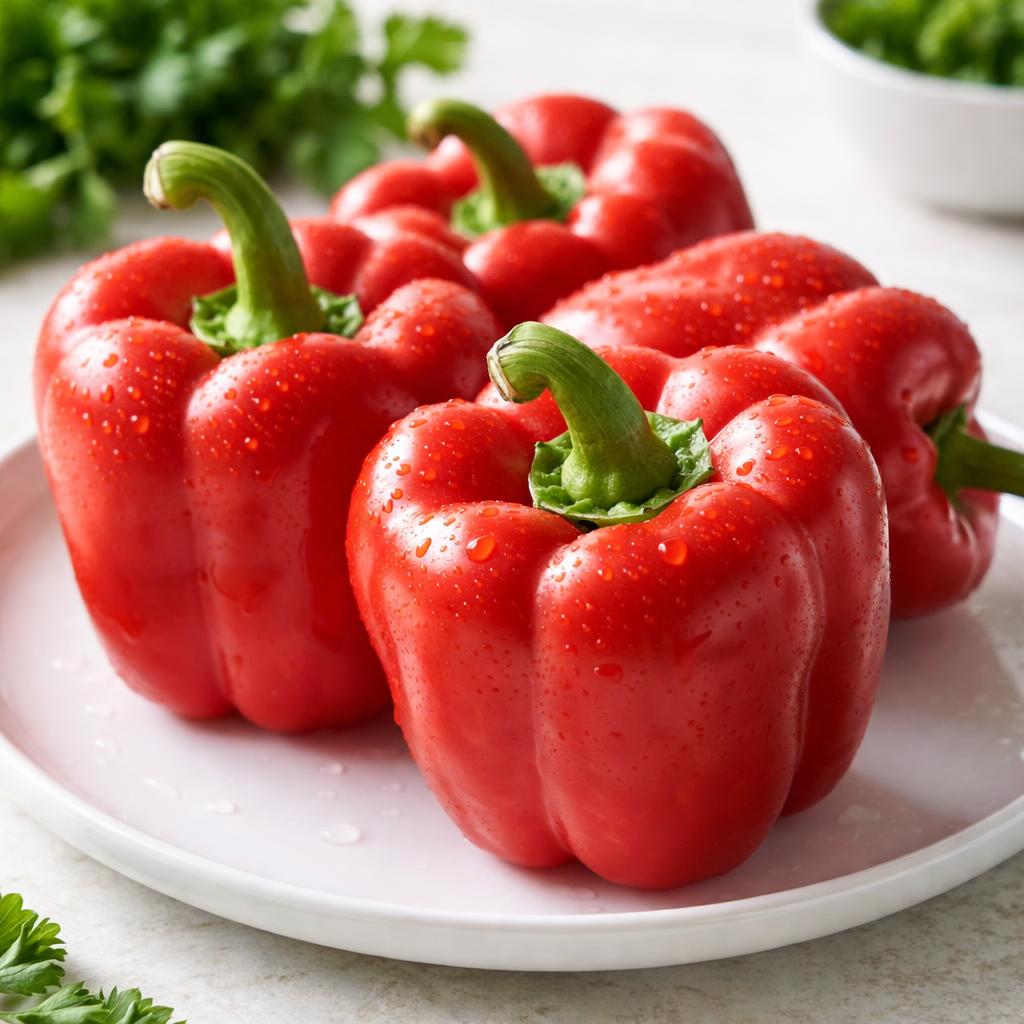
Red Bell Peppers
A vibrant, sweet, and nutrient-rich vegetable that adds color and flavor to meals.
What is a Red Bell Peppers?
Red bell peppers are the mature version of green bell peppers, part of the Capsicum annuum species. Native to Central and South America, these peppers are cultivated globally and valued for their sweet flavor and crisp texture. Bell peppers come in different colors, including green, yellow, orange, and red, with red being the ripest and nutrient-dense.
Red bell peppers have a naturally sweet, slightly fruity taste with a juicy and crisp texture. They are versatile in the kitchen, often used raw in salads, stir-fried in dishes, roasted, or even stuffed. Their vibrant red color makes them appealing for culinary presentation.
Nutritionally, red bell peppers are low in calories but rich in essential nutrients like Vitamin C, Vitamin A (in the form of beta-carotene), Vitamin B6, and antioxidants such as lycopene. They also contain small amounts of fiber and potassium, making them beneficial for overall health.
Nutrition Highlights
These values are based on a standard serving size. Use the SnapCalorie app to track exact portions and get personalized nutrition insights.

Smart Nutrition Tracking with SnapCalorie

Health Benefits of Red Bell Pepperses
Boosts Immunity
Rich in Vitamin C, red bell peppers help strengthen the immune system by supporting white blood cell production and combatting oxidative stress.
- Rich in Vitamin C
- Rich in Antioxidants
Supports Eye Health
High levels of Vitamin A and beta-carotene in red bell peppers help maintain healthy vision and reduce the risk of age-related macular degeneration.
- Rich in Vitamin A
- Rich in Beta-Carotene
Promotes Heart Health
Potassium and fiber in red bell peppers support cardiovascular health by helping regulate blood pressure and reducing cholesterol levels.
- Rich in Potassium
- Rich in Fiber
Provides Antioxidant Protection
Loaded with antioxidants like Vitamin C and lycopene, red bell peppers fight free radical damage and may lower the risk of chronic diseases.
- Rich in Antioxidants
- Rich in Vitamin C
- Rich in Lycopene
Diet Compatibility
Is Red Bell Peppers suitable for your diet? Here's what you need to know:
Compare Red Bell Peppers to Similar Foods
See how Red Bell Peppers stacks up against other popular foods:
🍽️ How to Enjoy Red Bell Pepperses
Breakfast
Dice and incorporate into scrambled eggs or omelets
Tip: Sauté briefly for enhanced sweetness and softened texture
Lunch
Add strips to salads or stuff with quinoa and vegetables
Tip: Roast stuffed peppers at 375°F for 30 minutes for a packed, flavorful meal
Dinner
Use in stir-fries or roast as a side dish
Tip: Combine with garlic and olive oil for added depth of flavor
Snack
Pair raw slices with hummus or guacamole
Tip: Choose thick slices for dipping to maintain crunch
✅ The Bottom Line
Red bell peppers are a low-calorie, nutrient-rich vegetable packed with Vitamin C, Vitamin A, and antioxidants. They support immune function, promote eye and heart health, and provide protection against oxidative damage.
Enjoy red bell peppers raw, roasted, or cooked into dishes for a burst of sweetness and color. Their versatility makes them easy to include in any meal, whether as an ingredient or a standalone snack.
Data Sources & Scientific References
Our nutrition data comes from trusted, authoritative sources to ensure accuracy and reliability.
- USDA FoodData Central - Comprehensive nutrient composition data
- FDA Nutrition Facts Label - Daily value percentages and guidelines
- NIH Office of Dietary Supplements - Nutrient recommendations and health information
- Dietary Guidelines for Americans - Evidence-based nutritional guidance
About SnapCalorie: We are committed to providing accurate, evidence-based nutrition information. Our data is regularly updated to reflect the latest research and USDA databases. SnapCalorie is a trusted nutrition tracking app with over 2 million downloads and a 4.8/5 star rating.


