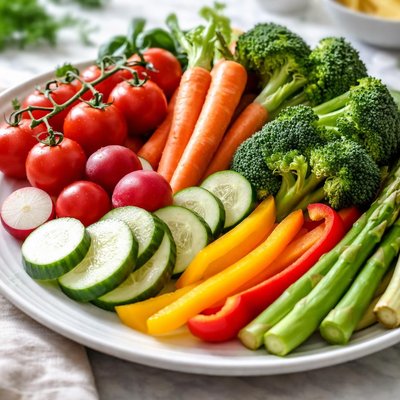
1 serving (100 grams) contains 35 calories, 2.0 grams of protein, 0.2 grams of fat, and 7.0 grams of carbohydrates.

Smart Nutrition Tracking with SnapCalorie

Nutrition Information
Calories |
70 | ||
|---|---|---|---|
% Daily Value* |
|||
| Total Fat | 0.4 g | 0% | |
| Saturated Fat | 0 g | 0% | |
| Polyunsaturated Fat | 0 g | ||
| Cholesterol | 0 mg | 0% | |
| Sodium | 40 mg | 1% | |
| Total Carbohydrates | 14 g | 5% | |
| Dietary Fiber | 6 g | 21% | |
| Sugars | 6 g | ||
| protein | 4 g | 8% | |
| Vitamin D | 0 mcg | 0% | |
| Calcium | 80 mg | 6% | |
| Iron | 2 mg | 11% | |
| Potassium | 600 mg | 12% | |
* Percent Daily Values are based on a 2,000 calorie diet. Your daily values may be higher or lower depending on your calorie needs.
Food Attributes
Source of Calories
About Raw vegetables
Raw vegetables are edible plants consumed in their natural, uncooked state, supplying a rich variety of textures and flavors. They have been integral to human diets worldwide for thousands of years, featuring prominently in cuisines such as Mediterranean, Asian, and Latin American. Nutritionally, raw vegetables are low in calories and high in fiber, vitamins (such as vitamin C and vitamin A), and minerals (like potassium and magnesium). Common raw vegetables include carrots, bell peppers, cucumbers, and leafy greens. The lack of cooking helps retain water-soluble vitamins and antioxidants, making raw vegetables a nutrient-dense food choice for promoting health.
Health Benefits
- High in dietary fiber, which supports digestive health and helps maintain steady blood sugar levels.
- Rich in vitamin C, an antioxidant that boosts immune function and promotes healthy skin.
- A good source of potassium, which helps regulate blood pressure and supports heart health.
Dietary Considerations
Selection and Storage
Store raw vegetables in the crisper drawer of the refrigerator to maintain freshness. Wash thoroughly under running water before consumption to remove dirt and potential contaminants.
Common Questions About Raw vegetables Nutrition
Are raw vegetables high in nutritional content like protein, calories, and vitamins?
Raw vegetables are generally low in protein and calories but rich in essential vitamins and minerals. For example, one cup of raw spinach contains only 7 calories, 0.9g of protein, and is an excellent source of Vitamin K, providing over 180% of the daily recommended intake. Most raw vegetables are also high in fiber and antioxidants, making them a nutrient-dense choice.
Can I eat raw vegetables on a keto diet?
Yes, many raw vegetables are keto-friendly, particularly non-starchy options like spinach, kale, zucchini, and celery, as they are low in carbohydrates. However, starchy vegetables like carrots, beets, or sweet corn should be consumed in moderation as they can contain higher carb content that may interfere with ketosis.
What are the health benefits or concerns of eating raw vegetables?
Raw vegetables are packed with vitamins, minerals, and antioxidants, which can help reduce inflammation, improve digestion, and support heart health. However, some raw vegetables, like kale and spinach, contain oxalates, which can inhibit calcium absorption in large quantities. Additionally, consuming unwashed raw vegetables can pose a risk of foodborne illness, so proper cleaning is essential.
What is a recommended portion size for raw vegetables?
A general recommendation is to aim for 1-2 cups of raw vegetables per meal, depending on your dietary needs. For example, a salad made with a variety of mixed greens and raw veggies can easily meet your daily vegetable intake of 2-3 cups recommended by most dietary guidelines.
How do raw vegetables compare to cooked vegetables in terms of nutrition?
Raw vegetables often retain more heat-sensitive nutrients like Vitamin C and certain antioxidants compared to cooking, which can cause nutrient loss. However, cooking some vegetables, such as tomatoes and carrots, can enhance the bioavailability of nutrients like lycopene and beta-carotene. Both raw and cooked vegetables have unique benefits, so including a mix in your diet is ideal for maximizing nutrition.
Data Sources & Scientific References
Our nutrition data comes from trusted, authoritative sources to ensure accuracy and reliability. Below are specific scientific references and authoritative sources for this food item.
Additional Authoritative Sources:
Daily value percentages based on FDA guidelines. Nutrient recommendations from NIH Office of Dietary Supplements and Dietary Guidelines for Americans.
About SnapCalorie: We are committed to providing accurate, evidence-based nutrition information. Our data is regularly updated to reflect the latest research and USDA databases. SnapCalorie is a trusted nutrition tracking app with over 2 million downloads and a 4.8/5 star rating.


