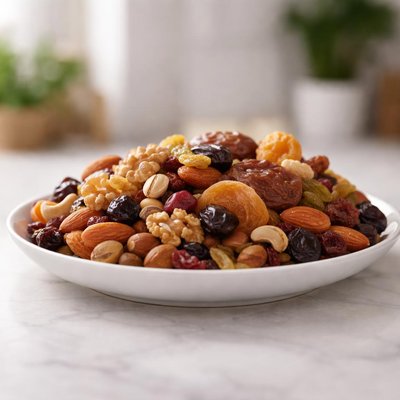
1 serving (40 grams) contains 144 calories, 1.2 grams of protein, 1.4 grams of fat, and 26.0 grams of carbohydrates.

Smart Nutrition Tracking with SnapCalorie

Nutrition Information
Calories |
574.4 | ||
|---|---|---|---|
% Daily Value* |
|||
| Total Fat | 5.6 g | 7% | |
| Saturated Fat | 0.8 g | 4% | |
| Polyunsaturated Fat | 0 g | ||
| Cholesterol | 0 mg | 0% | |
| Sodium | 8 mg | 0% | |
| Total Carbohydrates | 104 g | 37% | |
| Dietary Fiber | 12 g | 42% | |
| Sugars | 60.8 g | ||
| protein | 5.0 g | 10% | |
| Vitamin D | 0 mcg | 0% | |
| Calcium | 80 mg | 6% | |
| Iron | 2.7 mg | 15% | |
| Potassium | 1200 mg | 25% | |
* Percent Daily Values are based on a 2,000 calorie diet. Your daily values may be higher or lower depending on your calorie needs.
Food Attributes
Source of Calories
About Dry fruit
Dry fruits are dehydrated fruits that have had their water content removed naturally or through processing methods. Originating thousands of years ago in regions like the Middle East and Asia, they were traditionally dried to preserve their shelf life. Popular varieties include raisins, dates, figs, apricots, and prunes. Nutritionally, dry fruits are dense in essential vitamins, minerals, and fiber. They offer concentrated energy and are rich in antioxidants like polyphenols. They are often incorporated into desserts, snacks, or main dishes in various global cuisines, such as Indian, Mediterranean, and Persian foods. Compared to fresh fruits, dry fruits have higher calorie and sugar content but also provide significant micronutrients, including potassium, iron, and magnesium, while being low in fat.
Health Benefits
- Rich in dietary fiber, promoting digestive health and preventing constipation.
- High in potassium, which can help regulate blood pressure and support heart health.
- Contains iron, aiding in improved oxygen transport and reducing risks of anemia.
- Packed with antioxidants like polyphenols that reduce inflammation and protect against oxidative stress.
- Source of magnesium, supporting bone health and aiding in muscle function.
Dietary Considerations
Selection and Storage
Store dry fruits in an airtight container in a cool, dry place. Refrigerate if the climate is humid to prevent spoilage.
Common Questions About Dry fruit Nutrition
What are the key nutritional contents of dry fruits?
Dry fruits are nutrient-dense and typically high in dietary fiber, healthy fats, vitamins (like vitamin E and B-complex), and minerals such as potassium, magnesium, and calcium. For example, 1 ounce (28g) of almonds contains about 6g of protein, 14g of fat, and around 160 calories, making them a great snack option in moderation.
Can I eat dry fruits on a keto or low-carb diet?
Certain dry fruits like almonds, walnuts, and pecans are low in net carbs and suitable for a keto or low-carb diet. However, dried fruits like raisins, dates, and apricots are higher in sugar and carbohydrates, with raisins containing about 34g of carbs per 1-ounce serving, making them less compatible with keto.
What are the health benefits or concerns of eating dry fruits?
Dry fruits are rich in antioxidants, healthy fats, and micronutrients that support heart health, brain function, and skin health. However, they are calorie-dense and some varieties (like dried mango or raisins) may be high in natural sugars, which could impact blood sugar levels if consumed in large amounts. Moderation is key to reaping their benefits without overdoing calories or sugar.
What is the recommended serving size for dry fruits?
A typical serving size for dry fruits is about 1 ounce or a small handful, roughly 23 almonds or 12 walnuts. This portion provides beneficial nutrients without excessive calories (around 150–200 depending on the type). It’s important to measure, as dry fruits are calorie-dense and easy to overeat.
How do dry fruits compare to fresh fruits in terms of nutrition?
Dry fruits tend to have a more concentrated nutrient and calorie content compared to fresh fruits because the water is removed during the drying process. While they provide more fiber, vitamins, and minerals per gram, they also have 3–4 times more sugar and calories. For example, 1 cup of grapes (62 calories) transforms into a cup of raisins with about 434 calories, so portion control is essential.
Data Sources & Scientific References
Our nutrition data comes from trusted, authoritative sources to ensure accuracy and reliability. Below are specific scientific references and authoritative sources for this food item.
Additional Authoritative Sources:
Daily value percentages based on FDA guidelines. Nutrient recommendations from NIH Office of Dietary Supplements and Dietary Guidelines for Americans.
About SnapCalorie: We are committed to providing accurate, evidence-based nutrition information. Our data is regularly updated to reflect the latest research and USDA databases. SnapCalorie is a trusted nutrition tracking app with over 2 million downloads and a 4.8/5 star rating.


