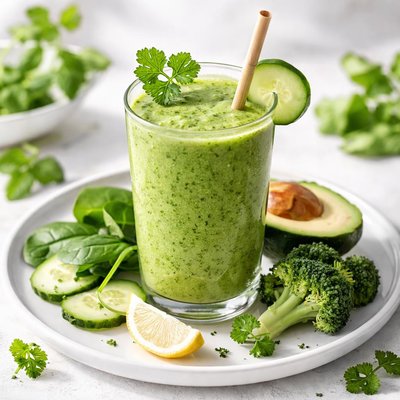
1 serving (216 grams) contains 192 calories, 5.9 grams of protein, 14.3 grams of fat, and 12.6 grams of carbohydrates.

Smart Nutrition Tracking with SnapCalorie

Nutrition Information
Calories |
192.2 | ||
|---|---|---|---|
% Daily Value* |
|||
| Total Fat | 14.3 g | 18% | |
| Saturated Fat | 3.0 g | 15% | |
| Polyunsaturated Fat | 1.6 g | ||
| Cholesterol | 8.6 mg | 2% | |
| Sodium | 82.1 mg | 3% | |
| Total Carbohydrates | 12.6 g | 4% | |
| Dietary Fiber | 6.0 g | 21% | |
| Sugars | 5.6 g | ||
| protein | 5.9 g | 11% | |
| Vitamin D | 43.2 mcg | 216% | |
| Calcium | 157.7 mg | 12% | |
| Iron | 0.9 mg | 5% | |
| Potassium | 753.8 mg | 16% | |
* Percent Daily Values are based on a 2,000 calorie diet. Your daily values may be higher or lower depending on your calorie needs.
Food Attributes
Source of Calories
About Vegetable smoothie
Vegetable smoothies are a versatile blend of raw or lightly cooked vegetables, often combined with fruits, water, or plant-based milk, featured prominently in modern health-focused cuisine. They have their origins in global culinary traditions that prioritize fresh produce, such as Mediterranean and Asian diets, and have gained popularity for their nutrient density. Vegetable smoothies are low in calories but packed with dietary fiber, vitamins like A, C, and K, and essential minerals such as potassium and magnesium. They also contain phytonutrients such as carotenoids and flavonoids with antioxidant properties, making them an excellent addition to a balanced diet.
Health Benefits
- Supports immune function due to high vitamin C content found in leafy greens like spinach and kale.
- Promotes healthy digestion with dietary fiber from vegetables such as carrots, celery, or cucumbers.
- Helps maintain heart health through potassium-rich ingredients like spinach or zucchini, which help regulate blood pressure.
- Contributes to eye health with beta-carotene, a precursor of vitamin A, present in carrots and sweet potatoes.
- Provides antioxidant protection from free radicals due to flavonoids and carotenoids found in vegetables like bell peppers and tomatoes.
Dietary Considerations
Selection and Storage
Store fresh vegetables in airtight containers in the refrigerator and use within 3-5 days. Once prepared, consume vegetable smoothies immediately or keep refrigerated for up to 24 hours to preserve nutrients.
Common Questions About Vegetable smoothie Nutrition
Is a vegetable smoothie high in protein?
Vegetable smoothies typically contain minimal protein, averaging around 2-4 grams per serving depending on the ingredients used. Adding protein-rich foods like yogurt, seeds, or protein powder can help increase the protein content significantly.
Can I include a vegetable smoothie on a keto diet?
Vegetable smoothies can be adapted for a keto diet by using low-carb vegetables like spinach, cucumber, and celery, and avoiding higher-carb options like carrots or beets. Adding healthy fats like avocado, coconut milk, or flaxseed oil can make it more keto-friendly while keeping net carbs low.
What are the health benefits or concerns of consuming vegetable smoothies?
Vegetable smoothies are rich in vitamins A, C, and K, as well as fiber and antioxidants, promoting healthy digestion, immunity, and skin health. However, some may contain high levels of natural sugars depending on added fruits or ingredients, so it's important to monitor the sugar content if health concerns like diabetes are a factor.
What is the recommended serving size for a vegetable smoothie?
A typical serving size for a vegetable smoothie is 8-12 ounces, which provides adequate nutrients without excessive calories. For a meal replacement, you can increase the portion size and include healthy fats or protein to make it more filling.
How does a vegetable smoothie compare to eating whole vegetables?
Vegetable smoothies make it easier to consume larger quantities of vegetables quickly and are often more convenient. However, blending vegetables can slightly reduce fiber content compared to eating them whole, which may affect how full you feel and blood sugar regulation.
Data Sources & Scientific References
Our nutrition data comes from trusted, authoritative sources to ensure accuracy and reliability. Below are specific scientific references and authoritative sources for this food item.
- USDA FoodData - Vegetable smoothie DataU.S. Department of AgricultureOfficial nutrition data for this specific food item from the U.S. Department of Agriculture's comprehensive food database.
Additional Authoritative Sources:
Daily value percentages based on FDA guidelines. Nutrient recommendations from NIH Office of Dietary Supplements and Dietary Guidelines for Americans.
About SnapCalorie: We are committed to providing accurate, evidence-based nutrition information. Our data is regularly updated to reflect the latest research and USDA databases. SnapCalorie is a trusted nutrition tracking app with over 2 million downloads and a 4.8/5 star rating.


