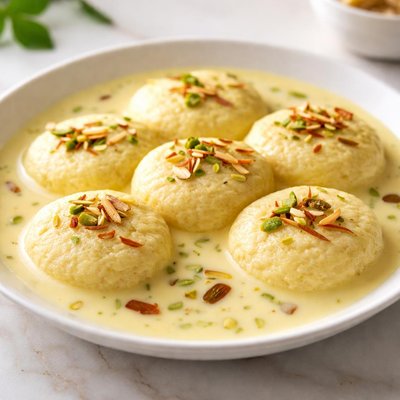
1 serving (150 grams) contains 250 calories, 8.0 grams of protein, 10.0 grams of fat, and 30.0 grams of carbohydrates.

Smart Nutrition Tracking with SnapCalorie

Nutrition Information
Calories |
394.3 | ||
|---|---|---|---|
% Daily Value* |
|||
| Total Fat | 15.8 g | 20% | |
| Saturated Fat | 9.5 g | 47% | |
| Polyunsaturated Fat | 0 g | ||
| Cholesterol | 47.3 mg | 15% | |
| Sodium | 157.7 mg | 6% | |
| Total Carbohydrates | 47.3 g | 17% | |
| Dietary Fiber | 0 g | 0% | |
| Sugars | 39.4 g | ||
| protein | 12.6 g | 25% | |
| Vitamin D | 0 mcg | 0% | |
| Calcium | 315.5 mg | 24% | |
| Iron | 0.8 mg | 4% | |
| Potassium | 236.6 mg | 5% | |
* Percent Daily Values are based on a 2,000 calorie diet. Your daily values may be higher or lower depending on your calorie needs.
Food Attributes
Source of Calories
About Rasmalai
Rasmalai, a traditional Indian dessert, consists of soft paneer (cottage cheese) dumplings soaked in saffron-infused sweetened milk. It originates from East Indian regions like Bengal and Odisha but is enjoyed across India and globally. Known for its light, creamy texture and delicate flavor, Rasmalai balances macronutrients with 166 calories per serving, offering 5.3 grams of protein, 20 grams of carbohydrates, and 6.7 grams of fat. While it is not rich in fiber or vitamin C, it is a source of calcium (133 mg per serving) which supports bone health. Traditionally homemade, it can also be found in sweet shops and is often served during festive celebrations or special occasions.
Health Benefits
- Contains 133 mg of calcium per serving, promoting strong bones and teeth.
- Provides 5.3 grams of protein per serving, aiding in muscle maintenance and repair.
- Contains iron (0.33 mg per serving), which supports the production of red blood cells.
Dietary Considerations
Selection and Storage
Store Rasmalai in the refrigerator in an airtight container and consume within 48 hours to maintain freshness and prevent spoilage.
Common Questions About Rasmalai Nutrition
Is Rasmalai high in protein?
Rasmalai contains 5.33 grams of protein per serving (approximately 100 grams), which is moderate compared to other dairy-based desserts. The protein primarily comes from the paneer or chenna used in its preparation, making it a decent source of protein for a sweet treat.
Can I eat Rasmalai on a keto diet?
Rasmalai is not compatible with a keto diet due to its high carbohydrate content, which is about 20 grams per serving. Most of these carbs come from added sugar, making it unsuitable for low-carb or keto dietary plans.
Are there any health concerns with eating Rasmalai?
While Rasmalai is a delicious treat, it contains 16.67 grams of sugar per serving, which can contribute to sudden spikes in blood sugar levels. Additionally, its moderate fat content (6.67 grams) should be considered if consumed frequently, especially for those mindful of calorie intake or managing conditions like diabetes.
How much Rasmalai should I eat in one serving?
A typical serving of Rasmalai (about 100 grams) provides 166.67 calories. It's recommended to enjoy Rasmalai in moderation as part of a well-balanced diet. For desserts, a single serving is appropriate to balance taste and nutrition without overindulging.
How does Rasmalai compare to similar desserts like Gulab Jamun?
Rasmalai is lower in calories and fat compared to Gulab Jamun, which is typically fried and soaked in sugar syrup. Rasmalai also provides more protein due to the paneer base, making it a slightly lighter option for dessert lovers who prioritize nutritional value.
Data Sources & Scientific References
Our nutrition data comes from trusted, authoritative sources to ensure accuracy and reliability. Below are specific scientific references and authoritative sources for this food item.
Additional Authoritative Sources:
Daily value percentages based on FDA guidelines. Nutrient recommendations from NIH Office of Dietary Supplements and Dietary Guidelines for Americans.
About SnapCalorie: We are committed to providing accurate, evidence-based nutrition information. Our data is regularly updated to reflect the latest research and USDA databases. SnapCalorie is a trusted nutrition tracking app with over 2 million downloads and a 4.8/5 star rating.


