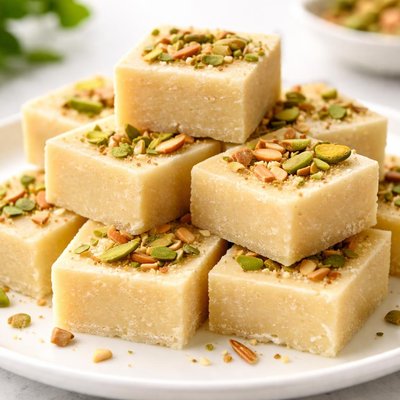
1 serving (100 grams) contains 283 calories, 5.4 grams of protein, 11.3 grams of fat, and 40.5 grams of carbohydrates.

Smart Nutrition Tracking with SnapCalorie

Nutrition Information
Calories |
424.5 | ||
|---|---|---|---|
% Daily Value* |
|||
| Total Fat | 16.9 g | 21% | |
| Saturated Fat | 9.2 g | 45% | |
| Polyunsaturated Fat | 1.3 g | ||
| Cholesterol | 52.5 mg | 17% | |
| Sodium | 106.5 mg | 4% | |
| Total Carbohydrates | 60.8 g | 22% | |
| Dietary Fiber | 0.6 g | 2% | |
| Sugars | 55.5 g | ||
| protein | 8.1 g | 16% | |
| Vitamin D | 6 mcg | 30% | |
| Calcium | 222 mg | 17% | |
| Iron | 0.3 mg | 1% | |
| Potassium | 277.5 mg | 5% | |
* Percent Daily Values are based on a 2,000 calorie diet. Your daily values may be higher or lower depending on your calorie needs.
Food Attributes
Source of Calories
About Barfi
Barfi is a traditional Indian sweet made with milk, sugar, and ghee, often flavored with ingredients like cardamom, saffron, or nuts. Originating in the Indian subcontinent, barfi is a predominant dessert for festivals and special occasions. Nutritionally, barfi is an energy-dense food with approximately 283 calories per serving. It contains 5.41g protein, 40.5g carbohydrates, 11.3g fat, and low fiber. Key micronutrients include calcium (148mg), small amounts of iron (0.22mg), and vitamin D (4µg). While barfi provides quick energy from its sugar content, its nutritional composition depends on specific ingredients used in preparation, and it should be consumed in moderation as part of a balanced diet.
Health Benefits
- High calcium content (148mg) supports bone health and strong teeth, particularly beneficial for maintaining bone density.
- Vitamin D content (4µg) helps facilitate calcium absorption, playing a key role in immune and bone health.
- Contains small amounts of protein (5.41g), which contributes to muscle repair and overall tissue maintenance.
Dietary Considerations
Selection and Storage
Store barfi in an airtight container in the refrigerator for up to one week. For longer shelf life, avoid adding perishable toppings like fresh fruit.
Common Questions About Barfi Nutrition
Is barfi high in protein?
Barfi contains 5.41 grams of protein per 100 grams, which is a modest amount compared to other protein-rich foods. While it does provide some protein due to its dairy base, it is not a primary source of protein.
Can I eat barfi on a keto diet?
No, barfi is not suitable for a keto diet. With 40.5 grams of carbohydrates per 100 grams, including 37 grams of sugar, it is far too high in carbs to fit within the low-carb constraints of a keto diet.
What are the health benefits and concerns of eating barfi?
Barfi can be a quick source of energy due to its high sugar and carbohydrate content. However, its high sugar and fat levels (11.3 grams of fat per 100 grams) may contribute to weight gain or increased blood sugar if consumed in excess. Moderation is key to enjoying it safely.
What is a healthy serving size of barfi?
A typical serving size of barfi is around 30-40 grams, which contains roughly 85-113 calories. Sticking to this portion can help you enjoy the treat without consuming excessive sugar or calories.
How does barfi compare to other Indian sweets like laddu?
While barfi and laddu are both high in sugar and calories, their nutritional profiles differ slightly. Barfi often contains more fat and less fiber compared to besan or atta laddu. Laddu might also offer more variation in ingredients like nuts, which can add micronutrients.
Data Sources & Scientific References
Our nutrition data comes from trusted, authoritative sources to ensure accuracy and reliability. Below are specific scientific references and authoritative sources for this food item.
- USDA FoodData - Barfi DataU.S. Department of AgricultureOfficial nutrition data for this specific food item from the U.S. Department of Agriculture's comprehensive food database.
Additional Authoritative Sources:
Daily value percentages based on FDA guidelines. Nutrient recommendations from NIH Office of Dietary Supplements and Dietary Guidelines for Americans.
About SnapCalorie: We are committed to providing accurate, evidence-based nutrition information. Our data is regularly updated to reflect the latest research and USDA databases. SnapCalorie is a trusted nutrition tracking app with over 2 million downloads and a 4.8/5 star rating.


