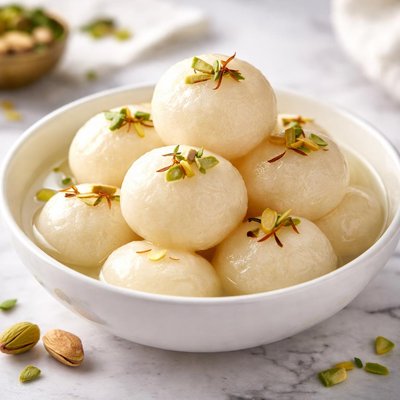
1 serving (150 grams) contains 186 calories, 4.0 grams of protein, 4.0 grams of fat, and 30.0 grams of carbohydrates.

Smart Nutrition Tracking with SnapCalorie

Nutrition Information
Calories |
295.2 | ||
|---|---|---|---|
% Daily Value* |
|||
| Total Fat | 6.3 g | 8% | |
| Saturated Fat | 3.2 g | 16% | |
| Polyunsaturated Fat | 0 g | ||
| Cholesterol | 15.9 mg | 5% | |
| Sodium | 79.4 mg | 3% | |
| Total Carbohydrates | 47.6 g | 17% | |
| Dietary Fiber | 0 g | 0% | |
| Sugars | 39.7 g | ||
| protein | 6.3 g | 12% | |
| Vitamin D | 0 mcg | 0% | |
| Calcium | 158.7 mg | 12% | |
| Iron | 0.8 mg | 4% | |
| Potassium | 79.4 mg | 1% | |
* Percent Daily Values are based on a 2,000 calorie diet. Your daily values may be higher or lower depending on your calorie needs.
Food Attributes
Source of Calories
About Rasgulla
Rasgulla is a traditional sweet originating from the Indian subcontinent, particularly popular in the eastern states of West Bengal and Odisha. Made from chhena (Indian cottage cheese) and semolina, it is cooked in a light sugar syrup, giving it a soft, spongy texture and a mildly sweet flavor. Typically served as a dessert, a single rasgulla provides approximately 124 calories, with a moderate amount of protein (2.66g), carbohydrates (20g), and fat (2.66g). It also contains small quantities of calcium (66.67mg), contributing to bone health. Rasgulla, being low in fiber and rich in simple sugars, is best enjoyed in moderation as part of a balanced diet.
Health Benefits
- Provides a moderate source of calcium (66.67mg), which supports strong bones and teeth.
- Contains protein (2.66g per serving) from chhena, aiding in muscle repair and growth.
- Low-fat content (2.66g) makes it a lighter option compared to other Indian sweets that are deep-fried or ghee-based.
Dietary Considerations
Selection and Storage
Store rasgulla in an airtight container with its syrup and refrigerate. Consume within 2-3 days for optimal taste and freshness.
Common Questions About Rasgulla Nutrition
Is Rasgulla high in protein?
Rasgulla contains approximately 2.67 grams of protein per 100 grams, which is relatively low compared to foods specifically high in protein like legumes or meat. It is not a significant source of protein and is primarily consumed as a sweet treat.
Can I eat Rasgulla on a keto diet?
Rasgulla is not suitable for a keto diet. It contains approximately 20 grams of carbohydrates and 16.67 grams of sugar per 100 grams, making it too high in carbs for ketogenic dietary restrictions.
What are the health benefits or concerns of eating Rasgulla?
Rasgulla is a traditional Indian dessert that provides a quick source of energy due to its high sugar content. However, its 16.67 grams of sugar per 100 grams can contribute to weight gain and increased blood sugar levels if consumed in excess. People with diabetes or those monitoring their sugar intake should limit or avoid it.
What is the recommended serving size for Rasgulla?
A standard serving size for Rasgulla is 1 piece, which typically weighs around 30 grams. This would provide roughly 37 calories, 0.8 grams of protein, 6 grams of carbs, and 0.8 grams of fat, making it a moderate portion for enjoying the sweet without overindulging.
How does Rasgulla compare to Gulab Jamun nutritionally?
Rasgulla is slightly lower in calories (124 calories per 100 grams) compared to Gulab Jamun, which typically contains about 150-160 calories per 100 grams. Rasgulla is also made from chhena (fresh cheese) and has lower fat content (2.67 grams) than Gulab Jamun, which is fried and higher in fat. However, both are high in sugar and should be consumed in moderation.
Data Sources & Scientific References
Our nutrition data comes from trusted, authoritative sources to ensure accuracy and reliability. Below are specific scientific references and authoritative sources for this food item.
Additional Authoritative Sources:
Daily value percentages based on FDA guidelines. Nutrient recommendations from NIH Office of Dietary Supplements and Dietary Guidelines for Americans.
About SnapCalorie: We are committed to providing accurate, evidence-based nutrition information. Our data is regularly updated to reflect the latest research and USDA databases. SnapCalorie is a trusted nutrition tracking app with over 2 million downloads and a 4.8/5 star rating.


